


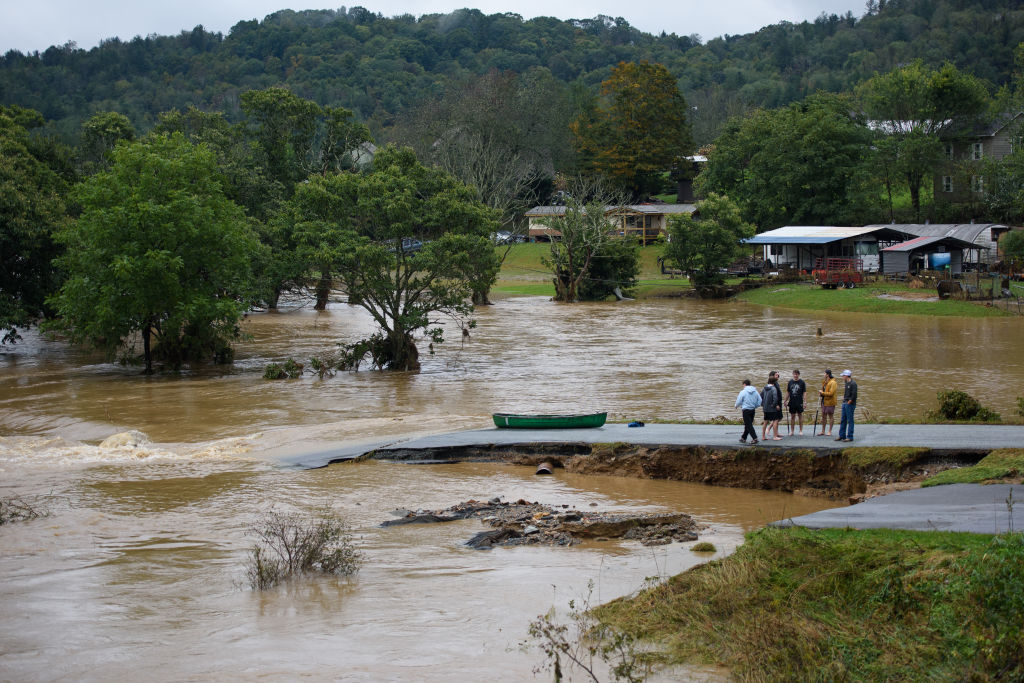
Intense rainfall from Hurricane Helene left many stranded and seeking shelter on Saturday as cleanup efforts commenced following the storm. The hurricane resulted in at least 60 fatalities, widespread devastation in the Southeastern U.S., and left millions without electricity.
Hurricane Helene made landfall in Florida’s Big Bend area as a Category 4 storm late Thursday, featuring winds of 140 mph (225 kph). It rapidly moved into Georgia, where Governor Brian Kemp described the scene on Saturday as looking “like a bomb went off,” after observing shattered homes and debris-filled roads from above. Helene weakened as it continued north, drenching the Carolinas and Tennessee with heavy rains, causing creeks and rivers to overflow and putting pressure on dams.
The National Weather Service Greenville-Spartanburg, South Carolina, said Saturday it is “devastated by the horrific flooding and widespread wind damage that was caused by Hurricane Helene,” and it has “no words” to express the amount of lives lost due to the storm. The agency called it “the worst event in our office’s history,” in a Facebook post Saturday evening.
More rain is forecasted this weekend for parts of the southern Appalachian region, reported The CNN. Areas in western North Carolina, including Asheville, and eastern Tennessee, such as Pigeon Forge and Gatlinburg, could receive an additional inch.
Up to 2 inches may fall in parts of Virginia, Kentucky, Ohio, West Virginia, and Pennsylvania by Monday. The National Weather Service office in Greenville-Spartanburg cautioned on Saturday morning that while the rain amounts will be modest, regions that experienced heavy rainfall from Helene might face localized issues with excessive runoff.
According to The Associated Press, thousands of utility workers arrived in Florida ahead of the hurricane, and by Saturday, power had been restored to over 1.9 million homes and businesses. However, hundreds of thousands are still without electricity in Florida and Georgia.
Helene was the eighth named storm of the Atlantic hurricane season, which started on June 1. Governor Roy Cooper stated that Helene “is one of the worst storms in modern history for parts of North Carolina.” The western region faced intense rains and strong winds approaching hurricane strength, resulting in life-threatening flash flooding, multiple landslides, and widespread power outages. As of Saturday, over 200 people had been rescued from floodwaters in North Carolina, according to the governor’s update.
