


Dr. Jamal Mosley has made a tremendous impact on his students, especially those with diverse learning challenges. He specializes in the design and assessment of Individual Education Plans (IEPs) for students with speech, intellectual, hearing, physical, or emotional difficulties. Since earning a Doctorate in Education from the top-ranked University of Massachusetts, he has used creative, student-focused subjects in education, subjects like our changing local and global ecosystems.
One of his favorite themes, which touches on several ecological dynamics, is the role of the environmental landscape in preserving bee habitats. The importance of biodiversity for humans and wildlife in our water supplies, air quality, and food sources is key to an Earth that supports future generations. Here, Mosley discusses how overdevelopment of usable land can harm the world’s critical bee populations.
The issue of landscape overdevelopment
Landscape overdevelopment involves the excessive expansion of human activity into natural environments, exceeding the landscape’s natural capacity. Natural landscapes inherently prevent soil erosion, manage stormwater, and provide essential life support, such as food and clean water. Overdevelopment alters the landscape to accommodate community needs, at the expense of plants, water, and wildlife, including bee populations.
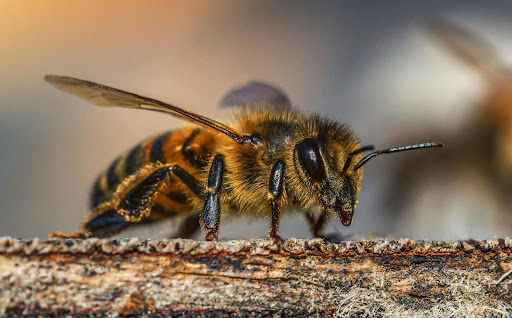
Dr. Jahmal Mosley teaches his students that bees need diverse food sources from plants (nectar and pollen) and safe nesting sites. Expanding community construction into natural ecosystems is harming the bees’ natural infrastructure and well-being, primarily when that construction promotes unsustainable development. Sustainable land development balances today’s population needs while promoting environmental protections.
The connection to a declining bee population
Recent news has reported on research into bee colony collapse and its negative impact on our food supply. Bee colonies collapse for several reasons. The loss of habitat, climate change, pesticides, and disease – 3 of which are distinctly artificial (or manmade). When green spaces are stripped of flowers and weeds, bees have nothing to feed on. And the chemicals designed to kill insect predators combine and change in soil and water, eventually becoming more toxic to bees than to other insects.
Mosley cites a recent Utah State University study on plant health and pests, which states:
“The western bumblebee (Bombus occidentalis) was once the most common bumblebee species in western North America, but its population has decreased by 93% over the last two decades.”
This study reveals even more challenges to the bee ecosystem, including much fiercer competition among introduced and native bee species (of which there are about 4000 species in North America).
The importance of protecting bee habitats
First and foremost, Dr. Jahmal Mosley hopes that all Americans can understand the importance of bees to our ecosystem. They perform the critical service of crop and wild plant pollination by collecting and transferring plant DNA on their hairy bodies. In one trip, one bee will visit many of the same specie flowers. Their unique buzzing produces vibrations that release the pollen – making bees vital to biodiversity and food security.
The impact of land overdevelopment on nature and its role in the declining bee population cannot be understated. There are lessons that all populations in the Northern Hemisphere can glean from this environmental catastrophe and take steps to protect bee habitats. Moseley believes in advocating for a variety of natural spaces in our communities, not just recreational parks for humans.
These include meadows, wetlands, and even marginal public spaces within communities that can feature an abundance of wildflowers. Homeowners can avoid using pesticides, plant only native (bee-friendly) flowers, and provide a water source for bees. This can be a shallow dish or pebbled area with water. Also, we can provide more support for ground-nesting bees (or tunnel dwellers) that require bare patches of soil without mulch, grass, or other barriers.
