



In a stunning strategic pivot that could reshape how humanity interacts with computation, Apple Inc. has acquired Q.ai, a previously highly secretive Israeli artificial-intelligence startup, in one of the most consequential technology deals of the decade. Valued at close to $2 billion, this acquisition stands as Apple’s second-largest ever, trailing only the 2014 purchase of Beats Electronics.
At first glance, this move may seem like another deep-tech acquisition in a long history of Silicon Valley deals. Yet on closer inspection, the implications are seismic. Apple appears to be betting its future not on chatty language interfaces or giant large-language models in the cloud, but on silent, intuitive communication, an interface that may feel more like telepathy than technology.
From Spoken Word to Silent Thought: What Q.ai Actually Does
Q.ai’s core innovation lies at the intersection of advanced machine learning, imaging, and human psychology. Its technology can detect imperceptible facial micro-movements, including subtle muscle shifts, lip motion, and skin vibrations, to infer intent and “silent speech.”
In plain terms, Q.ai’s systems can interpret what a person means to say not by listening to audible speech, but by reading the physical signals that accompany thought. Patents and research indicate this involves:
Facial micro-movement analysis, decoding tiny skin or muscle shifts that occur when we think or intend to speak
Silent speech interpretation, mapping non-vocalized commands to discrete machine understanding
Machine learning models trained on human interaction signals, enabling interpretation without traditional voice, keyboard, or gesture inputs
This is not merely enhanced voice recognition. It is a profound reimagining of human machine interface. If successful, it could make current paradigms, like speaking to Siri, typing into apps, or swiping screens, feel as archaic as command-line interfaces.
A Legacy of Visionaries: The Q.ai Founders
The team Apple has brought aboard is not emerging from obscurity. Its founders are seasoned architects of human-computer understanding.
Aviad Maizels, Q.ai’s CEO, previously co-founded PrimeSense, whose 3D sensing technology became a cornerstone of Apple’s Face ID biometric system. Maizels’ return to Apple with deep expertise in human sensing and perception represents continuity, not coincidence, in Apple’s long game of redefining interaction.
Alongside Maizels are Yonatan Wexler and Avi Barliya, a computer vision expert and an AI researcher, both seasoned in pushing the boundaries of sensing and cognition technology.
What makes this team particularly intriguing is not just prior success, but track record in building technologies that reshape how we perceive computing itself, from Face ID’s secure gaze to now, potentially, thought-like intent.
Why This Matters: The Interface Revolution
To appreciate the depth of Apple’s gamble, one must understand how transformative interfaces can reframe entire computing eras.
1. From Command Line to Natural Language
The computer revolution began with typed commands. Then came graphical user interfaces, mouse pointers, and touchscreens. Most recently, voice assistants like Siri and Alexa ushered in the era of conversational computing.
But despite decades of progress, even the best AI assistants are limited. They require articulated speech, explicit instruction, or physical gesture, all external to the user’s internal intent.
2. The Intuitive Leap
Q.ai’s technology, by contrast, seeks the holy grail of human–machine interaction. Communication that feels internal, natural, and embedded, akin to reading intention rather than decoding output. It’s not speech. It’s will.
Imagine:
AirPods that respond to silent cues, enabling you to change music, summon directions, or adjust settings without saying a word
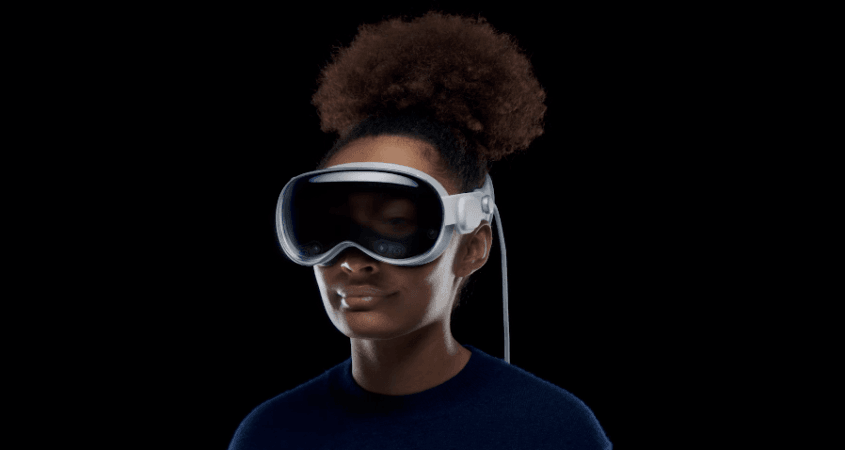
Vision Pro and future smart glasses that interpret thought-like signals, letting you navigate VR and AR without gestures or voice prompts
Wearables that predict needs before users articulate them, creating a seamless synergy between cognition and action
Instead of talking to AI, one could think with AI.
Reframing Siri or Replacing It
For years, Apple’s clients have voiced frustration at Siri’s relative shortcomings compared to rivals like Google Assistant or ChatGPT-powered interfaces. But Apple’s strategy may not be to compete on voice. It may be to leapfrog it entirely.
Rather than trying to improve Siri as a voice agent, Apple appears to be reframing the very premise of assistance, from speech recognition to intent recognition. Instead of saying “Hey Siri, play jazz,” a user might simply think or mouth a quiet intention, and the device understands.
This marks a tectonic shift in how we conceive of AI interactions, from spoken language as the primary channel to silent intent as the principal interface.
The Competitive Landscape: A New Front in the AI Race
Apple’s announcement arrives at a juncture where every tech giant is scrambling for dominance in AI and human-computer interaction.
Meta’s Ray-Ban smart glasses already let users engage AI in the physical world.
Google’s Gemini ecosystem is deeply integrated into search, assistant, and hardware.
OpenAI and others are exploring hardware partnerships and embedded AI agents.
Yet where competitors rely on spoken or visual interfaces, Apple is attempting to unlock the invisible layer, covert cognition.
This isn’t just another feature race. It’s a platform redefinition contest. Apple’s willingness to spend billions on such uncertain but foundational technology speaks volumes about its long-term vision and perhaps its anxiety about being perceived as a laggard in AI.
Ethics, Privacy, and the Silent Future
A vision of machines reading silent intent inevitably triggers deep ethical questions.
How is intent interpreted?
Who controls the models that decode inner signals?
What safeguards protect user autonomy and privacy?
Apple has long distinguished itself by championing on-device computation and privacy protections. If Q.ai’s technology is designed to run locally on Apple silicon rather than streamed to cloud AI servers, it may address some concerns, but only if safeguards are transparent, robust, and comprehensible to the public.
Unlike voice, which is an externalized signal, interpreting intent from micro-movements enters a psychological domain that has historically been the subject of ethical concern. Apple’s stewardship of this technology will be as important commercially as it is philosophically.
Beyond iPhone: The Invisible Interface Era
The “invisible interface,” a term already circulating among technologists, refers to systems that require no explicit command modality. Instead, they rely on implicit cognition, intention, context, and subtle human signals that precede action.
If Apple succeeds in productizing Q.ai’s technology, the implications will ripple throughout computing.
Wearables will feel alive, responsive not because we speak, but because they perceive us.
Product design will focus on anticipation rather than reaction.
Interaction design may shift from explicit commands to implicit intent models.
The silent future, once a sci-fi fantasy, could become the default mode of computing.
From Vision to Reality: Challenges Ahead
Apple’s ambition is breathtaking, but so are the challenges.
Training systems to accurately and ethically interpret silent signals across cultures, physiologies, and contexts.
Avoiding false positives and unintended actions. A device that acts when you didn’t intend it is worse than unresponsive software.
Ensuring that people retain control over technology rather than ceding power to inscrutable models.
These hurdles are not trivial. Yet Apple’s talent acquisition, especially a team led by innovators who already helped deliver Face ID, suggests the company is not merely experimenting, but building foundational layers for an entirely new interaction paradigm.
The End of Talking
Apple didn’t buy Q.ai to create better voice assistants. It bought a genesis technology, the potential to make spoken commands obsolete, and to redefine the relationship between human cognition and machine action.
If Apple can translate this silent interface into practical products, from AirPods that hear thought to immersive glasses that perceive intent, then the user experience landscape will shift irrevocably.
Speech was revolutionary. Typing was fundamental. Touchscreens changed everything. But silent intention could mark not just the next chapter in computing, but a new age of intuitive intelligence.
In the world Apple is hinting at, users may not ask “What can AI do?” Instead, AI may simply recognize what you want even before you formulate the question.
In this silent future, talking may indeed become classic, like dial-up modems or command lines, relics of interfaces we once relied on before we learned to think with machines.
[Major General Dr. Dilawar Singh, IAV, is a distinguished strategist having held senior positions in technology, defence, and corporate governance. He serves on global boards and advises on leadership, emerging technologies, and strategic affairs, with a focus on aligning India’s interests in the evolving global technological order.]
