


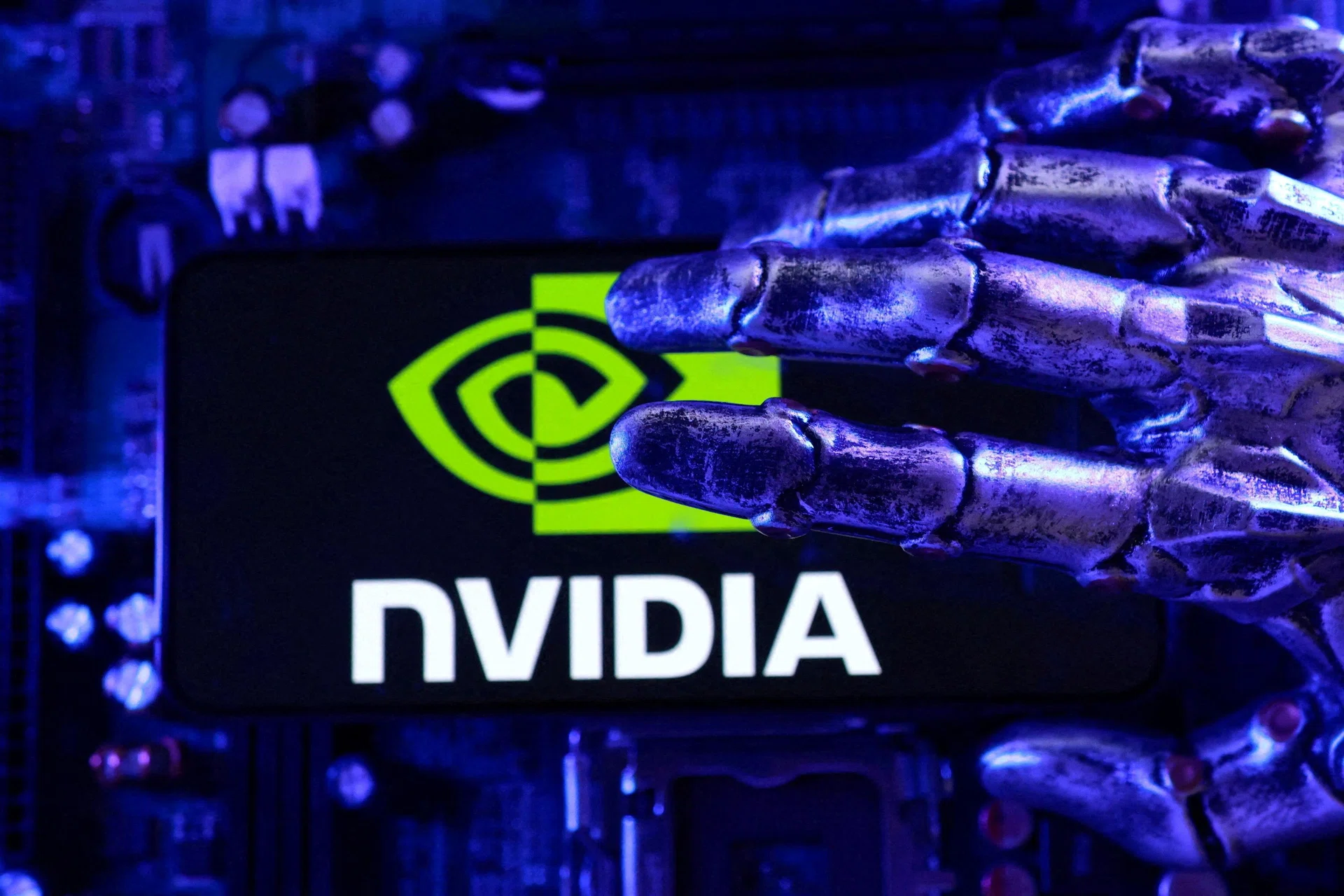
Since 2022, Washington has effectively blocked these processors from going to China over concerns that advanced AI could lend Beijing a military edge
A KEY company behind Thailand’s national AI effort is suspected of helping to smuggle billions of dollars worth of Super Micro Computer servers containing advanced Nvidia chips to China, with Alibaba Group Holding one of multiple end customers, according to people familiar with the matter.
US prosecutors this year outlined a scheme in which Super Micro’s co-founder allegedly worked with an unnamed South-east Asian company and a “rotating cast” of third-party brokers to divert the AI semiconductors in violation of US trade rules.
The South-east Asian firm the prosecutors didn’t name, identified only as Company-1, is Bangkok-based OBON Corp, the people said.
Some of the US$2.5 billion worth of servers sold to OBON allegedly went to Chinese AI leader Alibaba, according to the people, who requested anonymity to discuss a sensitive legal and geopolitical matter.
The prosecutors laid out allegations detailing the overall operation in a March indictment that sent Super Micro shares into freefall — by far the most significant chip smuggling crackdown since Washington first restricted Nvidia sales to China in 2022.
The indictment doesn’t name OBON or Alibaba and US authorities haven’t publicly accused them of wrongdoing.
Navigate Asia in
a new global order
Get the insights delivered to your inbox.
Spokespeople for the US Attorney’s Office for the Southern District of New York, which is prosecuting the case, and the Commerce Department’s Bureau of Industry and Security, which played a central role in investigating it, declined to comment.
“Alibaba has no business relationship with Super Micro, OBON or any third-party brokers who may have been mentioned in the indictment in question,” an Alibaba spokesperson said. “We have no involvement in the alleged smuggling activities.”
The spokesperson did not directly answer whether Alibaba currently uses, or has ever used, banned Nvidia chips in China.
A little known company outside of tech circles, OBON is responsible for the creation of Siam AI, Thailand’s sovereign cloud champion, according to a May 2024 press release.
OBON said at the time that it would deploy Nvidia servers in a small data centre in Bangkok, designed to “empower OBON to launch Siam AI Cloud and revolutionise the country’s AI roadmap.” Siam AI had been incorporated as a separate company four months prior.
Siam AI went on to win Thailand’s first official Nvidia Cloud Partner designation and host Nvidia chief executive officer Jensen Huang at a splashy event focused on so-called sovereign AI.
“The most important part of artificial intelligence is the data. And the data of Thailand belongs to the Thai people,” Huang said during a December 2024 fireside chat with Ratanaphon Wongnapachant, Siam AI’s CEO.
Ratanaphon, the nephew of Thai billionaire and former Prime Minister Thaksin Shinawatra, was also the CEO of OBON through at least May 2024, according to the company’s press release, which cited Siam AI’s website as a place to find more information about OBON. While the two companies’ paths have been intertwined and overlapping, it’s unclear whether OBON and Siam AI maintain any business relationship.
Ratanaphon said in a phone interview on Wednesday that he left OBON when he launched Siam AI and therefore couldn’t comment on US suspicions that OBON had smuggled chips to China. “I will only answer regarding Siam AI, which is that the company is not involved in this,” he said.
“Siam AI imports GPUs for our own use,” Ratanaphon added, referring to graphics processing units like those made by Nvidia. A person familiar with the company’s operations, who requested anonymity discussing private matters, said that OBON is one of several suppliers from which Siam AI has secured AI servers in Thailand.
Outside of the data centre that OBON touted when launching Siam AI in May 2024, Siam AI has announced at least two other computing facility agreements, including one under which it planned to jointly acquire Nvidia chips with a Dubai partner.
Bloomberg was unable to reach OBON for comment. The only contact number on OBON’s website has been disconnected, and company representatives didn’t respond to an email sent to an address listed on the page.
A Bloomberg reporter visiting the company’s official address in Bangkok was denied entry by a staff member of the office building, who confirmed that OBON employees work at the location but declined to provide a phone number or other contact details.
On a wall directory in the lobby, Siam AI is listed as one of the occupants of the seven-story office building, while OBON isn’t.
OBON’s purported involvement in the smuggling arrangement could deal a blow to Thailand’s fledgling AI ambitions and reignite calls in Washington for restrictions on chip sales to the region. The US has three times planned or considered export controls on semiconductor shipments to Thailand, but never moved forward.
A Thai government spokesperson declined to comment.
OBON’s alleged role also raises further questions about the efficacy of Nvidia’s due diligence on high-volume sales of its hardware.
Outside of Thailand, two official Nvidia partners headquartered in Singapore have drawn government scrutiny for alleged semiconductor trade violations, while the parent company of a third — located in China — has disclosed to Beijing that it procured Super Micro AI servers containing banned Nvidia chips.
“Our ecosystem partners must be committed to strict compliance at every level,” an Nvidia spokesperson said in an emailed response to questions. “Our diligence efforts have led to prosecutions of would-be smugglers, and we will continue to work with the government to enforce the rules while building the world’s AI infrastructure,” the spokesperson said, referring to a thwarted smuggling scheme via Thailand that was unveiled in March — the US government’s fifth chip diversion case since August.
Nvidia semiconductors are the most sought-after components of the AI age.
Companies like OpenAI use them by the thousands in massive data centres to train and run models like ChatGPT, while governments around the world view them as necessary for technological sovereignty.
Since 2022, Washington has effectively blocked these processors from going to China over concerns that advanced AI could lend Beijing a military edge.
The rules function as a license requirement: companies need to seek the US government’s permission to ship virtually any of Nvidia’s AI chips to the Asian country, a mandate that remains in place even after President Donald Trump recently said he’d allow some sales.
That’s left Chinese companies with effectively two options to access best-in-class AI hardware. They can rent chips that are physically located in facilities overseas — which is generally allowed under US law, and which companies including Alibaba are known to do — or they can procure chips that have been smuggled into China.
Super Micro co-founder Yih-Shyan “Wally” Liaw has pleaded not guilty to the diversion charges, as has Ting-Wei “Willy” Sun, an outside contractor described by US authorities as a “fixer” who allegedly aided in the diversion. The third defendant, Ruei-Tsang “Steven” Chang, is not in custody. He served as a general manager in Super Micro’s Taiwan office.
Super Micro, which is not named in the indictment, has launched an internal investigation and put Liaw — who stepped down from the board — on administrative leave. Chief Executive Officer Charles Liang said this week on the company’s quarterly earnings call that he is “personally shocked and saddened by these alleged actions,” and that “no one from the company, other than those named in the DOJ indictment, was involved. So, we have a very good confidence with our integrity.”
The company “has a robust compliance programme and is committed to full adherence to all applicable US export and re-export control laws and regulations,” a Super Micro spokesperson said in an emailed response to questions. “The company has taken decisive action in response to the elaborate schemes orchestrated by the individuals alleged in the US Attorney’s Office’s indictment.”
The spokesperson added that Super Micro “has not been charged with any wrongdoing and will continue to take steps to ensure that its technology is handled with the highest level of ethical and legal scrutiny.”
Super Micro declined to comment on its relationship with OBON, which — according to the descriptions of Company-1 in the indictment — was at one point Super Micro’s 11th most profitable customer.
A rapid increase in sales to Company-1, which accounted for nearly US$100 million in revenue for Super Micro’s quarter ending in June 2024, prompted the server maker to audit and temporarily pause shipments that October, the indictment said.
That corresponds with a steep decrease in OBON’s imports of goods under the trade code for AI servers, according to import records compiled by the platform Big Trade Data.
OBON’s imports started to pick back up again in 2025, and climbed steeply in April and May — just before the US was set to require permits for AI chip sales to Thailand, part of a global export controls framework that Trump’s team scrapped before it took effect.
Super Micro’s compliance team briefly paused shipments to Company-1 that April, though quickly lifted the hold, the indictment said.
A few months later, after OBON’s AI server imports once again slowed, Super Micro’s compliance team ordered another review — for which one of the defendants, Sun, allegedly prepared by staging dummy servers in warehouses.
Company-1 — which the people familiar said was OBON — also paid for off-site entertainment for one of the Super Micro auditors during that August 2025 visit, according to the indictment.
Several days later, the US Commerce Department’s Bureau of Industry and Security, which is responsible for semiconductor export controls, requested a hold on all shipments to Company-1. That request remains in effect as of the date of the March indictment. BLOOMBERG
Decoding Asia newsletter: your guide to navigating Asia in a new global order. Sign up here to get Decoding Asia newsletter. Delivered to your inbox. Free.
