


Key takeaways
- The CDU won no seats in Mecklenburg-Vorpommern for the first time ever, falling to 4.9% from 13.3% in 2021
- The AfD’s second major state victory in September reveals a structural shift in voter behavior, particularly among eastern Germans
- Merz’s federal coalition with the SPD faces growing strain as its slim parliamentary majority becomes harder to maintain
Chancellor Friedrich Merz’s Christian Democratic Union suffered an unprecedented collapse in Mecklenburg-Vorpommern on September 20, failing to reach the 5% threshold for the first time in a German state election since reunification. The far-right Alternative for Germany won 38.2% of the vote, cementing a pattern of regional dominance that now threatens Merz’s ability to govern at the federal level, as Europe’s largest economy struggles with economic stagnation and political fragmentation.
The CDU’s fall from 13.3% in 2021 to 4.9% represents more than a local setback. It signals a broader weakness in Merz’s federal coalition just 16 months after taking office, as centrist parties are squeezed between a surging far-right and leftward-shifting electorates. The defeats come as Germany’s government faces a stability paradox: constitutional safeguards prevent sudden governmental collapse, but they also prevent the unified governance needed to implement the pro-growth reforms Merz promised. Merz has stressed his intention to remain in office, stating that “what needs to be done now requires backbone, steadfastness, and patience.” Yet his approval rating has fallen to approximately 14%, with speculation mounting about whether his party might remove him. Germany faces a genuine governance crisis as the coalition that promised economic revival cannot command the political capital to deliver it, while the firewall against far-right power faces mounting pressure with each election.
A Historic Collapse
The numbers in Mecklenburg-Vorpommern laid bare the CDU’s predicament. The party lost all 12 of its seats in the state parliament, marking the first time in history that the CDU won no representation in any German state election. Voter turnout reached 78.1%, suggesting strong engagement rather than apathy. The SPD, governed by Manuela Schwesig, came second with 35.5% and 29 seats. The Left and Greens each cleared the threshold with 6.5% and 5.7% respectively, positioning them for a three-party “red–red–green” coalition to govern the state. This arrangement allows the mainstream parties to govern without the AfD, applying the same firewall logic used at the federal level.
The collapse was particularly striking given the CDU’s historical dominance in German politics. Merz, speaking after the results, called them “a disaster” for the political center, while vowing to press ahead with his reform agenda. “What needs to be done now requires backbone, steadfastness, and patience,” he said. The bluntness reflected not just the scale of the loss, but its timing: this was the CDU’s second crushing defeat in as many weeks, arriving as part of a broader deterioration in the party’s support across multiple state elections held in September.
Mecklenburg-Vorpommern Results
On September 20, 2026, the AfD won 38.2% and 32 seats in Mecklenburg-Vorpommern, while the SPD took 35.5% and 29 seats. The CDU fell to 4.9%, below the 5% threshold, losing all 12 of its previous seats—the first time the party has won no representation in any German state election in history.
The Cascade Across Eastern Germany
Mecklenburg-Vorpommern was the second major state election in September where the AfD demonstrated durable strength. Two weeks earlier, on September 6, the party won Saxony-Anhalt with 43.8% of the vote, falling just short of an absolute majority with 39 of 83 parliamentary seats. The CDU placed a distant second there with 17.2%, prompting state premier Sven Schulze to acknowledge the result “hit his party hard.” These back-to-back results in eastern Germany reveal an AfD voter base that has consolidated while traditional conservative supporters either abandon the CDU or retreat into skepticism of all established parties.
The timing and geography amplified the damage. The AfD’s success in Saxony-Anhalt came after months of debate about Germany’s direction on migration, cost of living, and economic slowdown. That the party could come close to repeating that performance two weeks later suggested the momentum was not a local anomaly but a structural shift in voter behavior. For Merz, now 16 months into his chancellorship, the elections demonstrated that his party cannot reliably hold even its core conservative constituencies against the AfD’s appeal to economically anxious voters in the former East German states. This represents another significant blow to Merz’s authority at precisely the moment his coalition government is struggling to revive Europe’s largest economy.
The Firewall Under Strain
Under Germany’s firewall policy, mainstream parties refuse coalition with the AfD—a practice that has long been one of Europe’s best-enforced democratic safeguards. In Mecklenburg-Vorpommern, that principle held, as the SPD, Left, and Greens are positioned to form a government without the AfD despite its plurality. The same logic applies at the federal level, where Merz has maintained his refusal to work with the far-right party, leaving him dependent on his coalition with the SPD in the Bundestag.
Yet the firewall faces mounting pressure. The AfD’s momentum, bolstered by endorsements from figures like Elon Musk, signals eroding barriers between far-right movements and mainstream politics. If the new government fails to address voter grievances about migration, living costs, and economic stagnation, support for the AfD could surge further. This creates a vicious cycle: the more the CDU loses voters to the AfD, the smaller the coalition becomes, the harder it is to govern effectively, and the more voters lose confidence in centrist solutions.
Coalition Arithmetic and the Federal Balance
That federal coalition rests on narrow mathematics. The CDU/CSU and SPD together hold a slim majority in the Bundestag. It is the governing arrangement born from the February 23, 2025 election, when the CDU/CSU won 28.5% of the vote. Neither party wants the coalition to collapse given that fresh elections would likely punish both. Yet the two partners hold fundamentally different economic philosophies: Merz has committed to cutting social welfare spending to boost growth, while the SPD, which controls the finance and labor ministries, will resist those cuts. With such a thin majority and competing priorities, coordinating policy becomes increasingly difficult.
The state elections compound this tension. Each CDU loss weakens Merz’s negotiating position within his own federal coalition, making it harder to resist SPD demands on spending. Each AfD victory narrows the math available for future governments without expanding far-right involvement, potentially creating unsustainable conditions for any coalition.
What needs to be done now requires backbone, steadfastness, and patience.
Economic Crisis and Public Confidence
The underlying economic crisis sharpens these political tensions. Germany’s government halved its growth forecast for 2026 while raising inflation projections. Public confidence has evaporated: in a March poll, 86% of Germans expressed dissatisfaction or strong dissatisfaction with the government’s work, with only 12% satisfied. Merz’s personal approval rating has plummeted to around 14% after just 16 months in office—a dramatic fall for a chancellor elected to revive European growth.
These figures underscore the depth of Germany’s economic and political troubles. Germany is the engine of European growth, yet it faces institutional paralysis at a critical moment. The country needs coordinated investment in infrastructure, tax reform, and competitiveness measures to compete with other major economies. Yet the coalition cannot command the political unity required. The government could theoretically persist until 2029, but without economic improvement, support will continue eroding among both centrist and working-class voters. The political fragmentation evident in September’s elections—with far-left gains in Berlin, far-right breakthroughs in the east, and centrist losses across eastern Germany—suggests the coalition may not survive that long.
A European Pattern
The CDU’s collapse reflects broader trends reshaping European politics. The AfD’s success represents what analysts describe as “anti-incumbency populism and a rightward shift felt across Europe and North America.” Germany is not unique in facing simultaneous pressure from far-left and far-right challengers. However, given Germany’s economic importance and its historical role as Europe’s stabilizer, its political fragmentation carries outsized consequences.
If Germany’s centrist government cannot deliver economic growth and restore confidence, support for the AfD will likely continue rising, potentially destabilizing the firewall entirely. Conversely, if the coalition somehow navigates toward stability and growth, it could demonstrate that centrist governance can compete with populist movements. Merz’s chancellorship, once expected to anchor Europe’s largest economy, now hinges on whether a narrowly divided coalition can deliver results before voters lose patience entirely—a question that will shape European stability well beyond Germany’s borders.
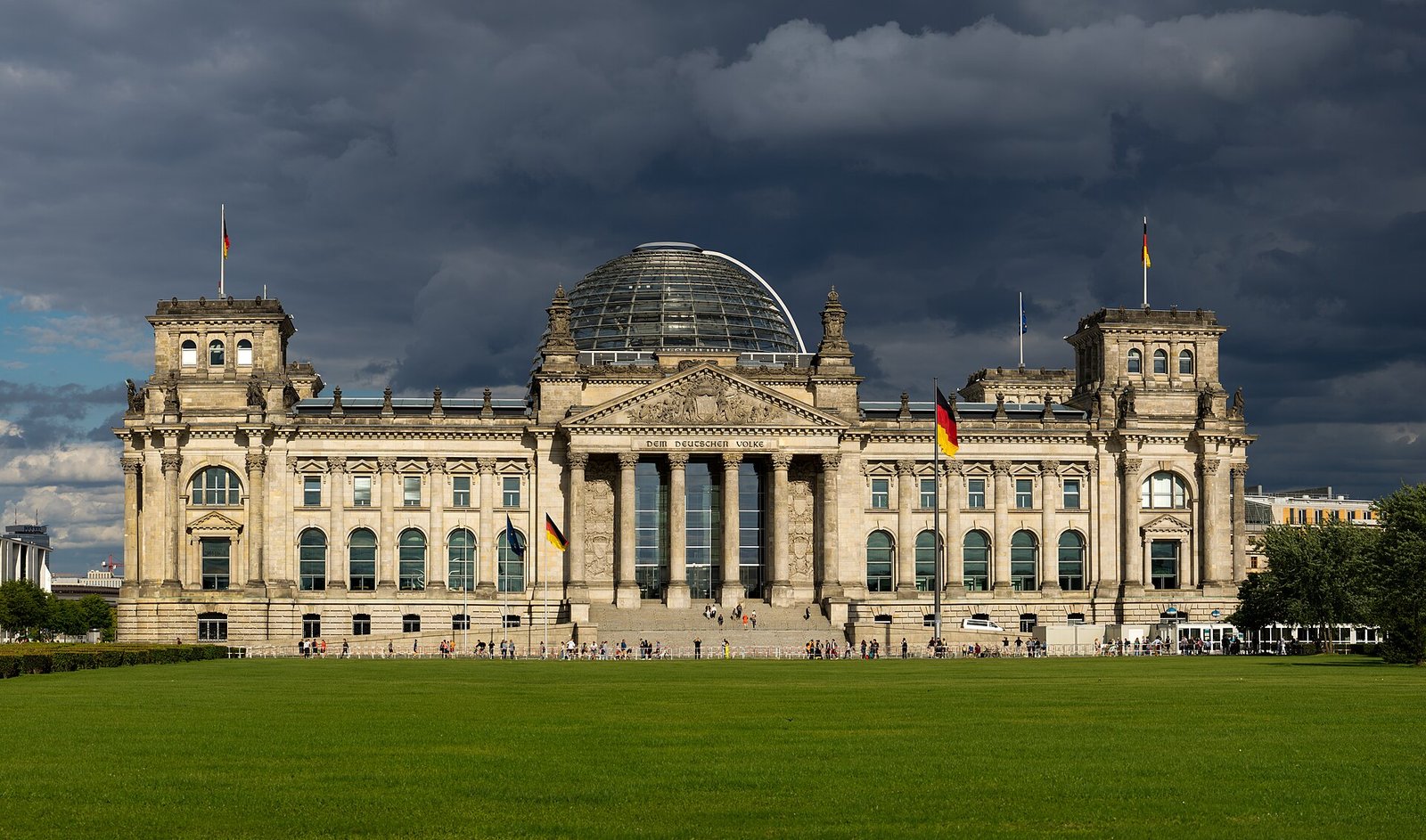
Photo: Jörg Braukmann · CC BY-SA 4.0 · via Wikimedia Commons
