


An economist says that the doubling in natural gas prices alone will add 3 percentage points
Published Mon, Mar 9, 2026 · 10:50 PM
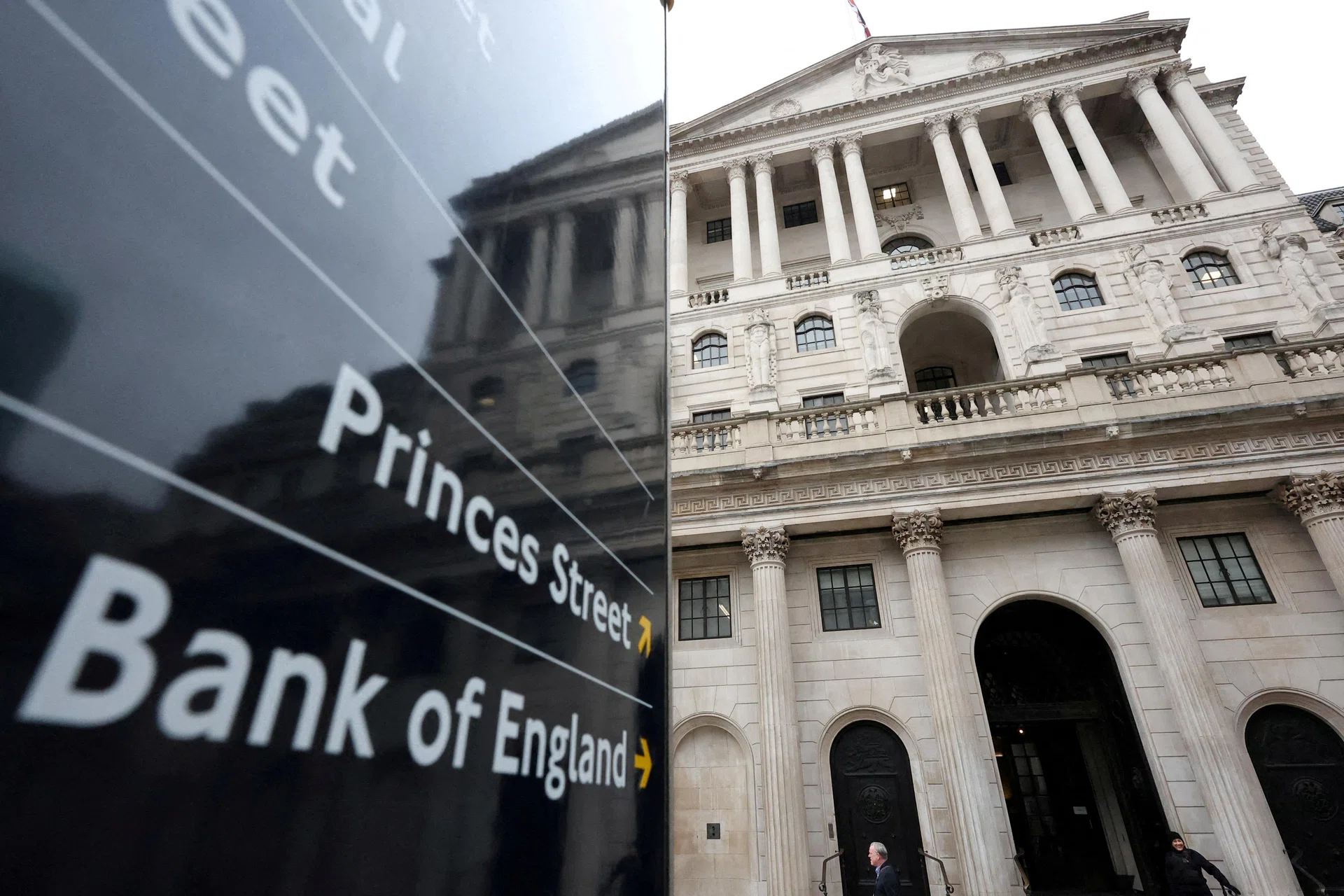
[LONDON] The Bank of England (BOE) faces the prospect of UK inflation rebounding to 5 per cent, with traders ramping up bets on a reversal of recent cuts to interest rates.
Inflation could rise to more than double the BOE’s 2 per cent target if the latest jump in oil and gas prices is maintained, based on estimates from ING and accounting firm RSM UK on Monday (Mar 9).
ING economist James Smith said that the price growth would hit 4.7 per cent in September if the oil surge holds throughout the second quarter, after Brent crude soared above US$100 a barrel for the first time since 2022.
Finance ministers from the Group of Seven are due to speak on Monday about their plans to increase the supply of oil.
RSM UK economist Tom Pugh said that the latest spike in oil and gas prices meant that the UK “is looking at inflation back above 5 per cent”.
He said that the doubling in natural gas prices alone would add 3 percentage points, and the rise in oil prices would add at least another 0.5 percentage points.
Navigate Asia in
a new global order
Get the insights delivered to your inbox.
It would mark a major setback for the BOE, as well as the UK’s Labour government, which had repeatedly pledged to tackle living costs. Before conflict erupted in the Middle East, the BOE had expected inflation to fall to its 2 per cent target during the March-to-May period.
Prime Minister Keir Starmer insisted on Monday that the UK was able to cope with the global shock.
While economists were revising up their predictions, he emphasised the recent falls and said that Labour had “done a lot of work in the last 18 months to put some resilience” into the economy.
The BOE’s monetary policy committee (MPC) had gradually lowered interest rates since August 2024, from a peak of 5.25 per cent to 3.75 per cent as the inflation threat receded.
However, the moves on energy markets on Monday were accompanied by a huge shift in expectations for the UK’s central bank policy.
Traders now envision a hike by the BOE as the next step, and priced in as much as 20 basis points of tightening by the end of 2026. Shortly before the US and Israeli attacks on Iran, markets put the odds of a rate cut on Mar 19 at almost 80 per cent.
Britain’s mortgages are already affected – the average interest rate on a two-year fixed deal has risen from 4.82 per cent to 4.87 per cent in less than a week.
“How long prices stay elevated is arguably more important than how high they peak, given that the UK’s household energy price cap takes a three-month average of wholesale prices,” said ING’s Smith.
The UK’s weak labour market may also limit the second-round effects that kept inflation elevated, after the energy shock following Russia’s invasion of Ukraine in 2022.
He added: “The big question is how much secondary (effect) we (will face) on food and services inflation. Given (that) the jobs market is much, much cooler than in 2022, I suspect (that) the services inflation response will be much more muted.”
The UK officials may be more wary about looking through any energy shock, after being criticised for being too slow to tackle price pressures triggered by the war in Ukraine.
That lifted inflation to over 11 per cent, and a tight labour market made their task of bringing down the price growth more difficult.
Martin Weale, a former BOE rate-setter who is now an economics professor at King’s College London, said on Friday that the MPC “will be nervous about looking through the increase in energy prices, having burnt their fingers in the last surge”.
Inflation caused by rising energy prices squeezes growth while pushing up prices. He noted that the BOE cannot offset the economic hit, but can try to prevent those costs from causing a spiral of higher wages that companies then pass on in higher prices.
“If I was on the MPC today, I’d be worried about adding to demand, given where inflation is right now,” he added. BLOOMBERG
Decoding Asia newsletter: your guide to navigating Asia in a new global order. Sign up here to get Decoding Asia newsletter. Delivered to your inbox. Free.
