


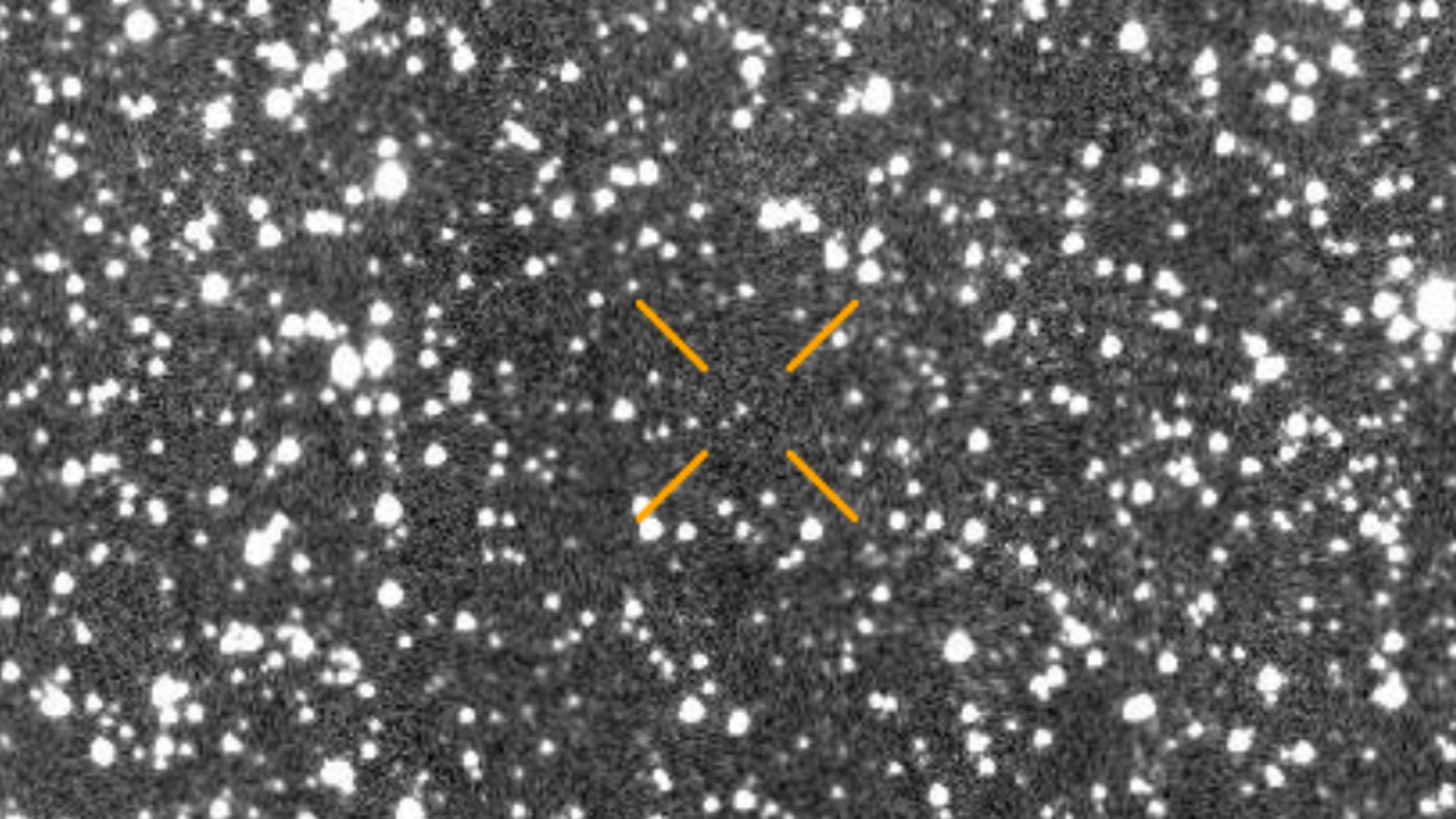
The arrival of interstellar comet 3I/ATLAS (C/2025 N1) has prompted the United Nations to mobilise a new global planetary-defence initiative, even as NASA confirms it poses no danger to Earth.
The object, set to pass at a distance of about 270 million kilometres, has rekindled public fascination with near-Earth threats and tested the world’s preparedness for such cosmic visitors.
Despite the reassurances, the object’s unusual origin, trajectory, and behaviour have spurred a coordinated campaign led by the International Asteroid Warning Network (IAWN) under the United Nations Office for Outer Space Affairs (UNOOSA) to test Earth’s readiness for such cosmic interlopers.
Discovery and Trajectory
The Asteroid Terrestrial-impact Last Alert System (ATLAS) telescope in Chile first detected 3I/ATLAS on 1 July 2025. Subsequent tracking confirmed its hyperbolic orbit and high velocity, indicating an origin beyond the Solar System, making it only the third confirmed interstellar object, after ʻOumuamua (2017) and 2I/Borisov (2019).
According to NASA, the comet will reach its closest approach to the Sun (perihelion) on 30 October 2025, at roughly 1.4 astronomical units, placing it just inside Mars’s orbit. Its closest distance to Earth will remain a safe 1.8 astronomical units, or about 270 million kilometres.
Behaviour Raising Eyebrows
Observations reveal the interstellar visitor is showing comet-like activity. The Hubble Space Telescope captured images of a dust- and gas-filled coma and a faint tail at an inbound heliocentric distance of 3.8 au.
Infrared spectroscopy from the James Webb Space Telescope (JWST) revealed a gas coma dominated by carbon dioxide, with a CO₂/H₂O mixing ratio far above that of most Solar System comets, according to arXiv.
This unusual composition has raised questions about how the object formed and whether its behaviour deviates from typical cometary norms.
The Guardian reported that while some independent researchers have openly considered more exotic possibilities, including a non-natural origin, NASA scientists maintain that the most likely explanation remains a natural interstellar comet.
UN-Endorsed Planetary-Defence Campaign Mobilises
The International Asteroid Warning Network (IAWN), operating under the United Nations Office for Outer Space Affairs (UNOOSA), has launched a coordinated planetary-defence campaign to track 3I/ATLAS and test the global response framework.
This marks the first UN-backed observational campaign for an interstellar object and ties into the planned International Year of Asteroid Awareness and Planetary Defence 2029, aimed at improving worldwide preparedness and data-sharing.
The European Space Agency (ESA) emphasised that international cooperation remains vital: ‘The collection and analysis of near-Earth object data is a matter of global common interest,’ it said in a briefing.
As the IAWN notes: ‘The collection and analysis of data associated with near-Earth objects is a matter of international cooperation and common interest.’
Not A Threat —But A Test
Despite online alarm, NASA confirms that 3I/ATLAS poses no impact risk to Earth. Planetary defence experts view the campaign as a rehearsal for future threats, allowing global agencies to test their coordination and communication systems before a genuine hazard arises.
‘We shouldn’t wait for a dangerous object to learn how we’ll respond—that would be too late,’ said one official at the Planetary Defence Coordination Office.
The object’s projected closest approach remains well outside the zone of concern. Nonetheless, experts say the significance lies in the drill-like nature of the event.
Why It Matters
The focus on 3I/ATLAS underscores growing concern about space-impact readiness beyond familiar asteroid threats.
Many nations, particularly in the Global South, lack robust monitoring or response infrastructure.
The 2029 planetary-defence initiative aims to engage amateur astronomers, schools, and national emergency agencies, thereby strengthening a shared global early-warning network.
What To Watch Next
Observatories around the world are preparing to monitor 3I/ATLAS as it swings through the Sun-ward side of the Solar System and proceeds on its exit path.
Key milestones include the perihelion date (end of October 2025) and subsequent monitoring in December and early 2026, according to The Weather Network.
Meanwhile, scientists will watch for any unusual activity, such as sudden outgassing, fragmentation, or trajectory shifts — behaviour that could challenge current models of comet or interstellar-object dynamics.
The Bottom Line
Earth faces no immediate danger from 3I/ATLAS. But its arrival has served as a real-world drill for international cooperation under the UN’s planetary-defence strategy.
As the comet exits the Solar System, it leaves behind a clear lesson: planetary safety depends on shared vigilance, rapid coordination, and a deeper understanding of the cosmic unknown.
Originally published on IBTimes UK
