[SINGAPORE] CapitaLand Investment’s (CLI) net profit fell 13 per cent to S$287 million for its first half ended Jun 30, 2025, from S$331 million in the year-earlier period, the company said on Thursday (Aug 14).
Basic earnings per share (EPS) came to S$0.058, 11 per cent down from a basic EPS of S$0.065 in H1 2024.
While earnings were down 13 per cent, “we certainly don’t expect that to continue in the second half”, said CLI group chief financial officer Paul Tham at an earnings briefing.
Several transactions in the pipeline are expected to bring in more fee income, and “a few more divestments” this year in India and China will make up some portfolio gains, he added. The group also expects to list its first real estate investment trust (Reit) in China by the fourth quarter of 2025, which will increase fee earnings.
“So, a little bit more confident on the outlook going forward,” said Tham.
Excluding portfolio gains, operating net profit would have fallen 12 per cent to S$260 million in H1 2025, from S$296 million.
BT in your inbox
Start and end each day with the latest news stories and analyses delivered straight to your inbox.
Revenue for H1 fell 24 per cent to S$1.04 billion from S$1.37 billion.
The declines were partly due to the deconsolidation of CapitaLand Ascott Trust (Clas), alongside the loss of contributions from divested assets in the US and China.
Excluding these effects, revenue would have risen by 7 per cent or S$69 million, amid higher fee income from the fee income-related business and improved performance of lodging properties under the real estate investment business segment, CLI said.
Following CLI’s sale of around 4.9 per cent of its stake in Clas in December 2024, the stapled group is no longer consolidated as a CLI subsidiary and is now accounted as an associate. As a result of the deconsolidation, CLI’s revenue declined by S$322 million, and its earnings before interest, taxes, depreciation and amortisation (Ebitda) fell by S$161 million.
By segment, the group’s fee income-related business recorded S$564 million in revenue, comprising contributions from listed funds management, private funds management, lodging management and commercial management.
Ebitda for the segment was, however, down 6 per cent on the year at S$208 million. This was mainly due to lower event-driven fees, higher foreign exchange losses, and higher business development and marketing related expenses for its lodging management business.
Tham said: “We thought we were going to see a number of transactions happen in the first half. But when ‘Liberation Day’ happened, everything was put on hold.”
In April, the US announced sweeping tariff hikes on countries across the globe, sending uncertainty streaming across markets.
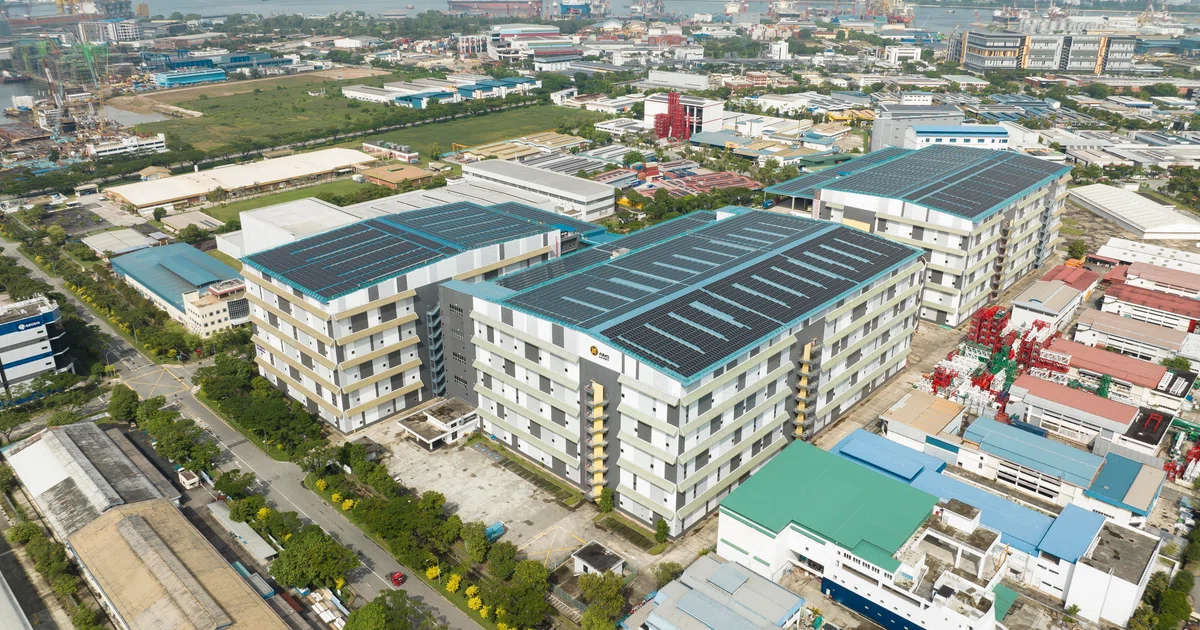
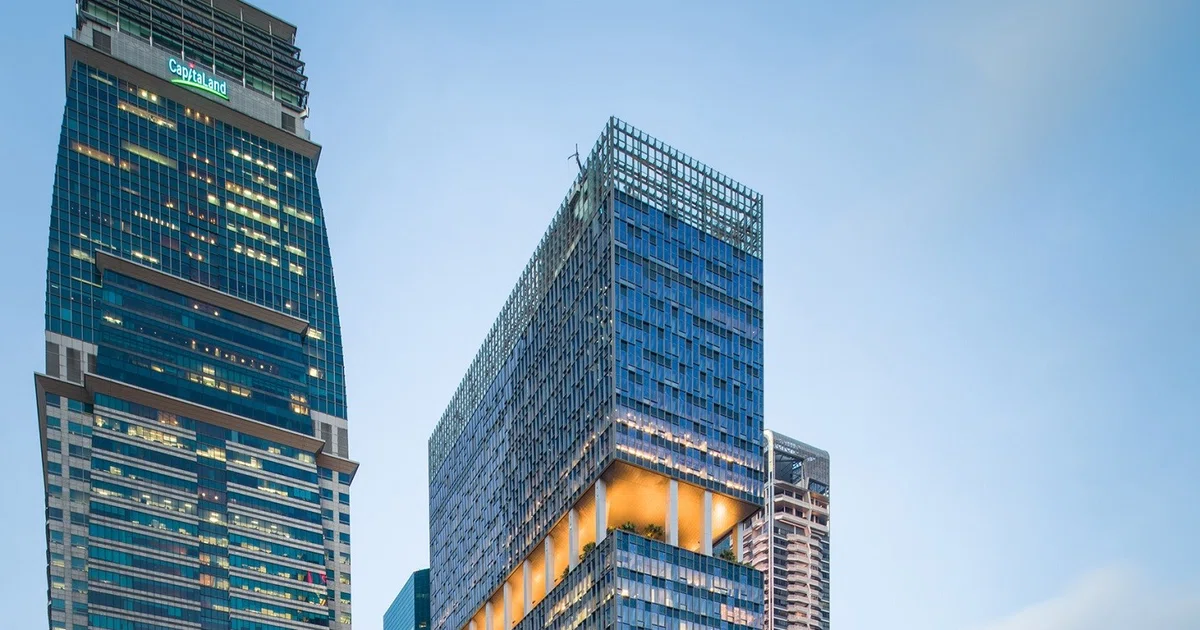
He is cautiously optimistic that CLI is out of the woods. Recent transactions undertaken by the group’s Reits include CapitaLand Ascendas Reit’s acquisition of a Tai Seng data centre and Science Park building for S$700.2 million, and CapitaLand Integrated Commercial Trust’s purchase of the remaining stake in CapitaSpring for S$1 billion.
“Between those, that is S$1.7 billion worth of deals and, as a fund manager, that means S$17 million worth of fees for us. So we know we can make up the transaction and performance fees in the second half,” said Tham.
Planned divestments in India and China will also make up some portfolio gains, he added.
The group’s real estate investment business logged revenue of S$519 million for H1, down 43 per cent on the year.
The decline in its top line was mainly due to the loss of contributions from divested assets in the US and China, partially offset by better performance from lodging on higher corporate leasing income, new leased properties, and higher revenue from lodging properties in Japan and Europe.
Ebitda of the real estate investment segment fell 37 per cent on the year to S$354 million.
Currently, the fee business makes up 60 per cent of CLI’s operating net profit, while the real estate investment segment accounts for 40 per cent. CLI hopes to increase the share of fee business to 70 per cent.
C-Reit listing
The listing of the group’s first China Reit by Q4 2025 is also expected to increase fee earnings. CLI announced in April that it would list a China Reit holding two major malls valued at 2.8 billion yuan (S$499 million) on the Shanghai Stock Exchange.
The two malls, CapitaMall SKY+ in Guangzhou and CapitaMall Yuhuating in Changsha, have a total gross floor area of 168,405 square metres, and an aggregate committed occupancy rate of 97 per cent.
Lee Chee Koon, group chief executive officer, said: “The pace of capital recycling in China has not been as fast as we would like in terms of reducing our balance sheet exposure. But with the formation of the C-Reit and setting up of the renminbi master fund, you should see increased activities happening.”
CLI plans to divest S$1 billion worth of assets across China, India and other countries.
Miguel Ko, the group’s chairman, said: “We are optimising our exposure in China through active asset repositioning and disciplined capital recycling, as part of our strategy to diversify and grow our global footprint and create sustainable long-term value for our investors and stakeholders.”
He added that the group is “on track” to achieve its target of S$200 billion funds under management (FUM) by FY2028. Its FUM is currently S$117 billion.
Cost of sales rose 7 per cent on the year, excluding the impact of the divestments and Clas’ deconsolidation.
For the period, administrative expenses fell to S$222 million from S$231 million, due to higher write-back of listing and restructuring expenses and lower impairment loss on trade receivables. These comprised mainly staff costs, depreciation, amortisation and other expenses.
No interim dividend was declared, unchanged from the previous year.
Separately, the group said it has appointed Kishore Moorjani as chief executive of alternatives, private funds. He will spearhead and expand CLI’s private credit and special opportunities businesses.
The counter closed 3.5 per cent or S$0.10 lower at S$2.72 on Thursday.