[BEIJING] China vowed to enhance technological self-reliance and grow the domestic market in the next five years, as it looks to both insulate the economy from foreign pressures and build a sustainable engine for growth.
The country will aim to “greatly increase” the capacity for self-reliance and strength in science and technology, according to a communique released on Thursday (Oct 23) after a four-day conclave of the Communist Party’s Central Committee. It will also seek to maintain manufacturing’s share in the economy at a “reasonable” level as part of efforts to build a modern industrial system.
Initial outlines of the five-year plan come on the eve of a new round of trade talks with the US, which has accused Beijing of using unfair practices to dominate advanced manufacturing sectors such as electric vehicles and exporting too much. They broadly signal a continued reliance on industrial production and exports to drive growth, a model that is likely to remain a source of geopolitical friction.
The readout reflected “a doubling down on a growth model with advanced manufacturing as its ‘backbone’”, said Duncan Wrigley, chief China economist at Pantheon Macroeconomics. “China will continue to rely on external demand to support growth, with domestic demand likely remaining soft.”
Goldman Sachs economists said comments on near-term economic management that signalled a determination to hit full-year targets “points to a slight upside risk” to their forecast for real GDP growth of 4.9 per cent this year.
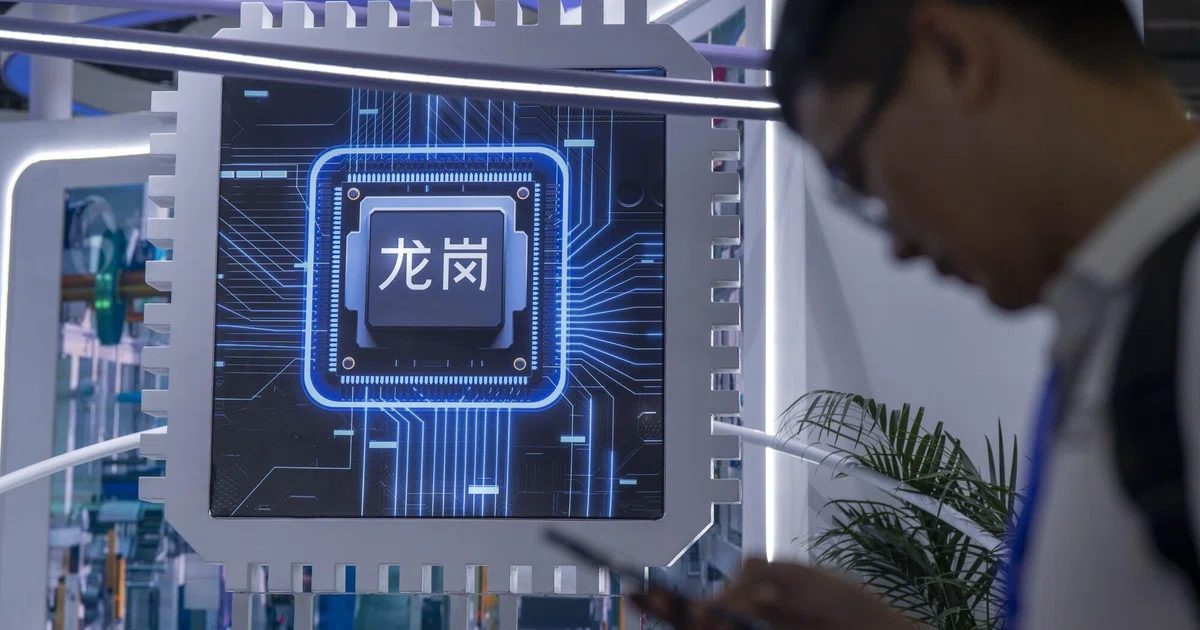
While a detailed blueprint will be released only in March, the document placed a heavy emphasis on high-quality development and the role of technology in building “new-quality productive forces”, which include advanced fields such as semiconductors and artificial intelligence. Efforts will be accelerated to turn the country into a powerhouse of aviation, transportation and the internet, as well as to promote the “fine and efficient” development of services.
BT in your inbox
Start and end each day with the latest news stories and analyses delivered straight to your inbox.
At the same time, the authorities reiterated a pledge to bolster domestic consumption and expand investment, vowing to “firmly eliminate clogs hindering the building of a unified national market”. Economists have long seen increasing demand at home as critical for rebalancing the economy, while the push to remove regional barriers may curb wasteful investment that fuels excess capacity and weighs down prices.
The development plan covering 2026 to 2030 is “essential” for advancing China’s modernisation, responding to changes in the external environment and “gaining a strategic edge”, said Zheng Shanjie, head of the National Development and Reform Commission (NDRC), according to the official Xinhua News Agency. The NDRC is China’s top economic-planning agency.
Benchmarks for Chinese shares in Hong Kong and on the mainland were both up about 0.5 per cent as at 10.28 am local time. Gains were more pronounced in tech-focused gauges, with the ChiNext Index rising as much as 2.2 per cent and the Star 50 Index rallying more than 3 per cent.
SEE ALSO


This intensified focus on technology builds on a strategy set in 2020, when the last five-year plan was announced after US President Donald Trump’s first term. That drive has only become more urgent, as Washington now seeks what it calls “a strategic decoupling” from China, targeting a broader range of sectors from semiconductors to pharmaceuticals and sanctioning a growing number of Chinese firms.
China’s leaders have adopted a “techno-fetishist supply-side growth model and basically, they have said all of our problems – productivity, income, growth, whatever – they will be solved by just investing massively in the technologies of the future”, Arthur Kroeber, founding partner at Gavekal Dragonomics, said ahead of the plenum on Trumponomics with host Stephanie Flanders.
“It’s a little bit like the people who are now going around saying AI is going to solve all known economic problems because of this productivity magic,” Kroeber said.
China is sticking to the manufacturing push despite rising tariffs from the US and pushback from other trading partners over a deluge of Chinese shipments. Net exports have made up an increasing share of the economy’s expansion in recent years, while consumption has diminished.
During a briefing on Friday on the plenum, China’s Commerce Minister Wang Wentao said that China should step up efforts to expand imports.
“We must better coordinate imports and exports and promote balanced development of the two,” Wang said.
The communique appeared to strike a milder tone on security issues compared to the 2020 version. The document invoked “security” 15 times, down from 22 mentions in the previous statement. And the phrase “insist on economic construction as the centre” reappeared after being notably absent from the last edition.
“Policymakers are still attempting an awkward balance between development and security,” said Christopher Beddor, deputy China research director at Gavekal Dragonomics. “Some of the language in this document suggests the needle might inch a bit more towards development.”
As trade headwinds grow, Chinese households would need to spend more to help absorb the country’s excess manufacturing capacity and break a record deflation streak. Economists and some foreign officials, including US Treasury Secretary Scott Bessent, have urged Beijing to use the plan to strengthen its social safety net and unleash household spending.
But the statement struck a cautious tone about more public spending on welfare, stating the government will “act within the means available” to strengthen basic programmes for people’s well-being, even as it pledged to increase efforts to improve livelihoods.
It promised to “promote the high-quality development of the real estate sector,” affirming officials’ efforts to stabilise the critical industry linked to the bulk of household wealth.
In a sign that policymakers recognise the importance of boosting household spending, the communique mentioned “consumption” four times, compared to just once in the 2020 statement.
However, “what really matters is how forcefully policymakers will execute these goals”, said Michelle Lam, Greater China economist at Societe Generale, citing raising pension payments as an example. She noted the measured tone about government investment in welfare, adding that may suggest fiscal constraints.
Economists broadly expect growth to decelerate in the coming years. The communique repeated a goal that implies an average annual growth target of about 4.5 per cent over the next decade, according to Larry Hu, chief China economist at Macquarie Group. China’s economy is on track to have grown at an average of 5.5 per cent annually during the five-year period ending in 2025, according to previous government estimates.
A central challenge in hitting that goal is China’s stubbornly weak household spending, which made up only about 40 per cent of GDP last year. That figure has barely budged from its 2019 level, before the pandemic stalled what had been a rising trend.
Hu and his colleague Yuxiao Zhang said that they expect China’s two-speed growth model to continue until exports fall again, when Beijing will turn to domestic demand to achieve its expansion goal.
“The timing of such a shift is determined less by the 5-Year Plan made in Beijing, and more by policies made in Washington,” they wrote in a note, referring to the potential impact of US trade curbs on China’s ability to sell overseas.
The plenum also appeared to reveal the breadth of Chinese President Xi Jinping’s anti-corruption campaign. Only 168 of the 205 central committee members were present at the meeting, a rare level of absence that the official readout did not explain. BLOOMBERG