


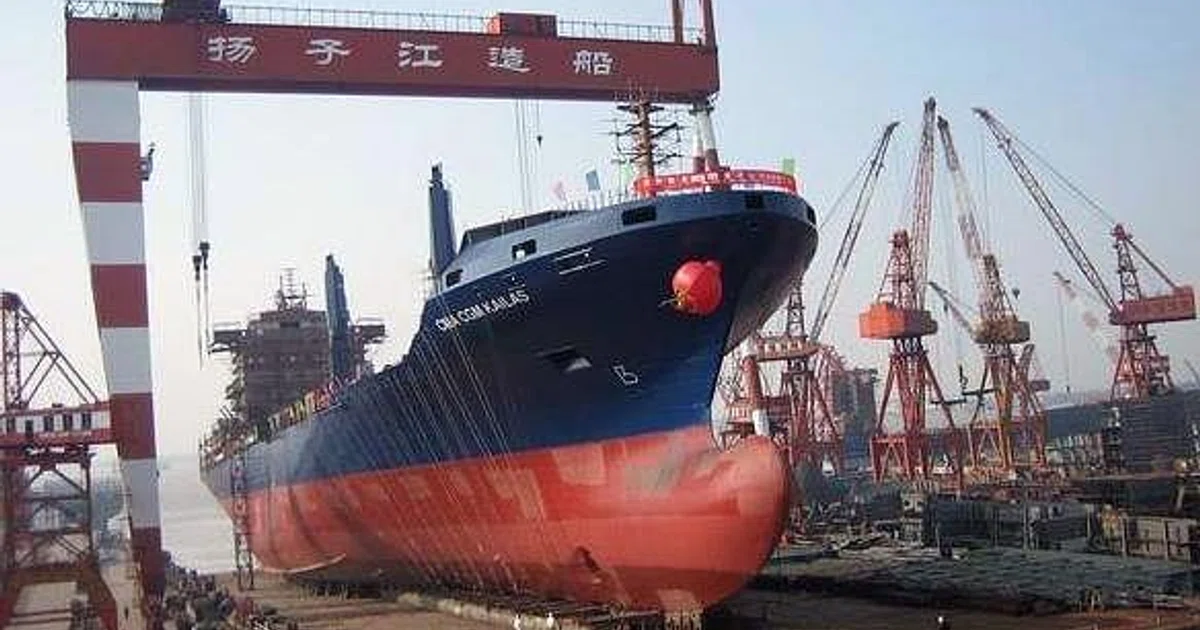
If approved by shareholders, the company can acquire up to 10% of its total issued shares
[SINGAPORE] Maritime financial solutions provider Yangzijiang (YZJ) Maritime will hold an extraordinary general meeting (EGM) on Mar 6 to seek shareholders’ approval on the proposed adoption of a share buyback mandate.
The in-person EGM will be held at Capital Tower, along Robinson Road, at 2.30pm, the company announced in a bourse listing on Wednesday (Feb 18).
First announced in January this year, the proposed share buyback will see the mainboard-listed company purchase up to 10 per cent of its total issued shares, if approved by shareholders. This amounts to about 348.9 million of its 3.5 billion issued shares at the last practicable date.
The shares can be acquired through on-market and off-market purchases.
For on-market purchases, the maximum price payable is 105 per cent of the average closing price. For off-market purchases, the maximum price is 120 per cent of the average closing price.
The “average closing price” refers to the average of the shares’ closing market prices over the five market days immediately preceding the date of the on-market purchase, or the date of the offer in the case of an off-market purchase.
Navigate Asia in
a new global order
Get the insights delivered to your inbox.
The aggregate consideration, should the company purchase the maximum buyback shares through an on-market purchase, this would amount to S$212.1 million, assuming each share is S$0.608.
In an off-market purchase, the aggregate consideration would amount to S$242.5 million, assuming each share is S$0.695.
Executive chairman and chief executive of YZJ Maritime, Ren Yuanlin, previously said that the company intends to focus on capital allocation, including through share buybacks, following its initial public offering last year.
Shares of YZJ Maritime closed flat at S$0.56 on Monday ahead of the Chinese New Year holiday.
Decoding Asia newsletter: your guide to navigating Asia in a new global order. Sign up here to get Decoding Asia newsletter. Delivered to your inbox. Free.
