The yen’s weakness has played a vital role in reviving inflation by prompting businesses to pass their higher input costs on to consumers
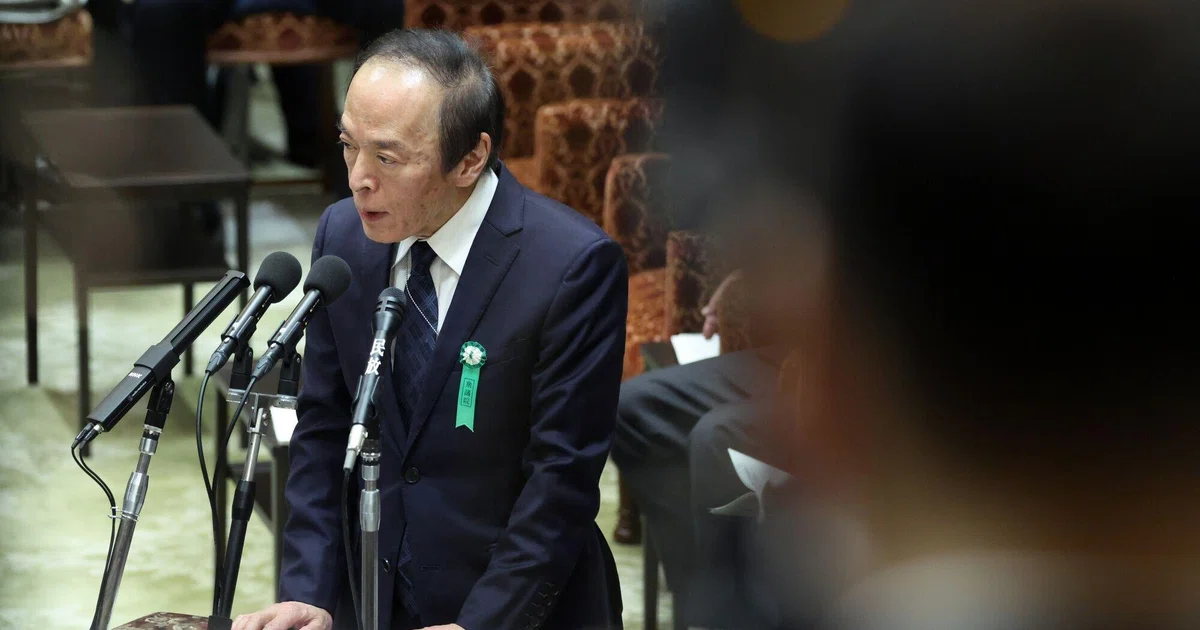
[TOKYO] Governor Kazuo Ueda is widely expected to raise the Bank of Japan’s (BOJ) key rate to the highest level in three decades on Friday (Dec 12). The path ahead becomes murkier as the government’s need for cheap financing clashes with a weakening yen that’s driving up import prices.
New Prime Minister Sanae Takaichi, who last year described the idea of a rate hike as “stupid”, is now contending with a cost-of-living squeeze that’s eroded support for her ruling party. Japan’s first female prime minister has refrained from criticising Ueda’s plans to dial back monetary easing since she took office in October as she prioritises the inflation fight.
Yet Takaichi also needs to keep bond yields from spiking as the government pulls together its budget for the next fiscal year, which is typically released in late December. Benchmark 10-year bond yields hit 1.97 per cent, the highest in 18 years, earlier this month, prompting Ueda last week to send a warning shot to say they are rising “somewhat fast”.
The last time the BOJ’s benchmark rate was around current levels, yields were around 3 per cent, a level that would increase debt servicing costs for a government with the highest public debt burden among developed nations and limit its spending options at a time it’s simultaneously trying to alleviate the cost-of-living squeeze and raise defence spending to counter an increasingly belligerent China.
“Out of consideration for the Takaichi administration’s preference for low interest rates, we think the pace of rate hikes will remain limited to roughly once every six months,” said Ryutaro Kono, chief Japan economist at BNP Paribas. Still, “the risk that the BOJ is forced to accelerate tightening depending on currency movements is not small.”
Ueda’s policy board is widely expected to raise its benchmark rates by a quarter percentage point to 0.75 per cent at the end of the two-day meeting on Friday. For the first time under governor Ueda’s watch, all 50 surveyed economists unanimously anticipate the move.
It’s likely to be the first unanimous rate decision of the nine-member board since July, after two members dissented with calls for a rate hike at the last two gatherings.
Overnight-indexed swaps now imply a better-than-90 per cent chance that the BOJ will raise its policy rate this week, roughly double the probability priced in at the end of October, Bloomberg-compiled data show. The contracts also fully price in another rate increase by October 2026.
The yen has strengthened more than 1 per cent from its late-November trough, when it briefly hit a 10-month low against the US dollar, as bets on a December hike gained momentum.
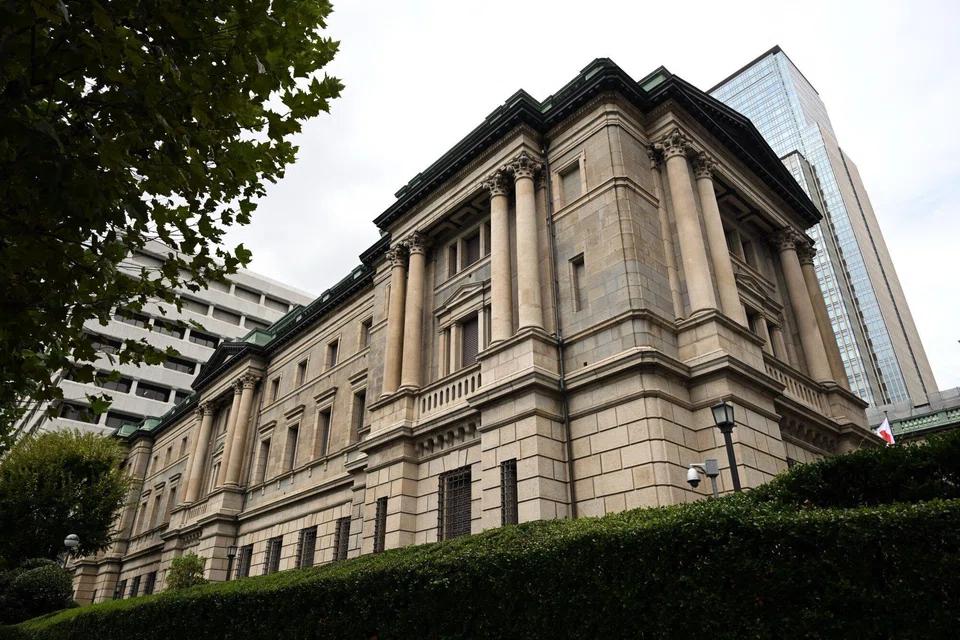
Japan’s 30-year yield climbed to a record earlier this month, rising faster than shorter-dated maturities amid concern that the nation’s finances will deteriorate and that the BOJ’s tightening pace will be too slow to keep inflation in check.
The move on Friday would crystallise the BOJ’s outlier status as the only major central bank hiking rates this year. It would also be the first time the BOJ and US Federal Reserve moved rates in the opposite direction in the same month since the Japanese central bank began its current meeting format in 1998.
“A lot happened this year, and more turbulence may still lie ahead,” said Shigeto Nagai, former head of the BOJ’s international department. “Ueda will be lucky if he can keep raising rates.”
As he’s sought to improve communications with investors, in line with his tactic in January, Ueda clearly flagged the rate hike earlier this month. That means the focus of BOJ watchers on Friday will be on any signals pointing to the pace of future rate increases.
In a sign that more rate hikes may loom, BOJ officials do not think the bank would be at the so-called neutral rate if borrowing costs are raised to 0.75 per cent, people familiar with the matter told Bloomberg last week. Some officials believe a 1 per cent level would still be below the neutral rate, they said.
Japan’s key inflation gauge has stayed at or above the BOJ’s 2 per cent target for more than three and a half years, the longest such streak since 1992. The yen’s weakness has played a vital role in reviving inflation by prompting businesses to pass their higher input costs on to consumers.
The yen is hovering around 155 against the dollar, close to the level that forced the Ministry of Finance to conduct four currency interventions last year. Finance chief Satsuki Katayama has recently said intervention is an option, a rare remark that signals growing frustration.
US Treasury Secretary Scott Bessent, who has visited Japan more than 50 times over his career in finance, has suggested the government should first let the BOJ raise rates before stepping into the market. In a rare intervention in August, Bessent said the BOJ is behind the curve in its handling of inflation.
The ruling Liberal Democratic Party has ceded ground in the last two national elections, losing its majorities in both chambers of parliament before Takaichi took the helm. The historic setback has led Takaichi to prioritise addressing inflation and to set aside her previous calls for an ongoing dovish monetary policy.
“Government communication with markets has now become more significant than Ueda’s guidance on the rate path,” said Naomi Muguruma, chief bond strategist at Mitsubishi UFJ Morgan Stanley Securities.
Even with Friday’s expected rate hike, the BOJ’s benchmark rate will remain the second lowest among major central banks after Switzerland.
Hideo Hayakawa, who has known Ueda for more than four decades, said he believes the governor probably would have hiked earlier this year again, if it were not for political developments at home and US President Donald Trump’s aggressive tariff salvos that threatened to undermine Japan’s export engines.
“This was the year of bad luck for the BOJ,” said Hayakawa, a former BOJ executive director and chief economist. “With Trump and Takaichi, the BOJ fell behind the curve.” BLOOMBERG
Decoding Asia newsletter: your guide to navigating Asia in a new global order. Sign up here to get Decoding Asia newsletter. Delivered to your inbox. Free.