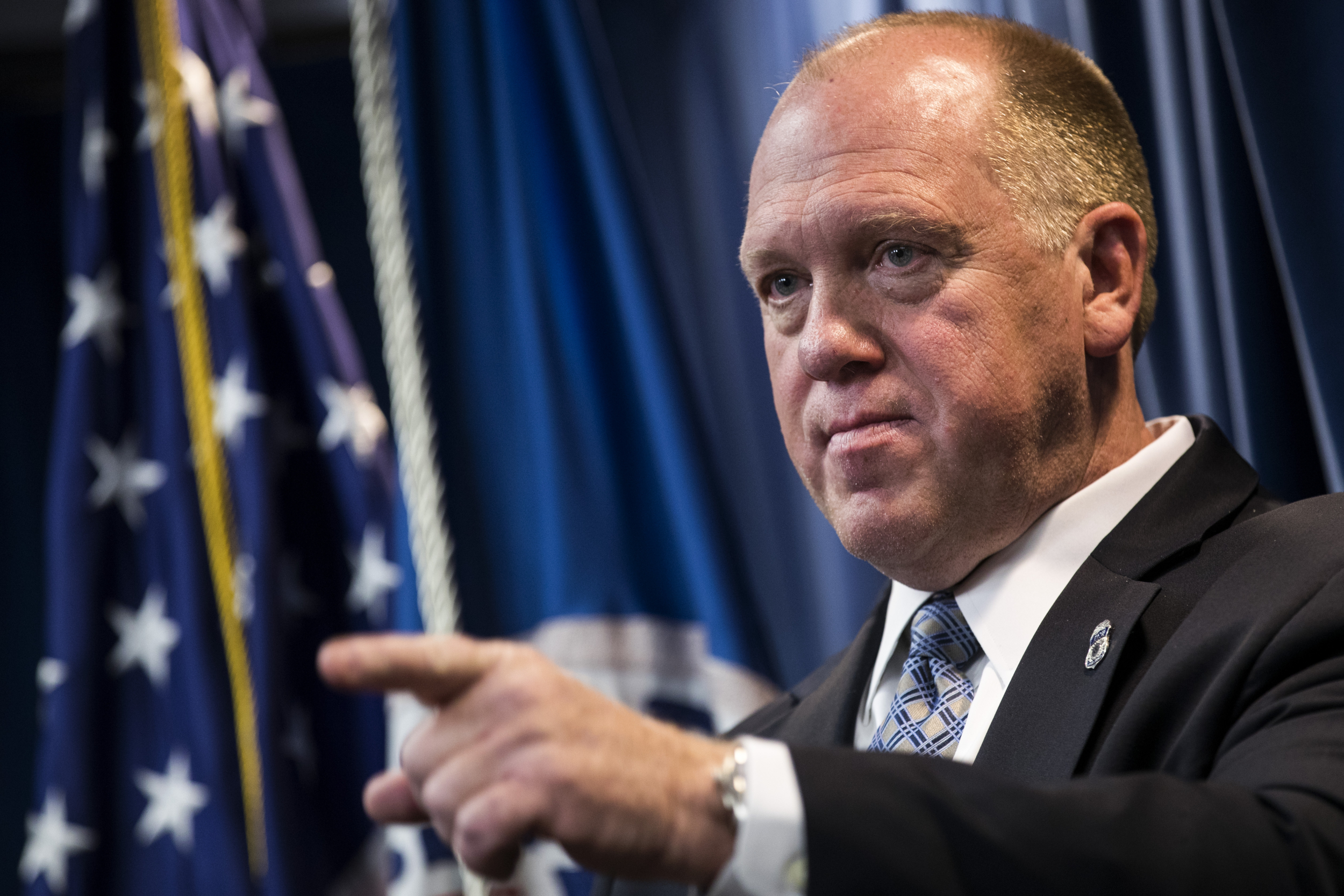
The controversial federal immigration enforcement effort in Minnesota known as Operation Metro Surge will be winding down, White House border security chief Tom Homan announced Thursday in Minneapolis. Homan said the decision follows consultations with President Donald Trump and changes in cooperation with state and local authorities.
Homan made the announcement at a news conference at the Bishop Henry Whipple Federal Building, saying that the large-scale deployment of U.S. Immigration and Customs Enforcement (ICE) officers to the Minneapolis–Saint Paul area and across Minnesota would conclude in stages over the coming week.
“Operation Metro Surge is ending,” Homan declared, “I have proposed, and President Trump has concurred, that this surge operation conclude. A significant drawdown has already been underway this week and will continue.” He said federal agents have already begun withdrawing from the state and that the operation will transition back to smaller, targeted enforcement consistent with standard ICE practices.
Homan in Minnesota: “I have proposed, and President Trump has concurred, that this surge operation conclude. A significant drawdown has already been underway this week and will continue.” pic.twitter.com/PfIaEfR3dt
— Aaron Rupar (@atrupar) February 12, 2026
Homan claimed that the operation is shutting down for two reasons. The first being the numerous “public safety threat” arrests, and the second being much lower need for federal officers to call in quick-response force teams to deal with “agitators.” He added, “I don’t want to see any more bloodshed.”
International Business Times has reached out to ICE and the White House for separate comments on the operation wind-down. In a statement to International Business Times, the White House said DHS “will continue enforce the laws of this country, including in Minneapolis and across the state of Minnesota. Homeland Security Investigators will remain surged to Minneapolis as we continue our widescale investigation to identify, arrest, and hold accountable bad actors who are defrauding the American people on a massive scale…”
The White House also forwarded an extensive list of “dangerous individuals” who have been arrested since DHS began operations in Minnesota. The operation, launched in December, had deployed thousands of federal officers to the state with a stated aim of identifying and removing undocumented immigrants who posed a threat to public safety. Homan and DHS have said the effort has led to more than 4,000 arrests and that Minnesota has become “less of a sanctuary state for criminals,” language he used to justify the push.
Under the drawdown plan, officers will be reassigned either back to their home duty stations or to other regions of the country where enforcement is needed. Homan said the tapers in personnel were underway as of Thursday and will continue “through the next week.”
The operation also drew national scrutiny after federal agents killed U.S. citizens Renée Good and Alex Pretti, fueling outrage and expanding calls for ICE oversight and reform. The killings prompted legal actions by Minnesota officials seeking to halt the deployment and led to widespread local and national protests earlier in the year.
Public hearings in Congress involving Minnesota officials this week have examined the operation’s impacts, with Minnesota Attorney General Keith Ellison testifying that the surge caused “real harm” to communities and demanding greater oversight into how the operations were carried out. In his opening statement, Ellison claimed that the “war on Minnesota” was “retribution” for the state’s “policies,” “values,” and “how we vote and it comes at a great cost.”
Minnesota Gov. Tim Walz said he was “cautiously optimistic” about the announcement but warned that the effects of the operation would take time to heal. “The long road to recovery starts now. The impact on our economy, our schools, and people’s lives won’t be reversed overnight. That work starts today,” Walz told reporters Thursday morning. He also proposed a $10 million relief package for small businesses affected by Metro Surge.
Minneapolis Mayor Jacob Frey welcomed the drawdown, writing in a statement on social media, “They thought they could break us, but a love for our neighbors and a resolve to endure can outlast an occupation. These patriots of Minneapolis are showing that it’s not just about resistance — standing with our neighbors is deeply American,” he said.
They thought they could break us, but a love for our neighbors and a resolve to endure can outlast an occupation. These patriots of Minneapolis are showing that it’s not just about resistance — standing with our neighbors is deeply American.
— Mayor Jacob Frey (@MayorFrey) February 12, 2026
Despite the federal drawdown announcement, some local law enforcement leaders, such as the Hennepin County sheriff, said their policies toward ICE will remain unchanged, reaffirming that they will not assist in civil immigration enforcement under current county protocols.