The autonomous buses will be piloted on services 400 and 191 for three years, starting in the second half of 2026
[SINGAPORE] The Land Transport Authority (LTA) on Thursday (Oct 2) awarded an S$8.1 million contract to pilot autonomous buses on public services to a consortium comprising BYD, MKX Technologies and Zhidao Network Technology.
The trial will begin in the second half of 2026 and run for three years. It was announced before recent efforts by MOT to test autonomous vehicles (AVs) in Punggol.
LTA will procure six autonomous buses from the consortium to start, which will have 16 seats each, and a safety operator will be on board at all times during the initial phase of the trial. Following this deployment, LTA said it may procure up to 14 additional autonomous buses and expand the pilot to more public bus services.
Chinese electric vehicle (EV) giant BYD will supply the electric buses for the trial, while MKX will lead local research and development and project management efforts. There are currently a total of 300 BYD electric buses operated and ordered by LTA.
MKX was incorporated in Singapore in April and has two shareholders. Its majority owner is X Star Technology, a Singapore unit of Chinese online vehicle financing company Yixin Group, while its minority owner is Japanese electric car-sharing company MK.X.
Beijing’s Zhidao Network Technology, which has deployed autonomous buses in Chinese cities such as Beijing, Shanghai and Tianjin, will provide the AV software and hardware kit such as Lidar (Light Detection and Ranging), Radar (Radio Detection and Ranging) and cameras, as well as the fleet management and remote operations systems.
BT in your inbox
Start and end each day with the latest news stories and analyses delivered straight to your inbox.
LTA in January called for a tender seeking proposals for the trial on the public routes of service 400 in Marina Bay and Shenton Way and service 191 in one-north. SBS Transit will continue to operate both services.
“The consortium awarded the contract has proven track records overseas in deploying autonomous bus services on public roads with mixed traffic and remote operations,” said LTA.
The tender closed on Jun 9 and drew four submissions in total. Apart from the BYD-linked consortium, the other three bidders were vehicle distributor Cycle & Carriage Automotive, WeRide Singapore and a consortium led by Malaysian bus operator Handal Indah – also known as Causeway Link.
SEE ALSO

The buses supplied by BYD will have fewer seats than the 19-seater BYD C6 minibus used on service 825 operated from Yio Chu Kang. They will be supported by a suite of AV solutions such as fleet management system and electric charging infrastructure for the pilot deployment.
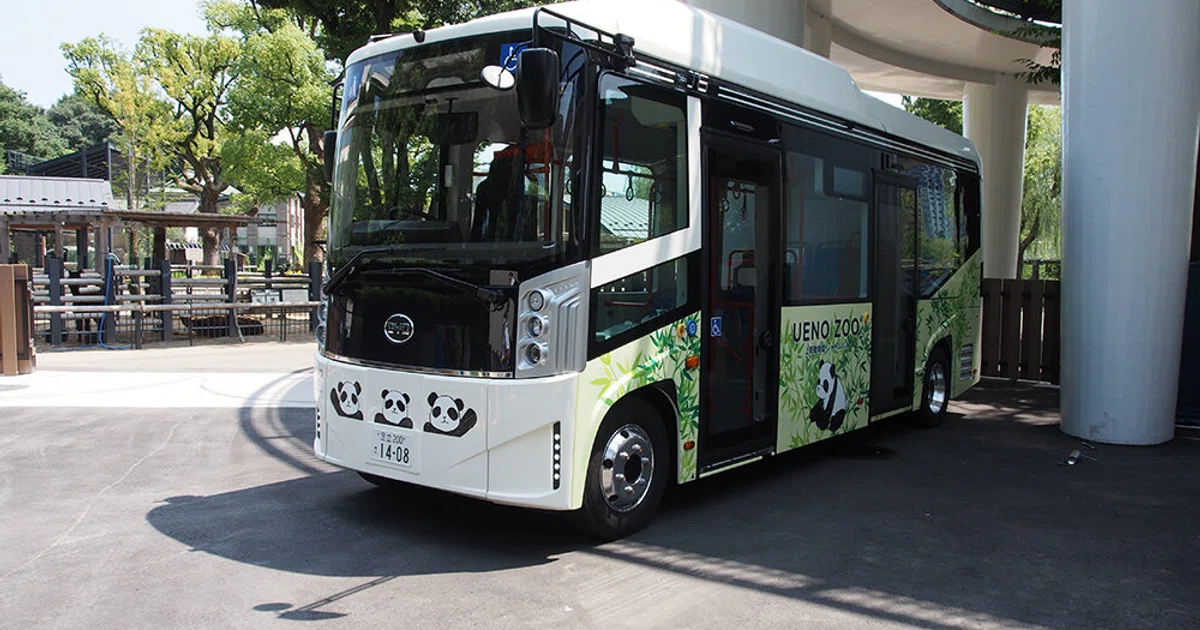
BYD’s J6 bus, similar to the one that could be used in this trial, is currently used at the Ueno Zoo in Tokyo and Hong Kong International Airport. The airport’s bus seats 14 passengers, has 10 cameras placed outside the vehicle from Beijing’s Uisee technology and uses GPS to track its position.
LTA said it will conduct “rigorous testing” to ensure that the autonomous buses meet safety and operating requirements, including its AV Milestone 1 test and assessment of the buses’ capabilities to perform safe boarding and alighting at all designated stops.
The Milestone 1 test is a closed-circuit test consisting of basic manoeuvres that ensure the AV can navigate safely on roads.
After the autonomous bus passes its first trial phase, it will progress to the next phase, where a remote operator will monitor the operation continuously in a remote control centre. A customer service officer will be deployed onboard to assist commuters in place of the safety operator.
The consortium will also work with the Singapore Bus Academy to train existing bus captains to take on new roles as safety operators, added LTA.
LTA, public transport operators and the National Transport Workers’ Union will collaborate to prepare training programmes for new roles in the AV industry such as safety operators, customer service officers, fleet managers and other technical functions.
“Through this pilot deployment, LTA aims to assess the technical feasibility of AV technology for public bus services, and gain insights into the operational aspects of running autonomous buses at both service and fleet levels,” it said.