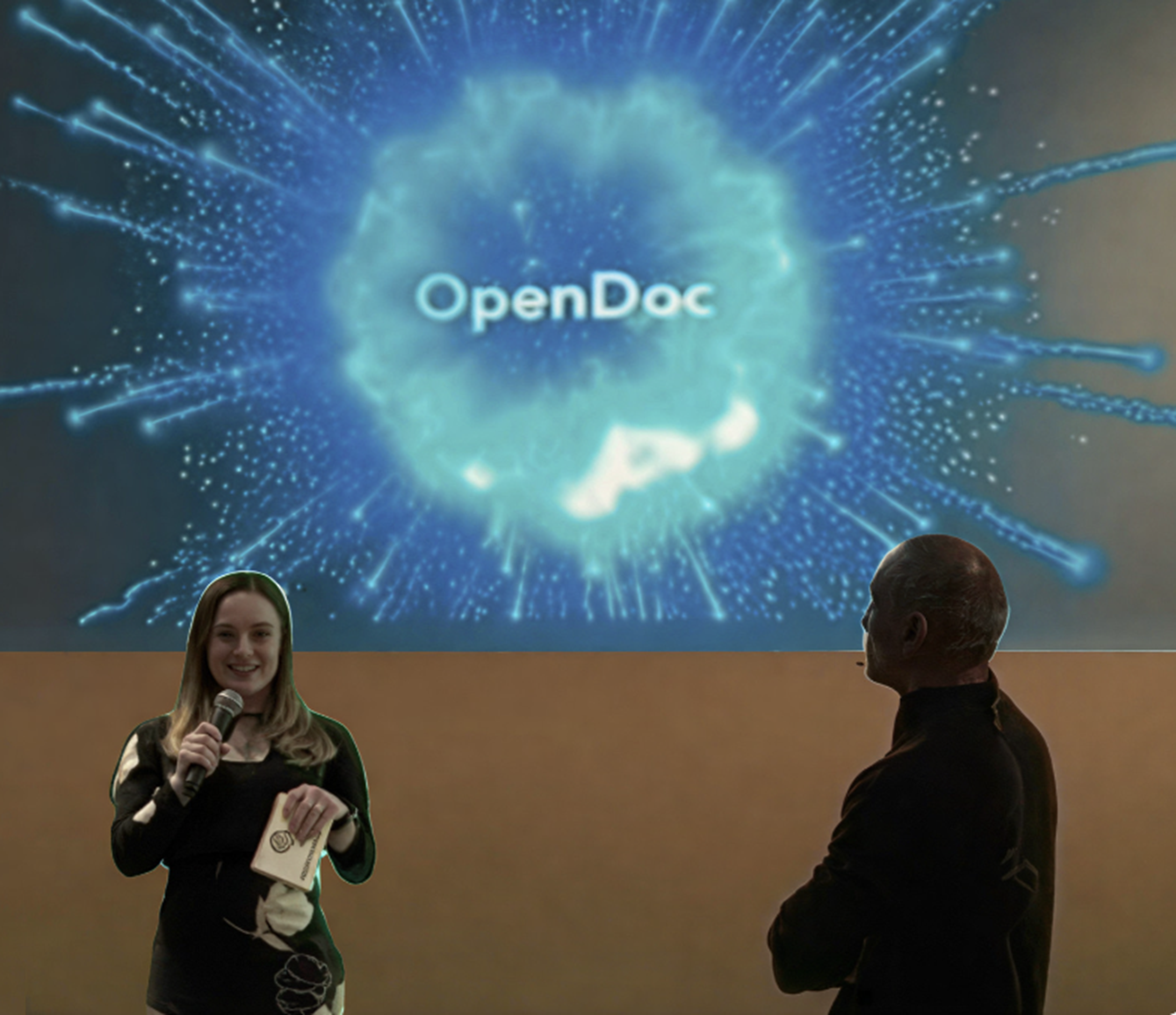
On 28 January 2026, beneath the stained-glass windows of London’s Garden Museum, something potentially radical may have just quietly happened in British healthcare.
At the Care Leaders Summit, Manchester-based Health Connect Global revealed OpenDoc, a free-to-access, AI-driven policy library.
The policy layer appears to be healthcare’s forgotten infrastructure. These days, AI in healthcare usually makes headlines for disease detection, chatbots, or robotic surgery. But the rules that govern everyday care, the policies, protocols, guidelines, and standard operating procedures, are still mostly PDFs on shared drives and dusty binders on office shelves.
In England, the regulatory watchdog, the Care Quality Commission (CQC), has flagged governance and leadership as weak spots in adult social care. In recent “State of Care” reports, the “Well-led” aspect (assessing leadership and governance) has performed worse than other areas. At the same time, research from the University of Oxford found that hundreds of care homes have been closed involuntarily by the regulator since 2011, often after sustained failures in standards and safety.
As founder and CEO of Health Connect Global, Dr. Devan Moodley puts it:
“We digitised the forms, but the rules that keep care safe are still trapped in dumb binders and PDFs.”
Health Connect’s flagship Care Intelligence System is an AI-powered operating system that connects clinical and operational data into a single intelligent layer. OpenDoc is the governance companion to that platform.
What Is OpenDoc?
Ruth Kyle (Co-founder), responsible for driving the OpenDoc expert community, explains it simply as:
“A policy and governance library for health and social care, which is continuously updated and expert-verified.”
But under the hood, it appears much closer to GitHub than to a traditional policy folder.
Crowdsourced Authorship
Policies are donated and authored by clinicians, managers, governance experts, ex-CQC inspectors, safeguarding specialists, and sector leaders. Kyle says:
“Policies have been contributed, covering safeguarding, medicines, clinical governance, incidents, workforce, digital, information governance, quality and risk.”
Every policy is reviewed by independent experts, with version history, rationale, and change logs fully transparent.
The Care Leaders Summit may have been a stress test of whether the sector is ready to co-own its governance layer. NHS leader Professor Craig Harris, Chief Commissioner of Lancashire and South Cumbria ICB, backed Health Connect’s broader approach, highlighting the need for shared standards that reduce variation and make assurance easier across complex provider landscapes.
High Standards as a Shared Asset
For investors and policymakers looking at the next wave of AI infrastructure, the value isn’t just in flashy interfaces; it’s in owning (or at least shaping) the standards layer that everything else rests on.
OpenDoc’s approach frames that standards layer as a public, shared asset rather than a proprietary advantage locked inside individual organisations or expensive consultancy packs.
Although OpenDoc’s deployment is currently tightly aligned to the English care context, its architecture is explicitly global. Moodley’s vision, shaped by his early work in resource-constrained environments in South Africa, is that the same engine could support emerging regulated markets, where policy frameworks are still being written and updated.
Human Rules, Machine Support
For all the AI sophistication under the surface, OpenDoc is strikingly human in tone. In Health Connect’s own materials and podcast series, expert contributors talk less about “regulatory optimisation” and more about making policies human, accessible, and genuinely useful under pressure.
Moodley and Kyle share a simple view:
“In order for care to truly benefit the technology needs to be shaped by the care workers doing the work.”
If International Business Times readers are looking for the next big AI story in healthcare, OpenDoc does not offer the usual imagery of robots and smart scanners. But in a sector where governance failures can close facilities, harm patients, and drain public funds, the idea of a crowdsourced AI for care might just be one of the most consequential experiments now underway.
The Double-Edged Sword
OpenDoc’s crowdsourced model echoes successes in platforms like GitHub, where collective input drives rapid iteration. But maintaining rigorous quality control is no small feat. Foremost among the challenges is contributor expertise variability. Unlike traditional policy development led by centralised bodies like the UK’s National Institute for Health and Care Excellence (NICE), crowdsourcing draws from a diverse pool of clinicians, managers, ex-regulators, and safeguarding experts, as Kyle describes. This breadth fosters innovation but introduces risks from uneven skills or biases.
Crowdsourced updates rely on proactive contributions, but low participation or “free-rider” dynamics, where users consume without contributing, could lag behind real-time needs.
Health Connect’s transparent version histories, independent expert reviews, and a focus on “human rules, machine support” are a strong start. But true adoption hinges on proving these mechanisms scale without compromising precision. If OpenDoc can navigate these pitfalls, it could set a blueprint for resilient, community-owned governance.
Professor Dhakshana Sivayoganathan, the CEO of UK Digital Health Care (UKDHC) said, “The challenge for OpenDoc will be to convince a risk-averse sector to try something new, even if the solution is a no-brainer. Policy management causes fear, drains energy, and is seen as a necessary evil because regulation keeps patients and staff safe. If OpenDoc does convince users, the next big challenge is to scale safely in a sector which often conforms quickly, once a service has proven itself to be useful. If it can, it could rapidly become part of the system’s core infrastructure.”
After the Museum lights go down…
The questions to be answered are deceptively simple:
Will regulators see and formally recognise the potential?
Do care providers contribute as well as consume?
And can an open-source governance layer really keep pace with the messy, political, human world of health and social care?
If the answer to even some of those questions is “yes,” the UK may be about to export a new kind of health infrastructure, not a device or an app, but a living, shared rulebook for safer, smarter care.