


[SINGAPORE] CapitaLand China Trust’s (CLCT) distribution per unit (DPU) for the six months ended Jun 30 fell 17.3 per cent to S$0.0249, from S$0.0301 in the year-ago period.
This was due to lower net property income (NPI) and a weaker renminbi against the Singapore dollar, which was partially offset by savings in finance costs.
Including contributions from CapitaMall Yuhuating, which were retained in view of its divestment to CapitaLand Commercial China Real Estate Investment Trust (CLCR) as a seed asset, DPU would have been S$0.0259, said the manager on Wednesday (Jul 30).
In actual Singapore dollar terms, NPI fell 9.7 per cent to S$106.5 million from S$117.9 million previously on lower revenue, which was partially offset by cost savings of 2.5 per cent year on year.
Revenue for H1 declined 7.9 per cent to S$159.2 million from S$173 million in actual Singapore dollar terms due to a drop in retail revenue and business park revenue.
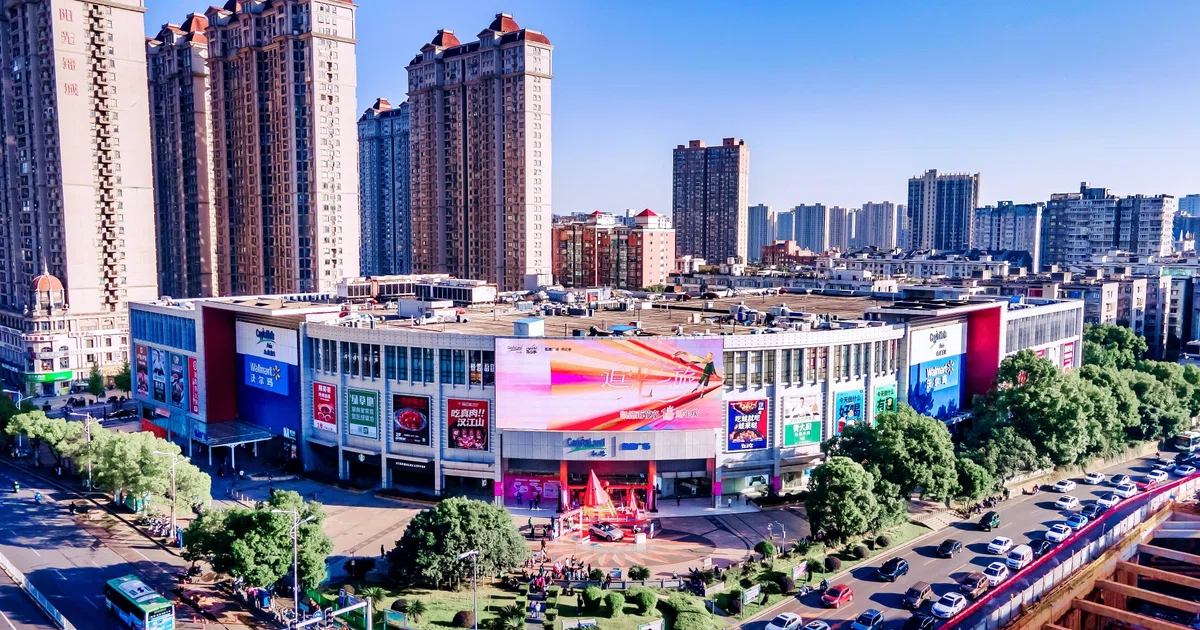
CLCT’s retail portfolio was largely affected by ongoing supermarket upgrades at three malls, while its business park portfolio recorded lower occupancy on the year. Retail revenue was down 3.3 per cent year on year. Occupancy for the retail portfolio stood at 96.9 per cent, down slightly from 97.8 per cent in the year-ago period.
BT in your inbox
Start and end each day with the latest news stories and analyses delivered straight to your inbox.
In H1, sales improved in the key trade sectors of toys and hobbies, jewellery and watches, information and technology, as well as food and beverage. Toys and hobbies recorded the largest increase at 46 per cent, due to the rising popularity of the collectibles toy market.
Chinese consumer behaviour has changed, with more favouring experiential retail experiences, noted Gerry Chan, chief executive officer of CLCT’s manager.
He added: “Certainly, they are no longer chasing luxury goods, but (purchases) like PopMart (collectibles) give them some excitement in their lives.”
CLCT’s business park revenue fell 10.1 per cent due largely to lower occupancy at Singapore-Hangzhou Science & Technology Park Phase II and Ascendas Innovation Towers.
In an earnings call on Wednesday, Chan said that although challenges remain in the business park sector, occupancy bounced back from a first-quarter low of 83.7 per cent to 86.9 per cent with more competitive pricing on rents.
The manager has backfilled serviced office tenant space in Singapore-Hangzhou Science & Technology Park Phase II, with take-up rising from 45 per cent as at end-March to 72 per cent as at the end of June.
CLCT’s logistics park portfolio recorded a 2 per cent year-on-year increase in revenue contributions, while occupancy rose to 96.6 per cent.
In actual Singapore dollar terms, the amount available for distribution to unitholders was down 11.9 per cent at S$45.2 million, from S$51.3 million in the year-ago period.
CLCT’s gearing remained stable at 42.1 per cent versus 42.6 per cent in the previous quarter, while the interest coverage ratio remained at 2.9 times.
Giving an update on operational performance, CLCT’s manager said it has started asset enhancement initiatives for three of its malls, converting low-yielding anchor spaces into higher-yielding areas with improved trade mix and circulation to unlock higher rental value.
While market pressures are expected to weaken rental prices and occupancy at CLCT’s business parks, government policies targeting the technology sector could be supportive. Meanwhile, there are ongoing efforts to explore portfolio reconstitution opportunities for its logistics sector.
Chan said the manager is observing the kinds of assets other property groups are injecting into their logistics China real estate investment trusts, which will serve as good data points for the prices and locations buyers are interested in.
He said: “By focusing our business parks and logistics parks on sectors aligned with the government’s priorities, we are well-positioned to capture policy-driven opportunities as China pursues high-quality growth.”
CLCT, together with CapitaLand Investment and CapitaLand Development, who are joint strategic investors in CLCR, aim for CLCR to be listed on the Shanghai Stock Exchange in the third or fourth quarter of 2025.
In his closing remarks, Chan said that trade tensions seemed to have eased, although the final deal between the US and China is expected to take some time.
Chinese regulators have announced a range of fiscal and monetary stimuli aimed at boosting domestic consumption and economic growth, and these measures have been implemented across multiple sectors, including the property and equity markets.
Chan added: “The stock market in China is quite buoyant, and it’s supported by domestic equity and support from the Chinese government. We hope and expect (the) wealth effect to filter through eventually.”
The payment date for CLCT’s H1 DPU is Sep 24, after the record date for income distribution on Aug 7.
Units of CLCT ended S$0.005 or 0.6 per cent lower on Wednesday at S$0.775.
