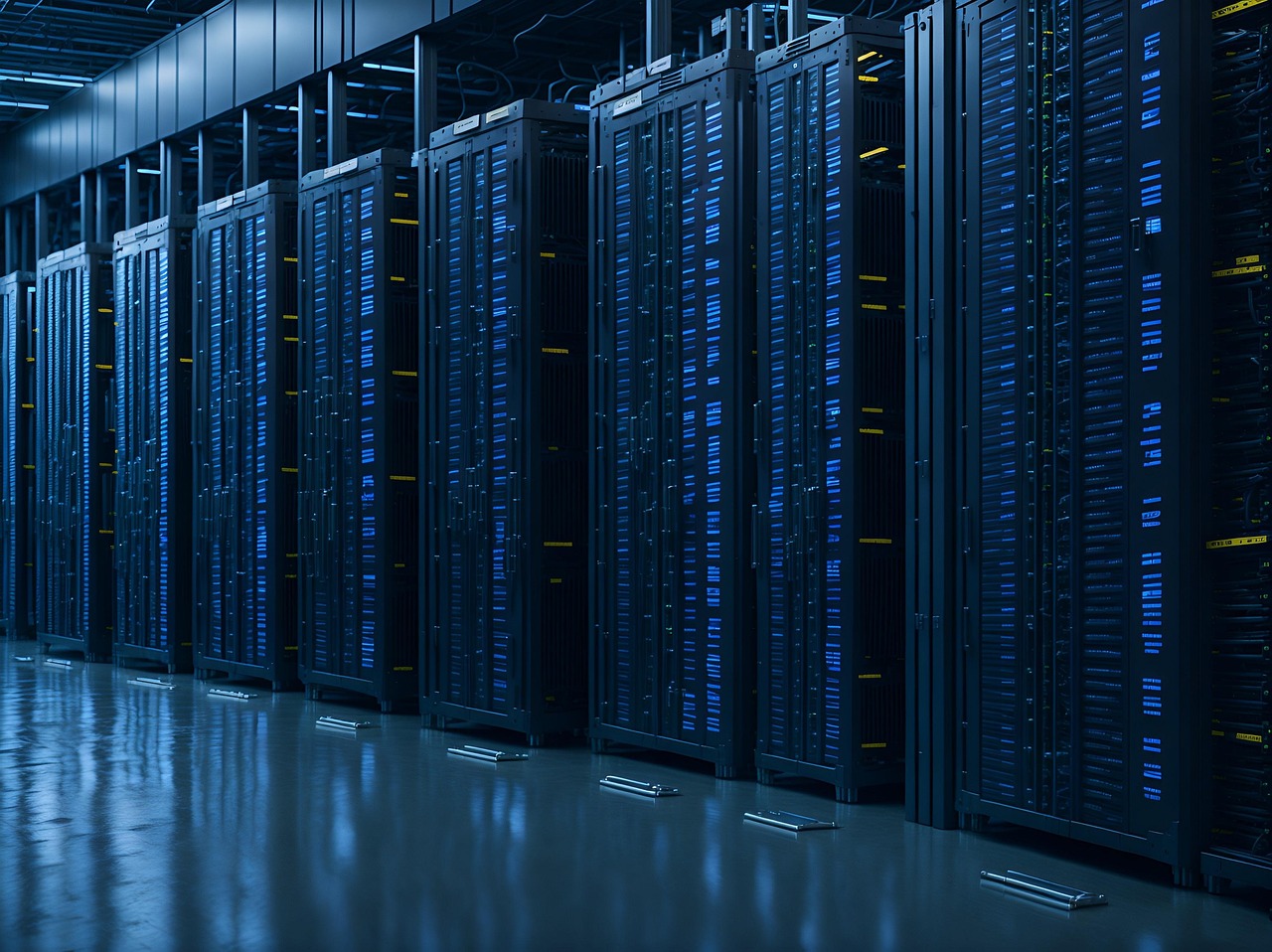
AI development is accelerating, but access to computing resources continues to constrain many of the teams building it. GPU pricing remains opaque, contracts vary widely by provider, and long-term planning is often shaped by short-term availability rather than strategy. For founders, operators, and investors alike, compute volatility has become a persistent challenge.
In response, Ms. Mai Trinh and Mr. Gabriel Ravacci, co-founder of Internet Backyard, set out to treat computing not as a line-item expense, but as an economic system that can be modeled, priced, and managed with greater consistency. Their platform, which they describe as a vertical FinOps layer for compute, brings together infrastructure billing, GPU marketplace access, and early frameworks for compute financing. The company raised $4.5 million at a $25 million valuation shortly after launch.
Identifying the Compute Bottleneck
Ms. Trinh’s experience sits at the intersection of AI operations and founder communities. During her time at Sanctuary AI, a Canadian robotics company, she saw firsthand how large-scale AI and robotics pipelines depend on infrastructure decisions that are often made with limited financial clarity.
“I’ve spent the last several years working across AI, infrastructure, and community,” Ms. Trinh says. “What stood out was how frequently compute decisions were driven by uncertainty rather than intention.”
Mr. Ravacci approached the problem from a complementary angle. His work focused on the financial and structural mechanics behind infrastructure, how pricing models, contracts, and incentives shape behavior across markets. As he observed AI teams scale, he saw the same pattern repeat: compute was one of the largest costs, yet one of the least transparent.
Together, they concluded that the issue was not a lack of compute, but a lack of systems that made compute legible as an economic input.
From Community Signals to Infrastructure Design
Ms. Trinh’s work building Red Thread Club, a Gen-Z founder and operator community, reinforced that conclusion. Through a series of in-person events and collaborations in Vancouver, she spoke with early-stage founders across AI, robotics, and software who described similar challenges. Many were building technically ambitious products while navigating fragmented billing systems and inconsistent access to GPUs.
The community produced tangible outcomes, including Y Combinator acceptances, venture fundraises, and new investment partnerships. More importantly, it surfaced recurring signals about how compute volatility affected product roadmaps and hiring decisions.
While those insights emerged from the technical side, Mr. Ravacci focused on translating them into infrastructure requirements. He worked with operators and data-center stakeholders to understand what standardization would need to look like in practice, not just for startups, but for providers, financiers, and long-term infrastructure partners as well.
Internet Backyard emerged at the intersection of those efforts.
Building a Vertical FinOps Layer for Compute
The platform combines data-center billing automation, GPU cloud access, and a marketplace model designed to support both buyers and sellers. It also lays the groundwork for future compute-linked financial instruments, though the company positions those as longer-term developments rather than immediate solutions.
For founders, the aim is predictability. For operators, efficiency. For the broader ecosystem, Ms. Trinh and Mr. Ravacci describe the goal as alignment, reducing friction caused by opaque pricing and inconsistent contracts.
Rather than competing with hyperscalers or data-center operators, Internet Backyard positions itself as a neutral layer. The idea is to standardize how compute is priced, provisioned, and financed without dictating outcomes or locking participants into proprietary systems.
Neutral Infrastructure in a Growing Market
Neutrality is a recurring theme in both founders’ thinking. Ms. Trinh notes that during conversations with data centers across regions, including Africa, Southeast Asia, and North America, similar billing and visibility issues surfaced regardless of geography.
Mr. Ravacci adds that opacity has broader consequences beyond individual companies. “When pricing and risk are unclear, capital allocation suffers,” he says, pointing to knock-on effects for investors, infrastructure planning, and long-term capacity development.
After consulting with more than 50 AI labs and robotics organizations, the team identified that a significant share of IT spend flows directly to hyperscalers. Their conclusion was not that this concentration is inherently problematic, but that the lack of standardized financial rails makes it difficult for new entrants and alternative providers to participate meaningfully.
Shared Principles, Distinct Roles
While their backgrounds differ, Ms. Trinh and Mr. Ravacci share a similar view on how infrastructure should be built. Systems shape behavior. Community accelerates adoption. Speed matters, but sequencing matters more.
Ms. Trinh emphasizes starting from real operator needs and building forward. Mr. Ravacci focuses on durability, ensuring that systems introduced early do not create constraints later. Together, those perspectives inform how Internet Backyard prioritizes product development and partnerships.
Looking Ahead
Ms. Trinh and Mr. Ravacci see Internet Backyard as part of a broader shift in how AI infrastructure is treated. As data-center capacity expands globally, they believe standardized financial and operational rails will become increasingly important.
In the longer term, they see implications beyond AI compute, including robotics fleet operations, alternative energy systems, and emerging computing architectures. The underlying idea remains consistent: infrastructure decisions made quietly today tend to shape which technologies succeed tomorrow.
For Ms. Trinh and Mr. Ravacci, Internet Backyard is less about visibility and more about function, building systems that reduce uncertainty and allow builders to focus on what they are trying to create.