[NEW YORK] China is guiding the yuan weaker at a carefully orchestrated pace, as the central bank seeks to blunt some of the economic impact of the trade war without destabilising financial markets.
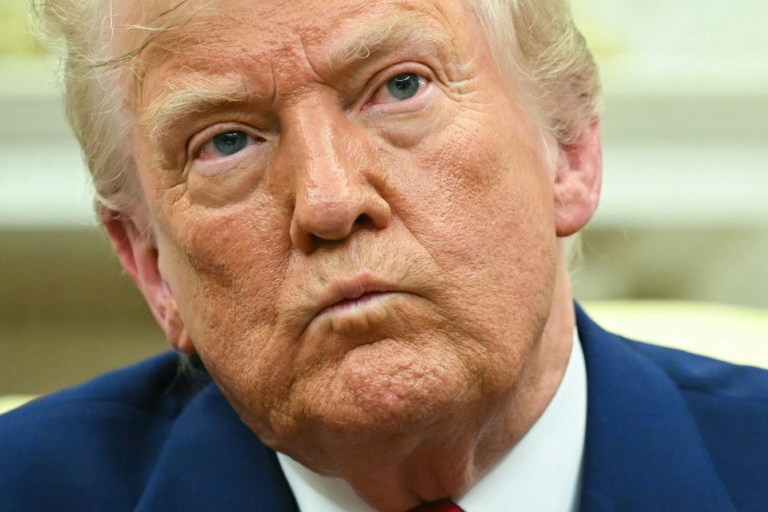
The People’s Bank of China (PBOC) weakened the yuan’s daily reference rate for a fifth straight session on Wednesday (Apr 9), but moderated the pace of its adjustment. The move came after the offshore yuan on Tuesday slumped to the weakest level since the creation of the market in 2010, as US President Donald Trump threatened to push ahead with a 104 per cent tariff on many Chinese goods.
In another sign that Beijing is seeking to control the pace of the yuan’s decline, state banks were seen selling US dollars in large amounts to prop up the yuan in the onshore market, according to traders. These measures helped the offshore yuan rebound by the most in a month.
“The authorities want to manage the pace of yuan weakness, and they don’t want a big disorderly move,” said Khoon Goh, head of Asia research at Australia & New Zealand Banking Group. “But the broad direction is for further upside in US dollar-yuan if there is no backdown on the US tariffs. I do not see a big one-off devaluation.”
The yuan is still under pressure on bets that the PBOC will keep allowing some currency weakness to counter the impact of US tariffs on its economy and expectations for more monetary easing to support slowing growth. So far, China has stopped short of delivering an aggressive devaluation that some had speculated, even as the trade standoff drags on with Beijing vowing to “fight to the end” against US tariffs.
On Tuesday, bearish yuan bets received a boost after the PBOC allowed the so-called fixing to breach 7.20 per US dollar, a level seen by investors as a soft red line for official intentions towards the managed currency since Trump’s election. The onshore yuan, which is confined to a 2 per cent trading range around the fixing and thus within tighter control of the PBOC, slid to the weakest level since September 2023 in response.
BT in your inbox
Start and end each day with the latest news stories and analyses delivered straight to your inbox.
However, sharp yuan weakness carries a high cost despite its potential support for exports. It can hurt confidence towards Chinese assets and further agonise the US, with Trump already accusing China of manipulating its currency to offset tariffs.
“Allowing the yuan to decline at the current pace will not be a viable strategy to offset the impact of tariffs, given how high the levies will be,” said Lynn Song, chief Greater China economist at ING Bank.
That’s because the scope of US tariffs on China have already exceeded those imposed during Trump’s first term. Still, yuan losses are milder, with the onshore unit down 3.7 per cent in the past six months, compared with the 11.5 per cent yuan depreciation during 2018 to 2019 that Morgan Stanley said offset two-thirds of the tariff hike back then.
Aside from using yuan to counter a growth slowdown, another long-term agenda may impact China’s currency policy. President Xi Jinping has a vision to raise the yuan’s status as a “powerful currency” that is stable enough to play an important role in global trade.
“If you have a negative growth shock, you’d want to have somewhat weaker exchange rate,” said Jens Nordvig, founder of Exante Data. Then from China’s perspective, they have aspirations to build a reserve currency and financial abilities. They want to keep things relatively stable if they can.”
There are signs China is seeking to control the pace of yuan’s declines.
State banks sold a large amount of US dollars at around 7.3460 level in onshore trading in the morning to support the yuan, according to traders who asked not to be identified. Investors were also unable to carry out some onshore yuan transactions that imply the currency is outside the weak end of its 2 per cent trading band against the US dollar, traders said.
The PBOC weakened its fixing by 0.04 per cent, half of the pace seen in the previous session, to 7.2066 on Wednesday. The gap between the fixing and market estimates widened to 1,321 pips, the most since February.
“Policymakers may prefer to maintain some degree of measured yuan stability,” Christopher Wong, strategist at OCBC, wrote in a note. “A softer magnitude of increase in the US dollar-yuan fix should calm sentiments for yuan, as well as provide a breather for Asian currencies.” BLOOMBERG