KEY POINTS
- The report says that between 1987 and 2021, at least 162 scientists who worked at Los Alamos returned to China
- Beijing offers financial incentives, appeals to patriotism and promises better prospects to attract scientists with overseas experience
- Chinese has made rapid advancements in military technology over the past decades
Several former Chinese scientists who worked in the U.S. Los Alamos National Laboratory went back to China to advance the country’s developments in hypersonic missile, drone technology and submarine programs, all of which present an array of global security risks today.
A recently released report by Washington DC-based security firm Strider Technologies exposes the vulnerabilities of open scientific collaboration, detailing how China, a state-sponsored talent program, sends promising scientists to work and train in the U.S. national laboratories and recruits leading scientists back to the country to advance its own military programs and agenda.
Although Beijing’s agenda of recruiting Chinese talent abroad is a well-known secret, the report is significant as it provides details of the scientists — known back home as the “Los Alamos Club” — and their work in key military and dual-use technologies, which has helped Beijing advance in critical areas such as hypersonics, deep-earth penetrating warheads, unmanned autonomous vehicles (UAV), jet engines and submarine noise reduction.
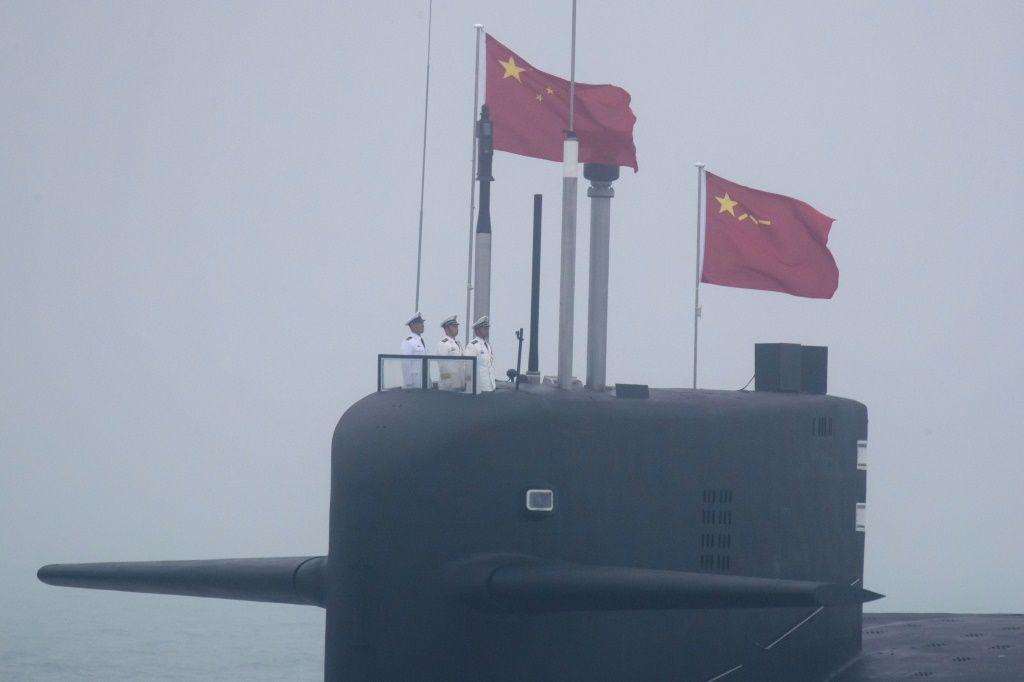
Over a decade back, Chinese submarines were notorious for being loud, which made them easier to track. However, a decade later, China has made rapid strides in the redesigning and reconfiguration of submarines, making them stealthier and quieter.
Similarly in hypersonic technology, China now claims that its advancement in hypersonic weapons technology breaks through any current generation anti-missile defense system. China has also made similar advancements in earth-penetrating warheads and UAV technology.
Interestingly, the Strider report finds scientists working on these very technology domains returned to work in Chinese research and technology institutions after working in the U.S.
The report says that between 1987 and 2021, at least 162 scientists who worked at Los Alamos returned to China to support a variety of domestic research and development (R&D) programs. Of these 162 scientists, 15 were permanent staff members at Los Alamos, 13 of whom were recruited into the Chinese government talent programs.
When working at Los Alamos, these scientists were obligated to Beijing to sponsor visiting scholars and postdoctoral researchers from China, with some of them even receiving the U.S. government’s funding for sensitive research.
The report says that at least one of these Chinese-native staff members held a U.S. Department of Energy (DOE) “Q Clearance,” required to access Top Secret, Restricted Data and National Security Information.
According to the report, a key figure of the so-called Los Alamos Club is Dr. Chen Shiyi, a world-renowned expert in fluid dynamics and turbulence and a major recruiter of Chinese talent from Los Alamos, where he worked in the 1990s before returning home as president of Southern University of Science and Technology (SUSTech).
Apart from making significant contributions to China’s hypersonics and aerodynamics programs, Dr. Chen also collaborated with other scientific agencies and the military to develop hypersonic glide vehicles, which helped the country bypass the U.S. in hypersonic technology.
Dr. Chen’s first recruit at SUSTech was Zhao Yusheng, who had spent 18 years at Los Alamos, during which he received several grant funding from the U.S. government totaling as much as $19.8 million for carrying out sensitive research on deep-earth penetrating warheads.
Interestingly, the report says that while at Los Alamos, Zhao sponsored another postdoctoral researcher from China, who eventually filed a national defense patent on similar technology upon his return to the country. The researcher is now affiliated with the Chinese Academy of Engineering Physics (CAEP), China’s premier nuclear weapons R&D and production facility.
Another member of the “Los Alamos Club,” according to the report, is Dr. He Guowei, an important figure in China’s efforts to develop quieter submarines, enabling them to evade detection. While at Los Alamos in the late 1990s, Dr. Guowei engaged extensively with Dr. Chen and, on his return to China, worked at the Chinese Academy of Sciences’ Institute of Mechanics (IMCAS), where his team developed computer models that help to quickly and accurately predict turbulence generated by a submarine.
The report also finds that in 2016, Dr. Chen recruited another scientist, Dr. Shan Xiaowen, to serve in SUSTech’s Department of Mechanics and Aerospace Engineering. Shan worked at Los Alamos from 1991 to 1998 and collaborated with Dr. Chen in the early ’90s.
In 2019, Dr. Shan became Head of the SUSTech Intelligent Aviation R&D Center, which focuses on unmanned aerial vehicle (UAV) technologies. Under Shan’s leadership, the center produced a prototype Vertical Take-Off and Landing (VTOL) UAV with both civil and military applications.
Although the findings of the report are not new, it suggests that the recruitment drive by Beijing may be widespread among several U.S. government-funded laboratories, academic research institutions and major centers of innovation.
An exclusive report in the South China Morning Post in 2017 provided similar details on how Chinese scientists who worked at Los Alamos returned to China to help the country’s weapons program.
The SCMP report said that Beijing had stepped up its efforts using financial incentives, appeals to patriotism, and the promise of better career prospects to attract scientists with overseas experience, particularly in space and defense research.
POOL / Mark Schiefelbein