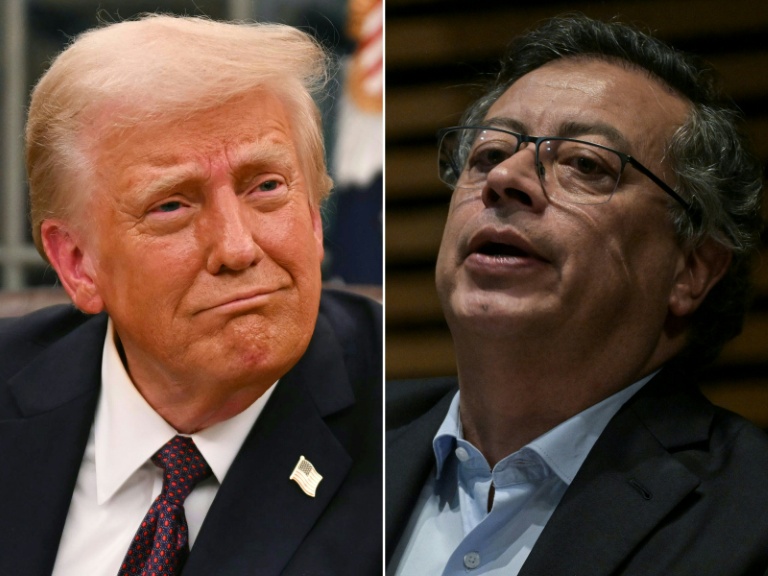
The Colombian government made several security-related concessions to the U.S. to defuse tensions between President Gustavo Petro and Donald Trump, according to a new report.
Spanish outlet El Pais detailed that the bombing of militia camps, fumigating coca camps with glyphosate and the extradition of drug lord Andres Felipe Marin were agreed with the U.S.
The outlet added that the administration also demanded that the Colombian government classify guerrilla groups like FARC and ELN as drug-trafficking organizations. However, that has not happened as of yet as it would make it more difficult for Petro to negotiate with them.
The group that negotiated the concessions was formed by business leaders, politicians and top Colombian officials. The concessions began taking place as of October, but relations between the leaders remained fraught.
They escalated further following the operation that captured Venezuelan authoritarian leader Nicolas Maduro. Back then, Trump called Colombia was governed by “a sick man who likes making cocaine and selling it to the United States.” Asked whether the United States could carry out an operation in Colombia, Trump replied: “Sounds good to me.”
Petro, in turn, said said that he would be willing to take up arms again if necessary to defend Colombia’s sovereignty.
However, tensions were defused after the two held a phone call this week. Petro posted an AI picture of a jaguar embracing a bald eagle to illustrate the amicable tone.
In a social media publication, Petro recalled that he wrote a letter to Trump that a “great American alliance can be established if South America’s clean energy potential is seized,” claiming that the region can satisfy the country’s entire grid with clean energy.
“That is what peace and global democracy means. Using Latin America for its oil can only lead to the destruction of international law and therefore barbarity and a third world war. World peace would be at real risk and we would move towards climatic collapse and the extinction of life,” Petro warned.
He then described the call in different interview, telling Spanish outlet El Pais that Trump’s message was “that they were preparing something now, planning it, a military operation.” He went on to say that the phone call led to a “freezing” of the threat, but he “could be wrong.”
In another interview with The New York Times following the call, Petro said he feared being captured like Venezuela’s authoritarian leader Nicolas Maduro in Venezuela and was set to begin sleeping in the presidential palace before the phone call.
Originally published on Latin Times