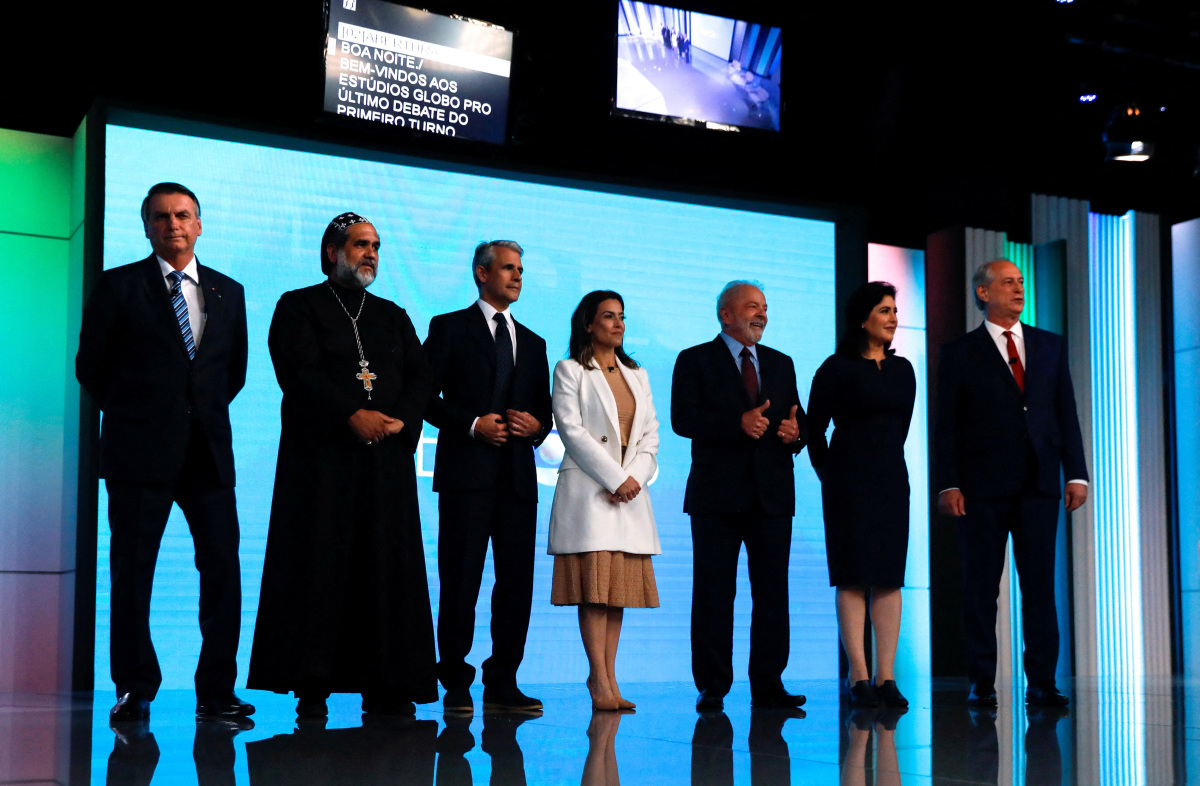
Brazil’s high-stakes presidential vote on Sunday did not yield a first-round winner with the necessary majority for an outright win, setting up a tense two-man race later this month featuring polar opposites Luiz Inacio Lula da Silva and Jair Bolsonaro.
HOW DOES BRAZIL’S ELECTION SYSTEM WORK?
Brazil, like many other Latin American countries, employs a two-round system for its presidential elections. In the first round, multiple candidates take part.
All the votes each candidate receives across the country are tallied. If no single candidate achieves more than 50% of the vote, the top two candidates head to a run-off on a later, scheduled date.
Winning outright in the first round is rare but not unprecedented – in the 1990s Fernando Henrique Cardoso won two presidential terms outright in first-round voting.
WHAT HAPPENED IN BRAZIL THIS ELECTION?
There were 11 candidates taking part on Sunday Oct. 2. Since none of the field bagged at least half of the vote, the top two – leftist former leader Lula and incumbent far-right president Bolsonaro – advance to a second-round election scheduled for Sunday Oct. 30.
With 99.7% of votes counted, Lula won 48.4% of votes versus 43.3% for Bolsonaro, according to vote totals released by the national electoral authority.
Bolsonaro did better than expected in opinion polls.
Two surveys released the day before the vote from some of Brazil’s most established polling firms showed Lula with a 14-point advantage over Bolsonaro but there was only a five-point gap between the two after Sunday’s vote.
WHAT HAPPENS TO THE REMAINING VOTES?
Both Lula and Bolsonaro are now likely to concentrate on how to sway those who voted for one of the other nine candidates who were eliminated in the first round.
Centrist Senator Simone Tebet came third in the election with 4%, and center-left candidate Ciro Gomes came in fourth with 3%.
Both said that they would announce in the next days who they will endorse for the run-off.
Overall, 8% of Sunday’s voters opted for candidates other than Lula or Bolsonaro, but since Lula only needs to pick up less than 2% to cobble together a majority, he enters the final stretch with an edge.
In a note, Eurasia Group sees this critical universe of voters breaking “slightly” toward Lula.
HOW DO PEOPLE VOTE IN BRAZIL?
The run-off vote will again be conducted via electronic voting machines, which have a long track record in Brazil but have come under unprecedented criticism from Bolsonaro, who has asserted without evidence that the machines are unreliable and could be manipulated to favor his leftist rival.
Voting is compulsory in Brazil for all those who are literate and aged between 18 and 70, with more than 156 million registered voters eligible. Some still choose not to vote, which incurs a minor fine.
WHAT HAS BEEN THE REACTION SO FAR?
Markets cheered the inconclusive first-round results on Sunday, betting that the closer-than-expected finish will push Lula to adopt more moderate positions in the home stretch campaign. Bolsonaro, meanwhile, is expected to continue to look to excite his hard-line base while appealing to investors with promises of reforms and privatizations.
In a note to investors, J.P. Morgan tipped Lula as the odds-on favorite but said eyes will be on Bolsonaro to see if he can keep momentum after his strong showing.
“The risks around political polarization, with non-acceptance of the ballot results must be monitored, but so far there have been no notable events to report,” it said.