While there is high enthusiasm for AI, more than half of South-east Asian companies remain in the piloting stage, says a new report
[SINGAPORE] The “Ikea moment” for artificial intelligence (AI) has arrived for individuals, but enterprises must move beyond the initial experimentation to integrate the technology.
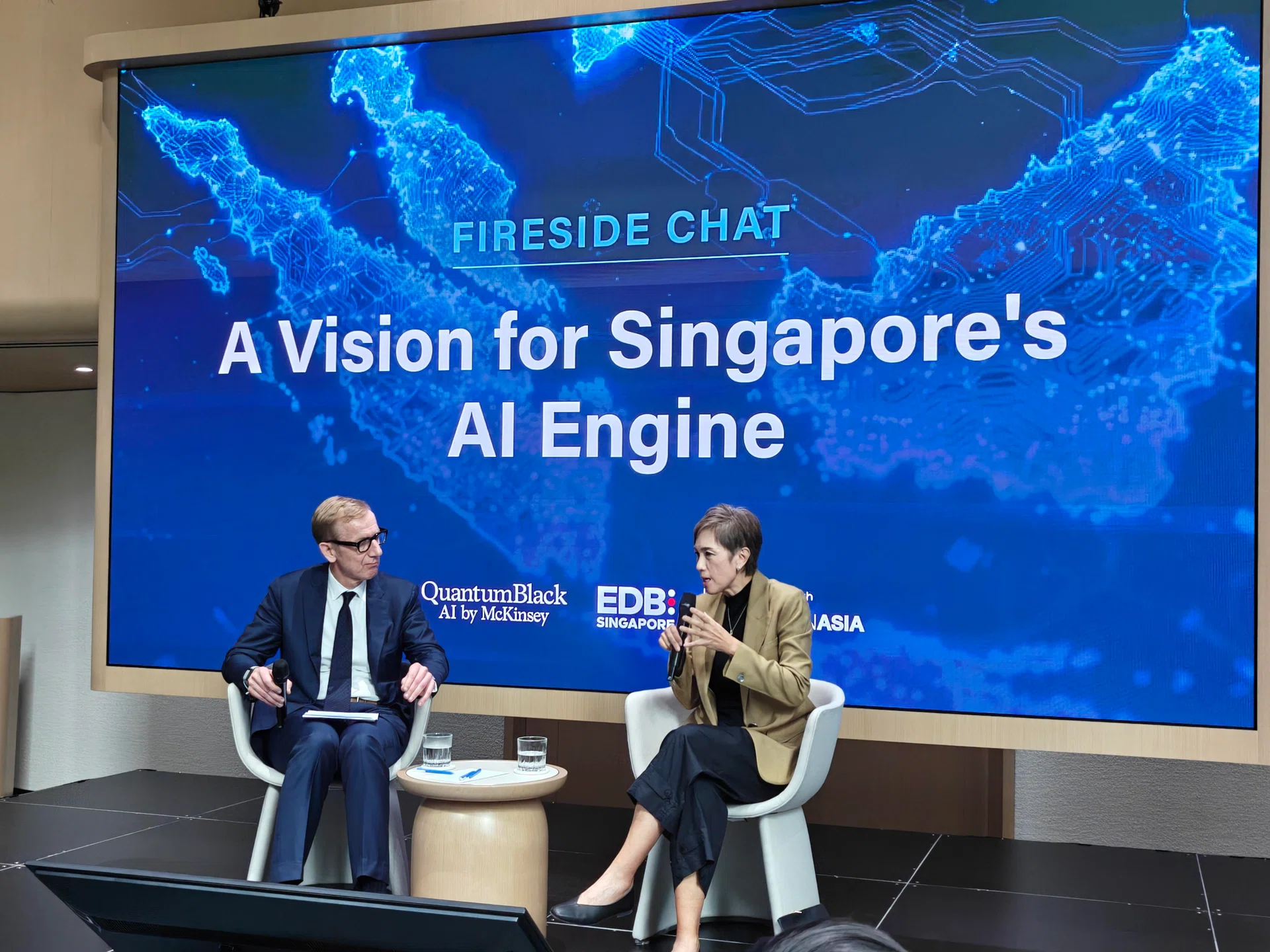
Speaking at the launch of the State of AI in Southeast Asia report on Wednesday (Feb 11), Minister for Digital Development and Information Josephine Teo likened the current wave of AI adoption among individuals to assembling flat-pack furniture.
Much like first-time shoppers at Ikea who realise they can assemble a product using simple instructions, users have gained confidence from using generative AI tools such as ChatGPT.
“You gain some confidence, and the next time you buy an object, you assemble it slightly better,” she said.
However, isolated experimentation with AI is insufficient for companies, she pointed out.
“It needs to reach the whole organisation,” she said.
Navigate Asia in
a new global order
Get the insights delivered to your inbox.
For the adoption of AI to grow beyond the early stages, the development of AI has to be rooted in governance, she argued. “If you want this technology to go further faster, you need to assure the people who are using it that it is safe.”
The report – a collaboration between McKinsey, the Economic Development Board and Tech in Asia – found that while the enthusiasm for AI is high, more than half of South-east Asian companies remain in the piloting and experimental stage.
In addition, the report noted that about 70 per cent of companies are seeing an impact of less than 5 per cent on their earnings before interest and taxes from their AI initiatives.
“Many organisations have adopted AI with a narrow use-case-centric approach that often neglects to assess AI’s true, meaningful business value,” the report said.
The talent gap
A shortage of talent remains the biggest barrier to adoption, the report found.
Teo said that the government’s approach to AI talent has “evolved” since the launch of the refreshed National AI Strategy. She noted that previously, efforts were focused on nurturing AI creators and practitioners developing sophisticated models.
“We also thought that at that point in time, if you didn’t have the broad base of AI users, you couldn’t support AI innovation in a very significant way,” she added. “The AI talent ecosystem is much richer than that.”
Drawing an analogy with an airport terminal, she said that the real value of the terminal does not lie solely in the architecture, but also in the teams behind the scenes – from horticulturalists to logistics experts and baggage handlers.
Similarly, the value of AI is not only with the developers and creators of AI models, but also with a workforce capable of applying the technology across different industries, she added.
Decoding Asia newsletter: your guide to navigating Asia in a new global order. Sign up here to get Decoding Asia newsletter. Delivered to your inbox. Free.