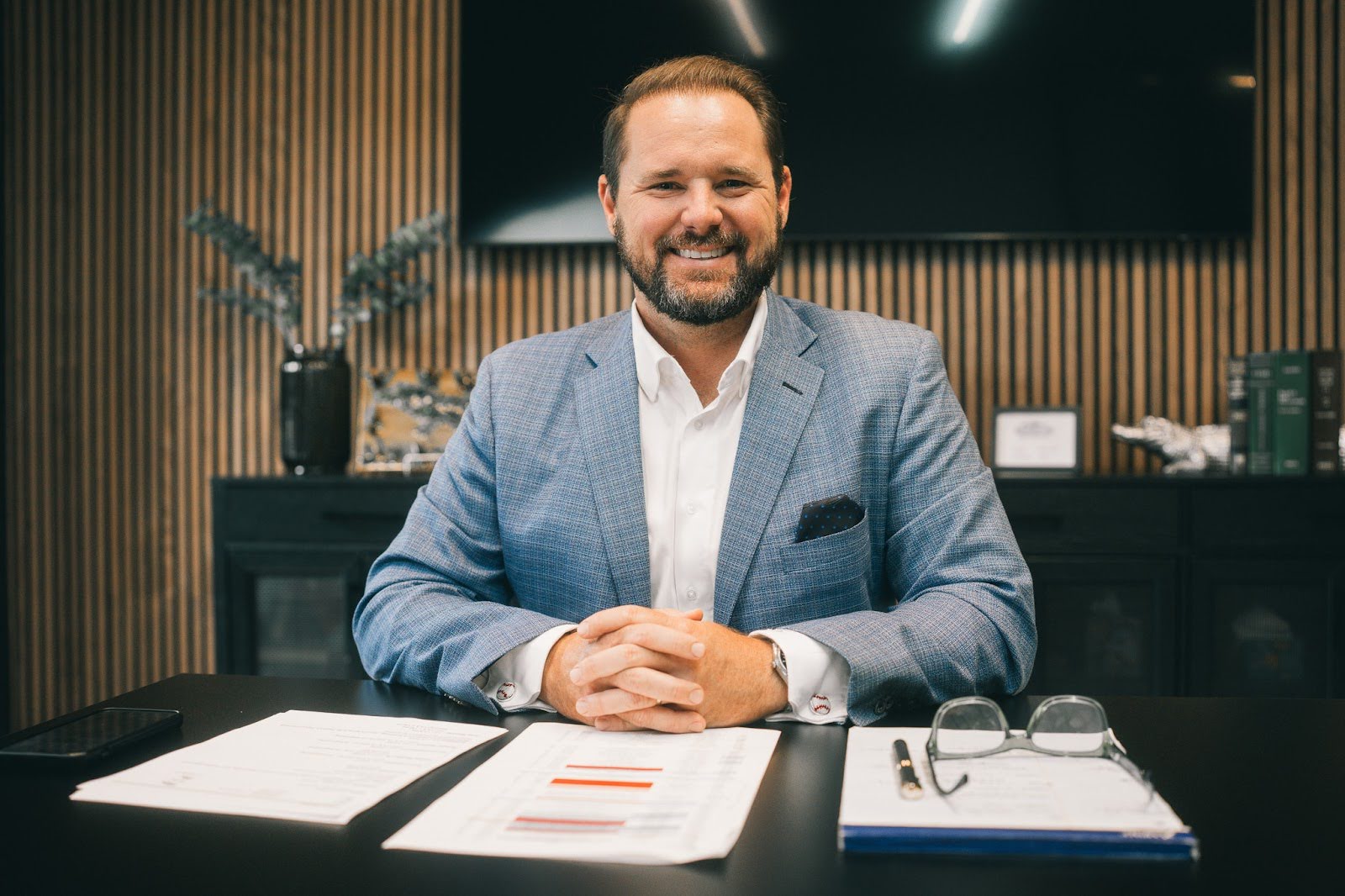
The career of Mel Blackwell, founder of Blackwell Media Group, did not begin with a defined roadmap toward leadership consulting. In many ways, it began with uncertainty. At 18, while peers followed conventional academic timelines, he chose a different pace, working while attending night school, delaying college until 21. That early stretch of hands-on exposure would later shape how he understood organizations as lived environments shaped by people, pressure, and performance.
Blackwell frames that period as foundational. “I didn’t realize it at the time, but I was being introduced to the idea that culture drives everything,” he says. Hearing a business leader speak passionately about belief, standards, and collective mission left a lasting imprint. “It was my first exposure to the idea that when the environment is right, performance follows,” he says.
Equally formative was his early discovery of the importance of a mentor and a model. Before formal leadership training, he sought proximity to individuals who demonstrated operational discipline and cultural clarity. According to him, finding someone willing to teach and someone whose behavior could be replicated became a blueprint for accelerated growth.
That hunger to learn translated quickly into results. “I was still a teenager in that collections role, but I ended up becoming one of the top performers in the company. There wasn’t a secret formula, I simply did exactly what my mentors told me to do,” he explains. “That experience taught me early on that when standards are clear, and you are willing to follow them, performance takes care of itself, regardless of age or experience.”
As his career advanced, those principles were tested in higher-stakes environments. One formative chapter came when he was tasked with helping expand a growing telecommunications operation into a new territory. The directive from leadership was precise: replicate the culture and operating standards of the original business without deviation.
“I was told to bring the company’s culture and way of working to life exactly as it existed,” Blackwell says. He approached the assignment with high standards and what he explains as an honor system toward the brand. According to Blackwell, the expansion became the most successful startup in that company’s history, reinforcing his belief that culture, when implemented intentionally, can scale.
“I made a lot of mistakes early on, hiring the wrong people, making leadership calls too quickly, and misjudging operational decisions. But those missteps were some of my greatest teachers,” he says. “They shaped how I lead today and how I help businesses course-correct without losing momentum.”
Yet what stayed with him was not the error itself, but the response to it. He explains working in environments where mistakes were treated as learning mechanisms rather than career-limiting events. “That culture gave me permission to grow,” he says. “I made plenty of mistakes, but I was never discouraged from learning through them.” Over time, this approach informed his own leadership philosophy, one centered on accountability paired with development.
Across 35 years, Blackwell’s work would span industries as varied as telecommunications, software, laboratory testing, environmental services, trade exhibitions, and forestry. He notes that the diversity reinforced a central realization: operational mechanics change, but cultural dynamics repeat. His role rarely involved redefining a company’s destination. Instead, he focused on the pathway to get there.
He frames his role as distinguishing between an organization’s destination and the path required to reach it. From his perspective, organizations typically understand their strategic ambitions. He notes that the friction lies in execution, alignment, communication, structure, and trust.
Over time, his reputation evolved into that of a corporate fixer, someone invited into organizations experiencing cultural fatigue, performance plateaus, or leadership misalignment. His method involved embedding within the business rather than advising from a distance, working shoulder-to-shoulder with teams to course-correct environments from within.
He explains many of these engagements as complex, high-risk environments where morale, clarity, and cohesion had eroded. Rather than quick fixes, his work focused on restoring unity of purpose and operational rhythm. After decades in these trenches, Blackwell began documenting lessons in a personal archive, notes capturing what worked, what failed, and what endured.
The file began in 2006 as a working repository of observations and frameworks gathered in real time, and has since evolved into his forthcoming book, Uncommon Sense: The Fight to Fix Your Workplace Culture in the Wild West of Business, set for release on March 3, 2026. The book represents both reflection and transition, from fixing cultures himself to teaching organizations how to do it independently. “It’s about capturing what I have learned so others can apply it without needing me in the room,” Blackwell says.
Today, through Blackwell Media Group, he continues working with organizations as a Leadership Breakthrough Consultant, focusing on cultural alignment, structural clarity, and leadership development. His messaging, however, extends beyond executives. He frequently emphasizes that culture is shaped by every level of an organization.
In that spirit, he indicates what he calls a shared pledge, also referred to as the Best PledgeTM, an understanding that leadership is not positional but behavioral. For Blackwell, culture transformation is less about heroic intervention and more about collective responsibility.
His career, shaped by mentorship, hard-earned lessons, and embedded leadership, now centers on one mission: turning decades of hands-on cultural transformation into practical frameworks teams can carry forward long after his direct involvement ends.