


- China’s global leadership approval reaches 36%, surpassing U.S. at 31%
- U.S. approval declines from 39% in 2024 to 31%
- Disapproval of U.S. leadership rises to record 48% globally
- Surveys across 130 countries show shifting global alignment toward China.
China recorded a 36% median global leadership approval rating in 2025. The United States registered 31%. That five-point gap, confirmed by Gallup in its annual World Poll, marks the first time in nearly 20 years that Beijing has outpaced Washington in the survey.
The shift is not primarily a story about China’s rise in global esteem. The data points more squarely at an American collapse. US approval fell from 39% in 2024 to 31% in 2025, an eight-point drop in a single year, while disapproval of American global leadership reached a record high of 48%. China’s own rating, at 36%, sits well below the kind of score that would normally signal genuine global enthusiasm. The gap opened because Washington’s number moved faster and further downward than Beijing’s moved up.
Gallup, the Washington, D.C.-based research and analytics firm, has tracked global leadership ratings annually since 2005 through its World Poll methodology, which surveys representative samples across more than 140 countries. The US held a meaningful net approval advantage over China as recently as 2023, before a shift in presidential administrations reset the trajectory.
Where America Lost the Most Ground: NATO Allies
The sharpest losses did not come from historically skeptical regions. They came from America’s closest partners. US approval ratings fell most dramatically among traditional North Atlantic Treaty Organization (NATO) allies, with Germany recording the steepest single-country decline at 39 percentage points, according to figures cited across multiple analyses of the Gallup data. That scale of movement within a formal military alliance is without precedent in the poll’s 20-year history, according to those same analyses.
When country-level preference data is aggregated, 54% of surveyed nations showed a clear preference for China’s global leadership over America’s, compared to only 16% preferring the United States, according to one analysis of the Gallup results. That figure has not been confirmed by a second independent source and should be treated with caution, but the directional trend aligns with the broader Gallup headline data.
The European deterioration carries particular strategic weight for American policymakers. NATO allies have historically served as force multipliers for US soft power, amplifying Washington’s diplomatic positions across multilateral institutions. A 39-point decline in German approval in a single survey cycle represents a structural shift in that dynamic, not a fluctuation.
Tariff Economics and the Trust Deficit
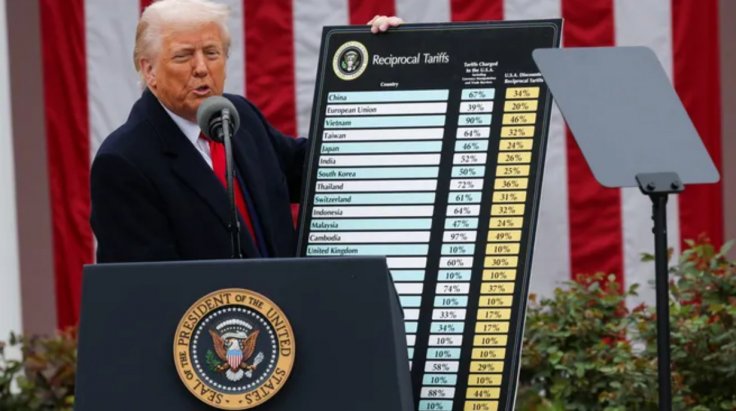
The economic context running alongside these polling numbers is difficult to separate from them. President Donald Trump’s tariff program, launched under what the administration branded “Liberation Day,” generated approximately $151 billion in revenue across five months. Those same tariffs now face legal challenges at the United States Supreme Court, with rulings potentially requiring up to $166 billion in refunds, a figure that would exceed the revenue collected.
X
The domestic economic picture has also darkened. Only 23% of Americans rated the US economy as excellent or good in early 2026, according to research published by the University of Massachusetts, representing an eight-point decline since July 2025. The combination of a contested tariff regime abroad and deteriorating consumer confidence at home fed the conditions that the Gallup data captured.
China’s economic positioning during the same period moved in the opposite direction. Beijing posted 5% gross domestic product (GDP) growth in 2025, contributing approximately 30% of global economic expansion while advanced economies broadly struggled, according to China Daily. That figure originates from Chinese state media and has not been independently confirmed by a second source. The International Monetary Fund (IMF) and World Bank have separately noted China’s outperformance relative to developed-economy peers, though specific comparable figures for 2025 were not available in the sourced material.
The Survey’s Blind Spot: 2026 Events Not Yet Counted
The Gallup data carries a structural limitation that is worth stating plainly. The 2025 World Poll captures sentiment formed before several consequential 2026 developments in US foreign policy. The United States has since withdrawn from 66 international organizations, and a military conflict involving Iran has emerged as a major foreign policy commitment. Neither event is reflected in the approval figures published in April 2026.
Time reported in April 2026 that the Iran military engagement had grown increasingly unpopular domestically, with Republican electoral strategists concerned about the conflict’s drag on 2026 midterm prospects and the White House actively seeking an exit strategy. If domestic opposition to the Iran conflict is already consolidating within the president’s own party, the international polling impact, which historically lags domestic opinion, has likely not yet been fully measured.
The methodological question cuts in both directions. Gallup’s World Poll is conducted in person or by phone across representative national samples, a design that produces reliable trend data in open democratic societies. In countries with restricted press freedom or where expressing disapproval of the United States carries social signaling value, the approval figures for both powers may not fully reflect underlying sentiment.

China‘s 36% rating, while higher than the US figure, is drawn partly from countries where independent verification of polling conditions is limited. Analysts studying soft power dynamics have flagged a broader shift from Western-centric evaluation frameworks toward development-focused criteria, a change that structurally advantages Beijing’s narrative in the Global South regardless of methodology.
What the 2025 Gallup data establishes, on its own terms, is a directional reality that American foreign policy planners cannot easily dismiss. The US began the Trump administration’s second term with a meaningful approval advantage over China at the global level. By the end of 2025, that advantage had reversed. The full accounting of 2026 foreign policy decisions, from multilateral withdrawals to armed conflict, will not appear in survey form until the next Gallup World Poll cycle.
