The relationship of Kurt Wedberg, founder of Sierra Mountaineering International, Inc., with mountains did not begin as a career decision, but as a constant presence throughout his upbringing.
“Growing up, my family spent a lot of time in California’s Sierra region, and weekends were often built around being in the mountains. We would go hiking, skiing, or traveling through the backcountry, and that environment just became a natural part of my life,” Wedberg says. “Those early experiences shaped not only my comfort in alpine settings but also my long-term curiosity about the natural world.”
That curiosity followed him into early adulthood, though his initial professional plans pointed elsewhere. While attending college, Wedberg worked at a mountaineering retail store, where he began teaching introductory courses in rock climbing, backpacking, and navigation. At the same time, he was pursuing a degree in political science and preparing for law school, with the goal of becoming an environmental attorney. According to him, the outdoor work was meant to be temporary, a way to stay connected to the mountains while exploring other possibilities.
A seasonal guiding position on Mount Rainier became a turning point. Leading climbs during the summer months, Wedberg spent extended time with clients whose professional lives contrasted sharply with his own. He recalls frequent conversations over meals after climbs, many of them with attorneys and executives reflecting candidly on their careers.
“The more I talked to those guys, the more I realized they didn’t want to do it,” he says. Those conversations unfolded alongside a growing demand for his guidance, as climbers began asking whether he could lead expeditions outside the United States, from Mexico’s volcanoes to Africa’s high peaks. Reflecting on how quickly that shift unfolded, he says, “Life is what happens while you’re making other plans.”
Sierra Mountaineering International, Inc. took shape as those requests became more frequent. Wedberg explains that the company’s earliest form was informal, built around his own availability as a guide. “Sierra Mountaineering International was basically another name for Kurt’s Guide Service in those early days,” he says. “I was freelancing, guiding trips myself, and figuring things out as I went. Over time, I realized I needed to formalize it to build something that could operate beyond just me.”
Today, Sierra Mountaineering International operates as a guiding organization offering mountaineering expeditions, skills courses, and alpine training programs. Its work spans seasonal environments, including avalanche education, ski touring, and snow travel instruction in winter, followed by rock climbing, peak ascents, and technical courses during the summer months. Wedberg notes that the seasonal nature of the work requires adaptability, both from guides and from the organization itself, as conditions and disciplines shift throughout the year.
Mount Whitney is also incorporated into the company’s training progression, with climbs used to prepare clients for the physical and logistical demands of international expeditions. Wedberg notes that the mountain provides a structured environment for testing endurance, pacing, and high-altitude readiness before traveling abroad.
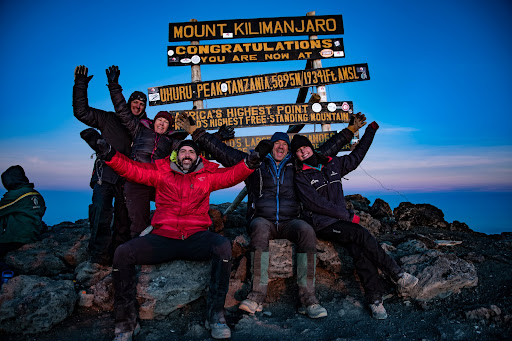
International expeditions have become another defining component of the company’s offerings. Wedberg has guided climbs across multiple continents, leading groups on trips that vary in duration, altitude, and technical complexity. Among the regularly offered expeditions are ascents of Kilimanjaro, climbs on Mexico’s volcanoes, and extended journeys in the Andes. From his perspective, each destination offers a distinct combination of physical challenge, landscape, and cultural experience, shaping how participants engage with the climb.
Kilimanjaro, in particular, reflects the company’s emphasis on preparation and education. While often viewed as more accessible than highly technical peaks, Wedberg stresses that readiness remains essential.
“You have to set people up for success from the very beginning,” he explains. “That means having honest conversations about their experience, fitness level, and expectations well before any travel plans are finalized. If someone isn’t quite ready, we map out steps, training, and smaller climbs so they can build toward a bigger expedition the right way.”
That advisory role, he says, is central to guiding. Wedberg frames the work as balancing instruction, logistics, and responsibility, ensuring participants understand both the opportunity and the demands of high-altitude environments. His own experience informs that approach.
Over the course of his career, he has climbed Mount Everest three times, first as a young climber and later as a guide. He has also completed ascents of the highest peak on each continent. Reflecting on Everest, he notes that the experience defies simple explanation. “You can describe the altitude and the effort, but nobody really knows what it’s like until they experience it,” he says.
Despite those accomplishments, Wedberg tends to frame his career around facilitating meaningful experiences for others rather than personal milestones. He remains actively involved in guiding while supporting a team of instructors who lead courses and expeditions worldwide.
Operating from Bishop, California, near the Eastern Sierra, Wedberg remains actively involved in guiding, instruction, and expedition leadership, while continuing to mentor the next generation of climbers and guides. “The mountains have given me a lifetime of perspective. My role now is to help others experience them safely and responsibly, and in a way that stays with them long after the climb is over,” Wedberg adds, “Through this, we build genuine connections; clients become great friends and relationships last as long as the memories that are made.”