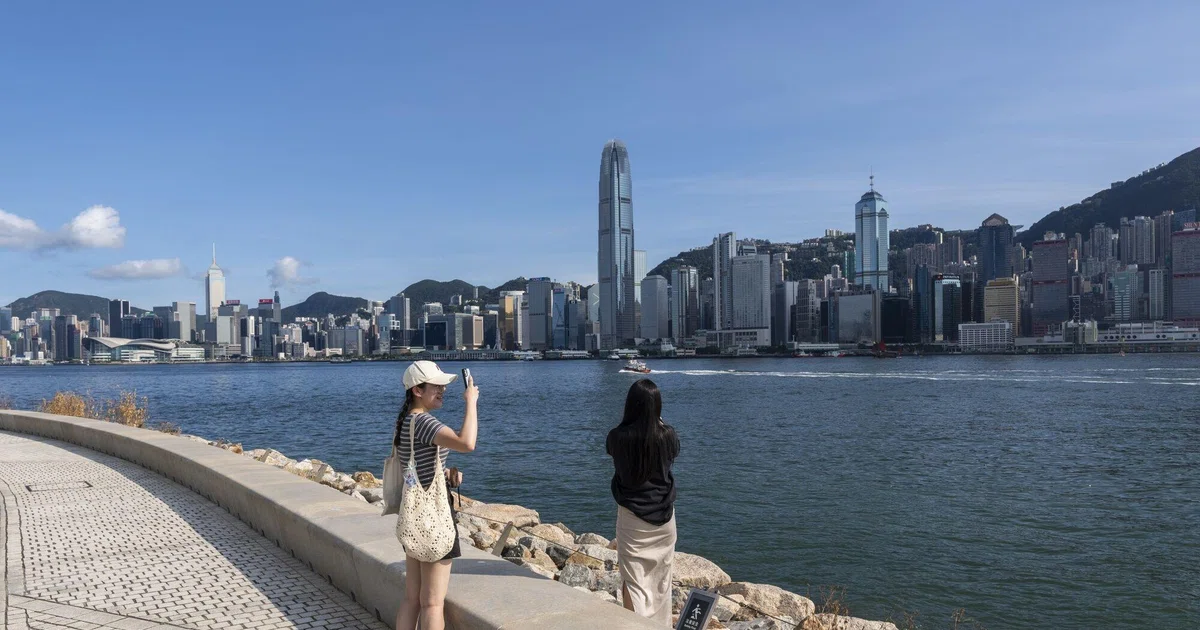
Strong net fund inflows of HK$7 trillion brought the city’s managed assets back up to HK$35.1 trillion at the end of 2024
[HONG KONG] The turnaround in Hong Kong’s financial stature has come swiftly, abruptly and decisively. The city’s thriving banking sector hints at the cause: Exceptionally high, double-digit growth in wealth and investment management income is driving profitability.
Industry leader HSBC’s latest quarterly results reflect this trend, with a 50 per cent increase in deposits and 70 per cent of that coming from non-residents. Meanwhile, the stock market mirrors this surge, with the benchmark Hang Seng Index gaining more than 30 per cent in the year to date.
This torrent of incoming capital feels somewhat like a financial tsunami. Amid a sluggish mainland Chinese economy, hot money has rushed back across the border, as it once did.
“Hong Kong’s wealth management industry has long been driven by money from mainland China,” said Peter Stein, chief executive officer of the Asia Securities Industry and Financial Markets Association (ASIFMA). “That has been the key driver of growth for quite some time.”
He noted that while it is not a recent phenomenon, there is “strong interest” from mainland Chinese investors looking for diversified returns.
“Hong Kong is the easiest and most convenient place for them to do that,” he added.
It’s not just Chinese capital pouring into Hong Kong, but also funds from Asia, the Middle East and elsewhere.
Newcomers to the city include Chicago-based Adams Street Partners, which manages US$65 billion, and Paris-based private-equity firm Ardian, with US$192 billion under management.
“You are seeing a lot of influence,” said Stein. “With geopolitical changes, people have been diversifying from the US too. You have wealth in other parts of the world that, instead of going to the US, is coming to Asia and China, in particular through Hong Kong.”
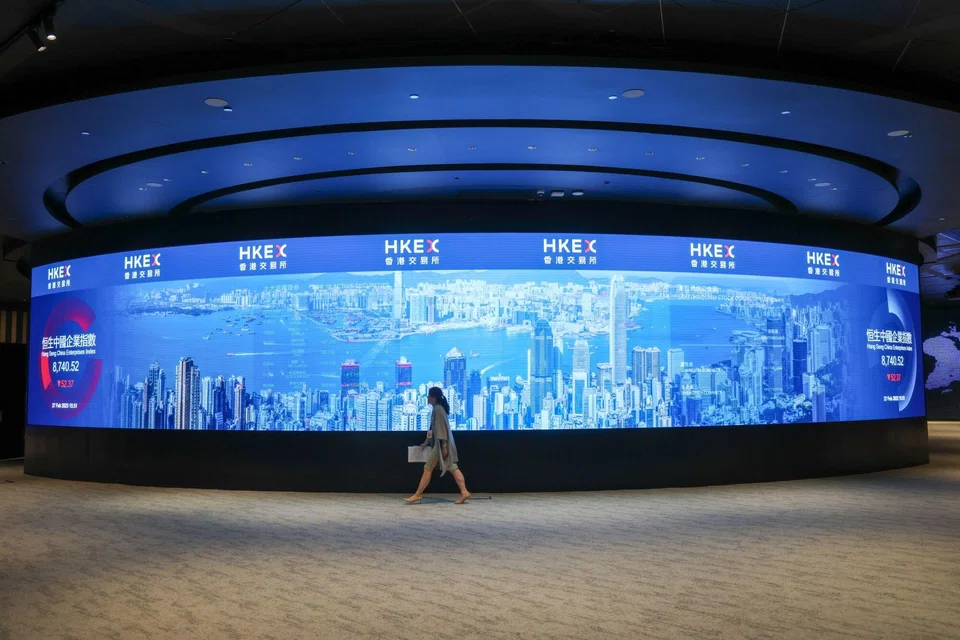
Strong net fund inflows of HK$7 trillion (S$1.2 trillion) – more than treble the 2021 level – brought Hong Kong’s managed assets back up to HK$35.1 trillion at the end of 2024, slightly below 2021’s peak of HK$35.6 trillion.
This expanded the total pool of assets under management by 20 per cent, according to an annual survey by the Securities and Futures Commission (SFC).
The survey indicated that, over the past five years, investors outside Hong Kong contributed more than 60 per cent of total assets. Of this total, 59 per cent was reinvested outside mainland China and Hong Kong.
But the distinction is not so clear-cut, analysts say.
Mainland-invested firms, as defined by the SFC, could manage assets sourced from investors all over the world, whereas investors based outside the mainland could include assets originally held offshore by mainland investors.
The largest segment – asset management and fund advisory, accounting for 62 per cent of total assets – saw tidal inflows of US$321 billion in 2024, over six times more than in 2023.
The second-largest sector – private banking and private wealth management – grew by 15 per cent year on year to HK$10.4 trillion, or 30 per cent of the total, with over one-third coming from net inflows.
Stein cited a global wealth report by Boston Consulting Group (BCG), released in June this year, which ranks Hong Kong alongside Switzerland in attracting private wealth.
The report confirmed Hong Kong as a “booking centre” with the world’s “largest absolute growth” in 2024, drawing US$231 billion in new cross-border wealth.
BCG projects that Switzerland, Hong Kong and Singapore will capture nearly two-thirds of all new cross-border wealth through 2029, led by Hong Kong’s anticipated US$951 billion over the next five years.
Currently, Hong Kong is the world’s second-largest offshore wealth management centre, managing about US$2.7 trillion in cross-border assets, just behind Switzerland.
Offshore wealth in the city is projected to reach US$3.6 trillion by 2029, based on a 6.3 per cent annual growth rate, said BCG managing director and partner David Chan.
“Together with Singapore, Hong Kong is expected to capture a growing share of regional wealth as investors seek more sophisticated product access and portfolio diversification under robust legal and regulatory frameworks,” said Chan in an e-mail.
“While flows from mainland China have supported both centres, Hong Kong continues to benefit from its deep financial linkages with the mainland, including through the cross-boundary Wealth Management Connect scheme and the Stock Connect programme,” he added.
Rising demand from Chinese households
Rowena Chang, a financial analyst at Fitch Ratings, said 2023 marked a turning point, when net inflows from mainland China resumed, driven by rising demand from Chinese households seeking to diversify from real estate into capital market products.
“Mainland investors have also increasingly sought higher yields in offshore assets, using Hong Kong as a gateway to diversify currency exposure and access broader investment opportunities,” she added.
Local banks are reaping the rewards. Matt Choi, a banking analyst at Fitch, said cross-border wealth management has become a key driver of earnings diversification for Hong Kong banks, including HSBC Hong Kong.
This momentum is supported by strong offshore investment demand from mainland China, expanded cross-border investment schemes, and interest rate differentials between the mainland and Hong Kong. Choi noted that many “non-resident” new-to-bank customers cited by banks are mainland Chinese.
Analysts said that, if China’s private wealth potential is fully unlocked, Hong Kong’s private banking and wealth management sector stand to benefit most.
Mainland China remains the largest source of private wealth managed in Hong Kong, accounting for 57 per cent of the total today and projected to rise to 63 per cent over the next five years, according to a joint report by the Hong Kong-based Private Wealth Management Association and KPMG China.
The report highlighted next-generation and mass affluent clients – with assets of US$5 million to US$10 million – as significant growth opportunities.
This growth comes despite a strict quota implemented in February 2024 limiting mainland private wealth investment in Hong Kong to three million yuan (S$550,000) per individual under the Wealth Management Connect scheme.
“The quota is really insufficient because it falls below the Hong Kong professional investor standard, which is the minimum size to open a (high-net-worth) private banking account for many of the private banks,” said Vivien Khoo, CEO and managing director of the Private Wealth Management Association.
“But we are hopeful because they seem optimistic that they also want to figure out ways to make it bigger if they can.”
Khoo underscored Hong Kong’s efforts to build “a corridor” linking the city to South-east Asia, the Middle East and Western jurisdictions.
A new one-stop service center for family offices, set up by the government under Hong Kong’s investment promotion agency investHK, has logged in over 2,200 applications under a new capital investment scheme, which it estimates could draw in HK$70 billion if all are approved.
BCG’s Chan said: “Hong Kong should strengthen its role as the region’s capital-formation hub. Its strengths in wealth intermediation, innovation financing, and market infrastructure position it well to capture Asia’s next phase of private-capital and new-economy growth.”
For the near term, Stein of ASIFMA sounded a note of caution.
“The macro environment is so incredibly unpredictable right now. If there were problems in one market, that could end up impacting Hong Kong, even if factors in Hong Kong are positive,” he said.
Decoding Asia newsletter: your guide to navigating Asia in a new global order. Sign up here to get Decoding Asia newsletter. Delivered to your inbox. Free.