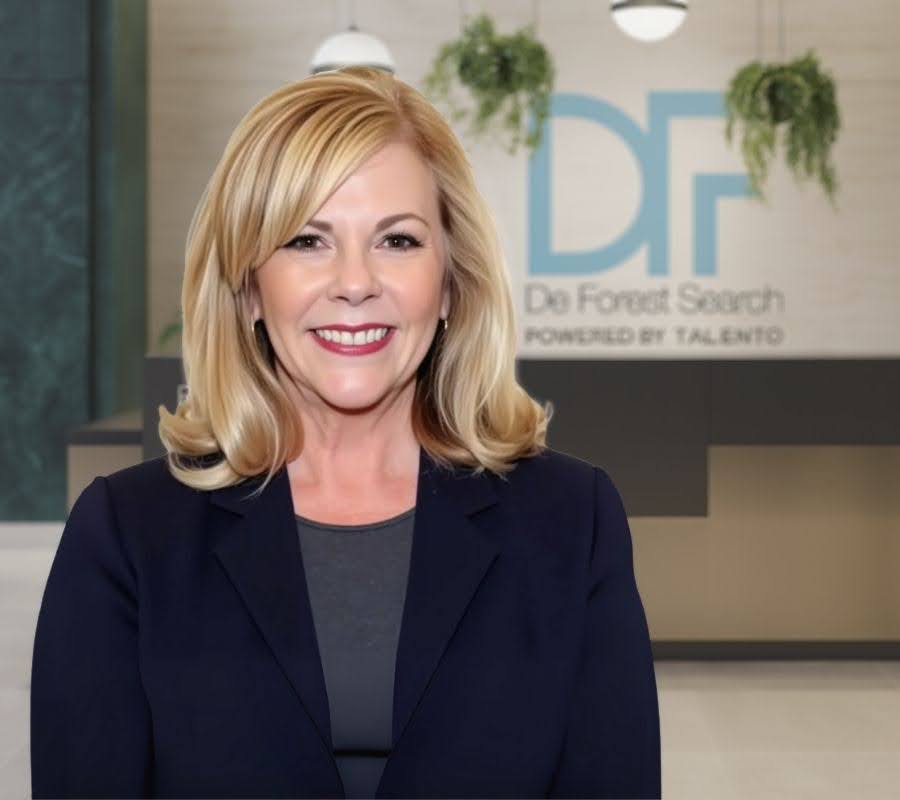
Jill De Forest’s journey through entrepreneurship and executive search is anything but conventional. Her early professional years did not begin in recruiting or talent strategy but in real estate, where she earned her license at just 20 years old and quickly found success selling high-value homes along the California coast. Reflecting on that chapter, she explains it as an energizing start, one defined by ambition, independence, and rapid learning.
Yet shifting economic conditions reshaped that trajectory. According to De Forest, the move into search was less a calculated decision and more an unexpected opportunity that revealed itself over time. “I didn’t initially plan to go into search,” she explains. “But once I stepped into it, I realized it was a natural fit for my skill set and personality.”
Her early experience with a national employment agency helped solidify that realization. De Forest recalls quickly rising to performance rankings, crediting her relationship-driven communication style and pace of execution as differentiators. That momentum ultimately led her to launch her first firm while still in her 20s, an entrepreneurial leap that would set the tone for decades to come.
She went on to build a full-service staffing and employment agency that expanded to multiple offices and employees. Despite limited formal management experience at the time, De Forest explains the growth as organic, fueled by instinctive leadership and a hands-on approach to both clients and candidates. She notes that relationship building became the operational backbone of the business.
“During the early 1990s recession, I stepped into an in-house corporate recruitment leadership role where I oversaw hiring across creative, marketing, and sales functions,” De Forest says. “That experience gave me a direct, inside view of how organizations make hiring decisions, and it ultimately shaped the way I approach executive search today.” From her perspective, understanding internal stakeholder alignment, collaboration structures, and product development cycles added depth to her advisory capabilities.
After returning to entrepreneurship, De Forest founded what would become De Forest Search, an executive search firm focused heavily on senior leadership placements. Over time, the firm developed a specialization in consumer products, including sectors such as food and beverage, gaming, toys, and licensed entertainment products. According to De Forest, this niche focus allowed her to cultivate longstanding executive relationships across interconnected industries.
“I have always operated at the executive level because I have lived that experience myself,” she says. “Having built and sold multiple businesses, I understand the pressures and decisions leaders face.”
Her entrepreneurial track record spans four businesses, all of which she built and exited. She explains that this lived experience, ranging from scaling teams to navigating acquisitions, allows her to engage executives not simply as a recruiter, but as a peer. She believes that peer-level credibility shapes the trust required in high-stakes hiring decisions.
In 2022, De Forest Search entered a new chapter when it was acquired by TalentoHCM, integrating into a broader portfolio of search firms while maintaining its executive-focused identity. The transition reflected both market evolution and strategic alignment, enabling expanded reach while preserving the firm’s relationship-centric approach.
Longevity within the search industry has also deepened her professional network. Over the decades, De Forest has remained closely connected to senior leaders across the sectors she serves. From her perspective, those relationships are not transactional, but cumulative, built through repeat engagements, career transitions, and long-term advisory dialogue. “Executives take my calls because they know how I operate,” she explains. “There’s a foundation of trust that comes from consistency, honesty, and delivering on what you say you will do.”
She credits much of her sustained relevance to core professional values: integrity, transparency, responsiveness, and kindness. Those principles, she notes, guide both client partnerships and candidate relationships, particularly when navigating sensitive leadership transitions. As executive hiring continues to evolve amid technological change and shifting workplace expectations, De Forest believes the human element of search remains indispensable. Organizations may adapt processes and platforms, but leadership hiring still depends on judgment, alignment, and trust.
From her point of view, having an experienced partner who understands executive risk, career inflection points, and organizational pressure has never been more important. “Leadership moves impact entire organizations,” she says. “That’s why guidance, discretion, and alignment matter so much in this space.”
Her career, shaped by unexpected pivots and sustained through decades of relationship-building, reflects a broader philosophy, one where executive search is about long-term leadership alignment. From her perspective, the responsibility extends beyond placements to understanding the pressures, aspirations, and inflection points that define executive careers.
“Executive search is not about filling a seat; it’s about understanding the human story behind leadership decisions,” De Forest says. “When you have lived that journey yourself, you approach every search with a deeper sense of responsibility.”