Prime Minister Keir Starmer has placed the United Kingdom on a collision course with the White House, branding Donald Trump‘s threat to impose sweeping tariffs on European allies as ‘completely wrong.’
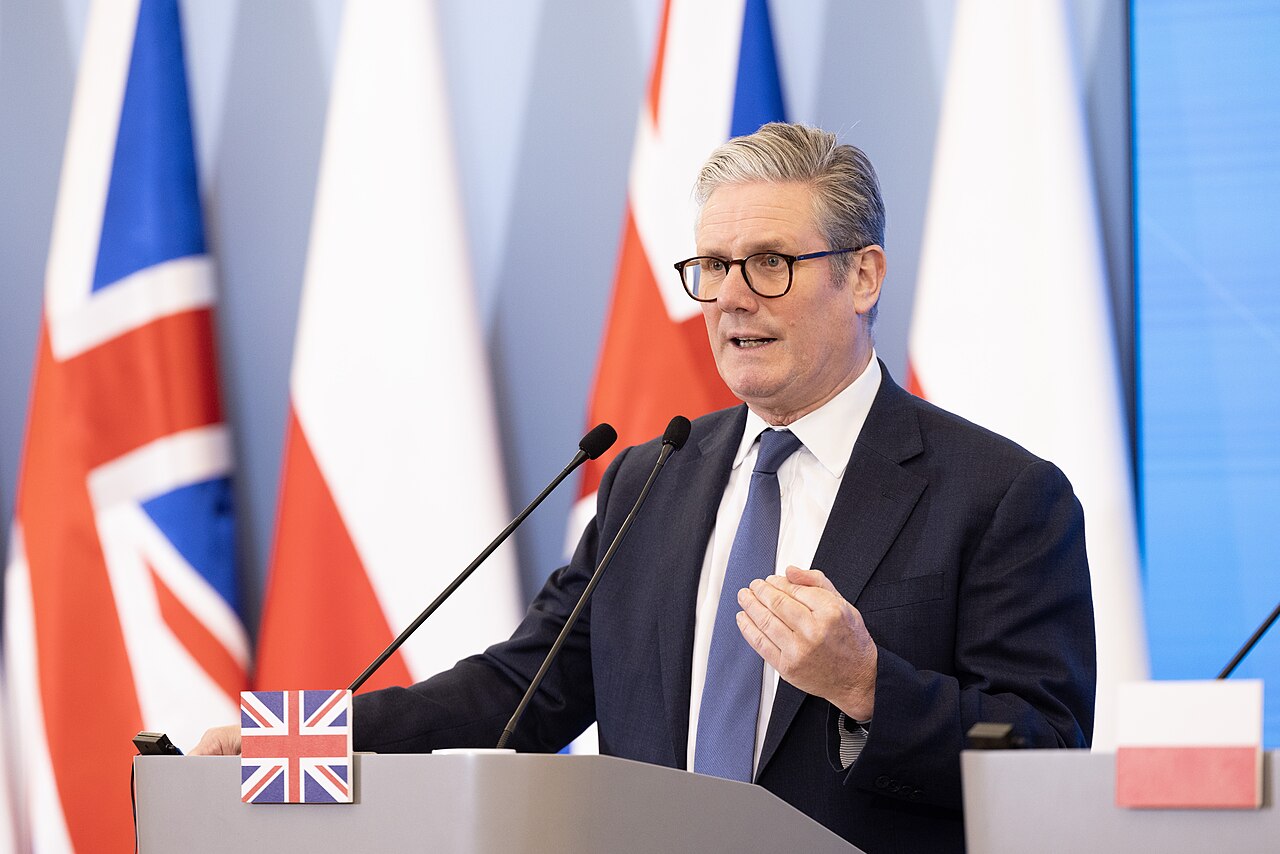
In an emergency press conference at Downing Street on Monday, 19 January 2026, he insisted that the future of Greenland is a matter solely for the people of Greenland and the Kingdom of Denmark, vowing to uphold international law against what he described as ‘economic pressure’ and ‘blackmail.’
The escalating row follows President Trump’s weekend announcement that he will levy a 10% tariff on goods from eight European nations—including the UK, France, and Germany—starting 1 February 2026, unless a deal is reached for the United States to purchase the Arctic territory.
What began as diplomatic brinksmanship has metamorphosed into something far more unsettling: a potential trade war that could unravel decades of carefully constructed alliances.
‘This must be resolved through calm discussion between allies,’ Starmer insisted during the press conference, his tone measured but firm.
The Prime Minister’s intervention underscores the gravity of the situation—when a British leader feels compelled to intervene directly in trans-Atlantic affairs, the stakes are unmistakably high.
The Tariff Threat and Why International Law Matters
Starmer pulled no punches when discussing the weaponisation of tariffs as a negotiating tool. He warned that using tariffs against allies is ‘completely wrong’ and that a trade war is ‘not the right way to resolve differences within an alliance’. The language here is particularly telling: by framing this as an alliance problem rather than a bilateral dispute, the Prime Minister sought to mobilise collective European resistance.
What elevates this beyond rhetoric is the immediate, tangible impact on ordinary British families. ‘That is why this Government’s approach is rooted in a simple belief that we must use every tool of Government, domestic and international, to fight for the interests of ordinary people,’ Starmer declared, making clear that economic suffering in British households would be an unacceptable price for Trump’s territorial ambitions.
The threat of retaliatory tariffs could ripple through supply chains, inflate consumer prices, and derail economic growth at a moment when British households are already grappling with a cost-of-living crisis.
The Prime Minister’s invocation of international law appeared deliberate and strategic. By anchoring Britain’s response in legal and institutional frameworks, Starmer sought to transcend the volatile personal dynamics between Trump and the British Government, instead appealing to shared Western legal principles.
This represents a calculated effort to frame the dispute not as a transactional negotiation but as a fundamental challenge to the rules-based international order that has underpinned Western prosperity since 1945.
A Unified European Front Against Trade War Escalation
Starmer’s concerns echoed across the Atlantic and throughout Europe with remarkable coordination. In a bombshell joint statement, eight nations—Britain, Denmark, Norway, Sweden, France, Germany, the Netherlands and Finland—issued an unprecedented warning that ‘tariff threats undermine transatlantic relations’.
The breadth of this coalition is remarkable, spanning both NATO members and neutral nations, signalling genuine European alarm rather than partisan posturing.
This unified stance carries symbolic and strategic weight. By assembling such a diverse group, these governments implicitly rejected any suggestion that individual bilateral negotiations might divide them. Instead, they projected a message of collective resolve: that trade wars are not the answer to geopolitical disputes.
Yet the underlying tensions remain unresolved. Trump’s Greenland ambition, whilst extraordinary, reflects deeper anxieties about Arctic strategy, resource access, and great-power competition with China.
Economic Implications for the UK
Analysts warn that the ‘Greenland Tariffs’ could derail the UK’s fragile economic recovery. With a 10% levy looming in less than two weeks, sectors such as automotive, Scotch whisky, and luxury goods are bracing for significant disruption.
Conservative leader Kemi Badenoch and Liberal Democrat leader Ed Davey have both condemned the threats, though they differ on whether Starmer’s ‘reset’ with the US has already failed.
What Comes Next for UK-US Relations
Trump’s stance on Greenland reflects deeper strategic anxieties about Arctic dominance and great-power competition. Whether Starmer’s appeal to calm diplomacy and legal norms can influence Washington’s approach remains uncertain.
For now, the Prime Minister has drawn a clear line: Britain will not support territorial demands enforced through trade threats. The coming weeks may test whether the so-called special relationship can withstand a dispute that cuts to the core of alliance principles.
Originally published on IBTimes UK