


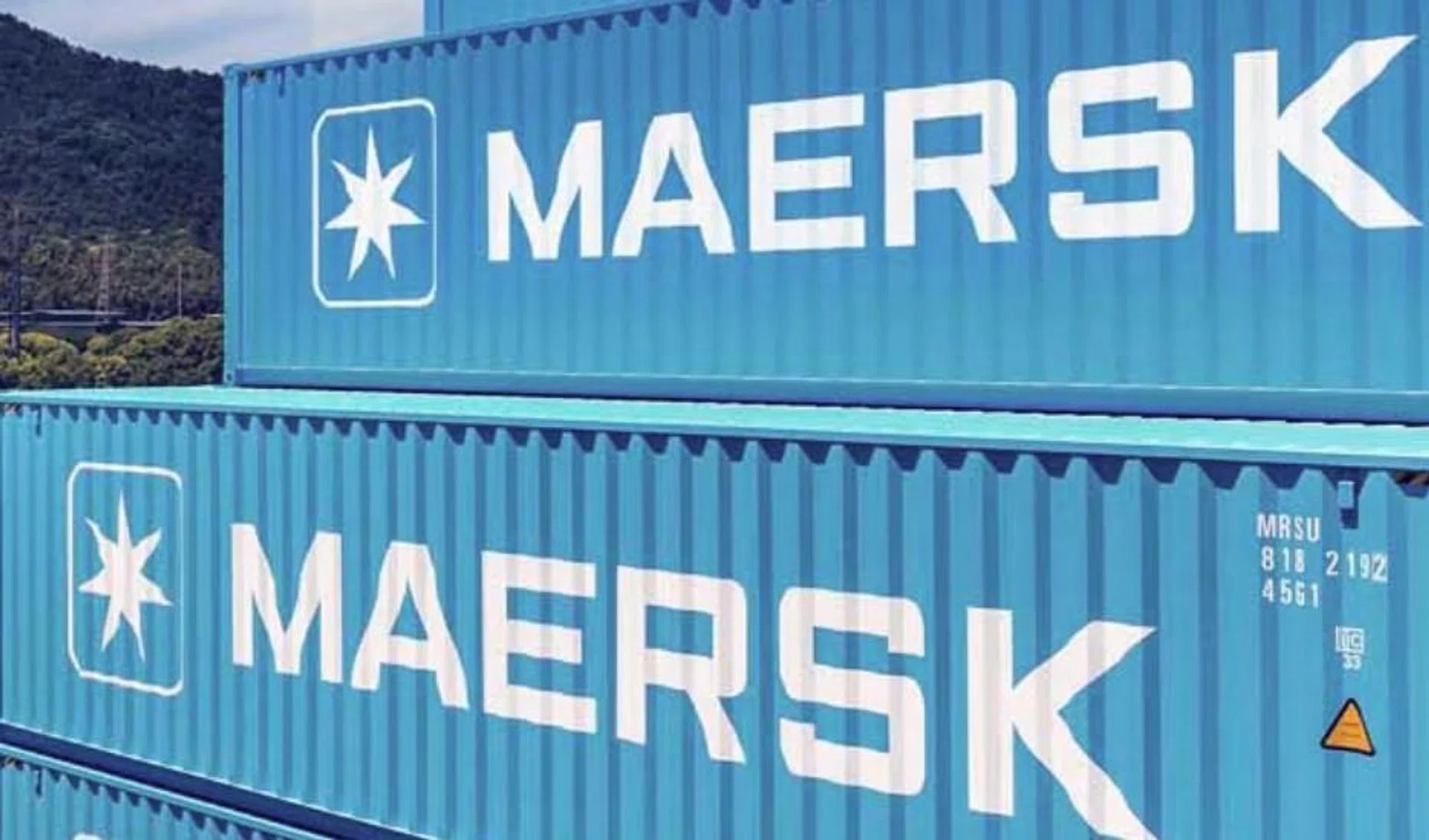
It will double the company’s footprint to more than 2 million sq ft and is equipped with the latest in automation tech
[SINGAPORE] Maersk opened its fully automated distribution centre in Singapore on Wednesday (Mar 18), deepening its contract logistics and e-commerce capabilities in the Asia-Pacific.
The 1.1 million sq ft facility in Benoi – an investment of more than S$200 million – doubles Maersk’s footprint in the city-state to more than 2 million square feet.
Maersk said the new warehouse will serve companies that rely on the city-state as a regional or global distribution centre.
Known as World Gateway II, the facility has achieved about 70 per cent occupancy so far. When it is fully operational, it will employ about 500 workers in operations, engineering, supply-chain management and analytics.
Its e-commerce fulfilment capabilities will serve business-to-business and business-to-consumer segments in the region; the sectors it will serve include lifestyle, fast-moving consumer goods, retail, wellness and technology.
The warehouse is kitted out with automation technologies including a multi-shuttle system, automated storage and retrieval system and robots which enable faster order fulfilment, shorter lead times, and improved accuracy by reducing manual handling.
Navigate Asia in
a new global order
Get the insights delivered to your inbox.
Notably, Maersk said that its multi-shuttle system is one of the largest automated loose-piece handling systems in the region.
Deputy Prime Minister and Minister for Trade and Industry Gan Kim Yong was at the opening on Wednesday, along with Maersk chief executive officer Vincent Clerc, Danish Ambassador to Singapor Jakob Brix Tange and other guests.
In his speech, DPM Gan noted that Singapore is the Danish company’s second-largest base outside Copenhagen, with more than 1,500 employees in Singapore and over 140 Singapore flagged vessels.
A decade ago, the company opened World Gateway I nearby; it is also an automated and customs-bonded warehouse, supporting high-tech logistics operations and regional distribution. (Customs-bonded warehouses are where imported goods are stored; import duties and taxes on them are deferred until they enter the market.)
DPM Gan said that investments such as World Gateway II are important to Singapore as they strengthen the logistics and supply-chain ecosystem, on top of the nation’s investment in infrastructure.
Singapore cannot take its relevance as a global hub for the movement of goods for granted because trade flows are being reshaped by geopolitical conflicts, he added.
“We must continually refresh and strengthen our role as a hub for global flows. Singapore must ensure that it has the capacity and capabilities to support evolving trade flows,” he said.
DPM Gan said that the government will continue to invest in capacity, citing examples such as the construction of Tuas Port, which will be the world’s largest fully automated port when completed in the 2040s with the capacity to handle 65 million TEUs (Twenty-foot Equivalent Units) annually.
He also noted that the development of Changi Airport’s Terminal 5 and expanded cargo facilities will further strengthen Singapore’s role as a global air cargo hub.
In his remarks at the opening, Clerc said: “The centre of gravity for global trade is shifting towards Asia. We see it in the volumes moving through our network every day.”
He commented that more companies are redesigning their supply chains in Asia by diversifying production, building regional distribution hubs, and moving inventory closer to where demand is rising.
These companies look for shorter lead times, more inventory near cities, cross-border flows and integrated ocean-air-landside solutions to keep up with demand spikes, he said.
Decoding Asia newsletter: your guide to navigating Asia in a new global order. Sign up here to get Decoding Asia newsletter. Delivered to your inbox. Free.
