[SINGAPORE] As more affluent retail investors venture into alternative assets to diversify from public markets, wealth managers advise that investors should hedge their bets even further – by diversifying within these markets.
Also known as private-market instruments, alternative assets refer to those that are not publicly traded. While they can include passion investments such as wine and art, they are broadly classified into the sub-categories of private equity (PE), private credit, real estate and infrastructure.
In Singapore, apart from private-banking clients, retail investors known as accredited investors are deemed knowledgeable enough to dabble in alternative assets. These are individuals with an annual income of S$300,000, or net personal assets of at least S$2 million.
Financial advisers generally recommend that investors allocate 10 per cent of their investable assets in private markets, to diversify from their exposure to publicly traded stocks and bonds. Those who are comfortable with the lack of liquidity and transparency that typically characterise alternative assets can set aside up to 30 per cent.
A 10 per cent allocation would amount to S$200,000 for someone with investable assets of S$2 million. Given the variety of sub-categories and strategies within private markets, investors need to have a firm grasp of their investment time frame and liquidity needs.
“Investors should always invest and allocate according to their optimised risk-versus-return profile, investment horizon and liquidity needs,” Leong Chin Lin, managing director of wealth at Shorea Advisors, told The Business Times.
BT in your inbox
Start and end each day with the latest news stories and analyses delivered straight to your inbox.
“Even within the private-market universe, liquidity profile, complexity and risk-reward profile vary greatly across the various sub-asset classes like PE… private credit, hedge funds, real estate, (and) infrastructure,” he added.
PE refers to the buying of a stake in an unlisted company, usually one that is more established. Within this category, there is also venture capital (VC), where investors focus on early-stage, high-growth-potential companies that are often startups.
So VC would be considered a riskier subset within PE, given the high failure rate of startups – 90 per cent globally. But the returns could also be exponential if just one startup evolves into a unicorn.
For investors relatively new to private markets, investing in funds might offer a more structured approach for them to manage risks. Even so, they need to keep an eye on the big picture.
Portfolio construction
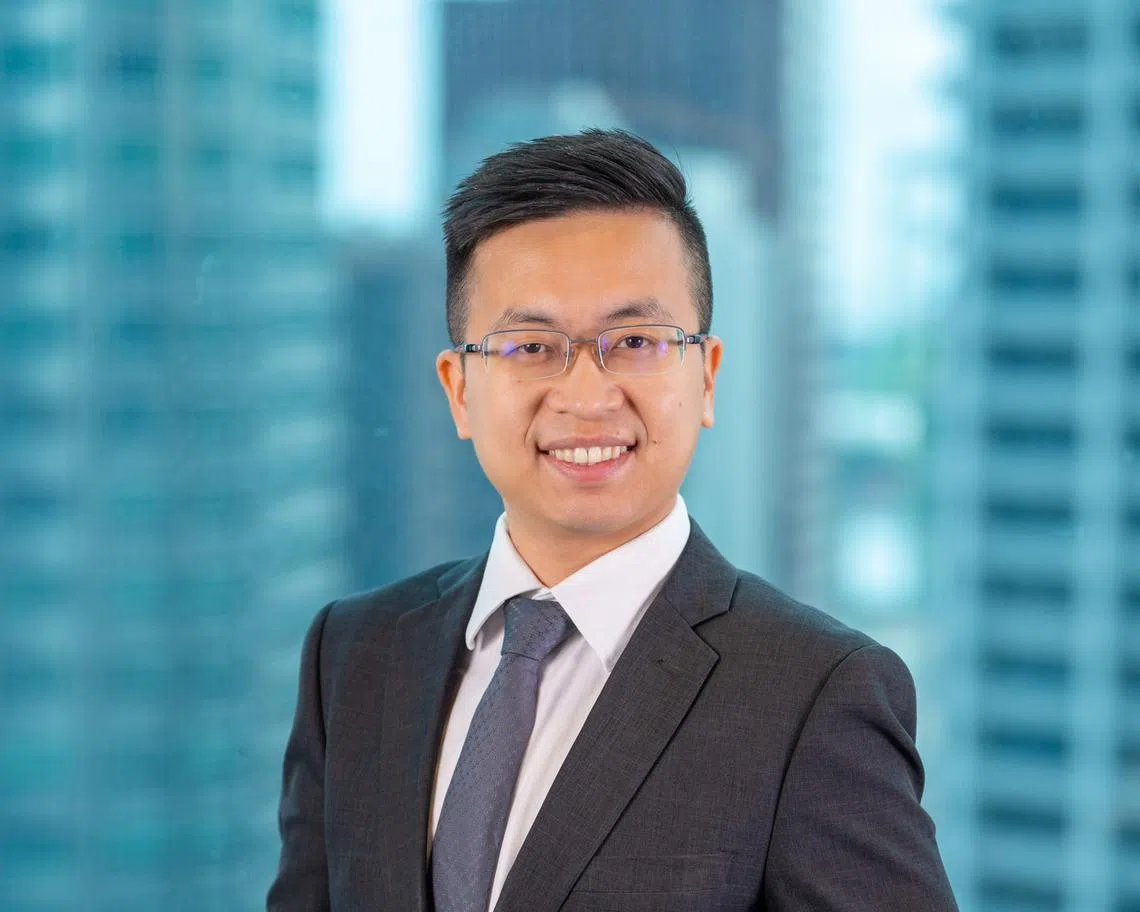
Walter Zhang, senior director and Asia’s head of private markets investor relations at Indosuez Wealth Management, said: “It is important for investors to think beyond individual fund selection and instead focus on constructing a well-diversified portfolio – across asset classes, investment strategies, geographies and vintage years.”
In particular, investing in funds would let investors access capabilities they would otherwise not be able to – an important point in private markets where information on the asset may not be easily available.
Charlene Huang, regional head of the Asia-Pacific for Unified Global Alternatives at UBS, noted that “fund teams have underwriting and due diligence processes, as well as deal sourcing and structuring capabilities, which are often not available to most investors”.

Zhang recommended the following allocation for investors: between 35 and 50 per cent in PE, between 20 and 35 per cent in private credit, as much as 30 per cent in secondaries, up to 15 per cent in real assets including infrastructure, and up to 10 per cent in co-investment opportunities.
Within PE, he suggested allocating as much as half to buyouts – referring to the acquisitions of a controlling interest in companies.
As buyouts typically target “mature, profitable businesses with stable cash flows”, this makes them more predictable and defensive, he added.
Leong pointed out that one private asset that most accredited investors in Singapore would already be exposed to is real estate, as they would usually have at least one investment property.
Another asset that most Singaporean investors – not just the accredited ones – would be familiar with is real estate investment trusts, or Reits.
While Reits are publicly traded, the underlying assets are essentially private real estate. An April 2023 report by GIC and DWS showed that Reits and private real estate in the United States delivered similar returns over 30 years.
Evergreen and secondary funds
One type of funds that accredited investors can consider as a way to gain exposure to private markets is the so-called evergreen funds.
These are funds that operate indefinitely, allowing continual capital raising, investment and distribution. Investors can enter and exit at periodic intervals, making such funds more palatable to retail investors as they provide some liquidity. This is also why such funds are known as semi-liquid funds as well.
Evergreen funds are in contrast to the typical closed-ended funds which involve mostly institutional investors, higher upfront investments and longer horizons.
“Reduced investment minimums and quarterly liquidity offered by evergreen vehicles have broadened investor access to private assets, including private equity, private credit, real estate, and infrastructure,” said Sheethal Dalpathraj, head of investment specialists for Asia at Citi Wealth.
Another sub-category of private market products that investors could consider is secondary funds, commonly referred to as secondaries. These are funds that buy existing interests or assets from primary PE investors.
PE fund managers create liquidity by leaning on the secondary market, where investors can exit early from their commitments by selling to players such as other fund managers, institutional investors and high-net-worth individuals.
Global activity in secondary deals, in what was previously a niche market, has surged in the past few years, as higher interest rates and a slowdown in dealmaking squeezed the US$4 trillion buyout industry. Last year, the secondary market boomed, with the volume of transactions surging 45 per cent from 2023 to a record high of US$162 billion, helped as some PE investors sold assets at a discount.
“Secondary PE strategies are a compelling complement to primary PE exposure, both from a strategic and tactical standpoint. They help investors backfill missed vintage years, enhance diversification, and reduce the J-curve effect,” noted Antoine des Noyers, managing director and head of alternative investments for South-east Asia, at JPMorgan Private Bank.
J-curve refers to the tendency of PE funds to generate negative returns in the initial years, only to be reversed in later years when the investments mature. As secondary deals usually involve more mature assets, they could start to generate positive returns earlier.