


Members include top executives from GIC, Temasek, Blackrock and DBS, along with public sector representatives
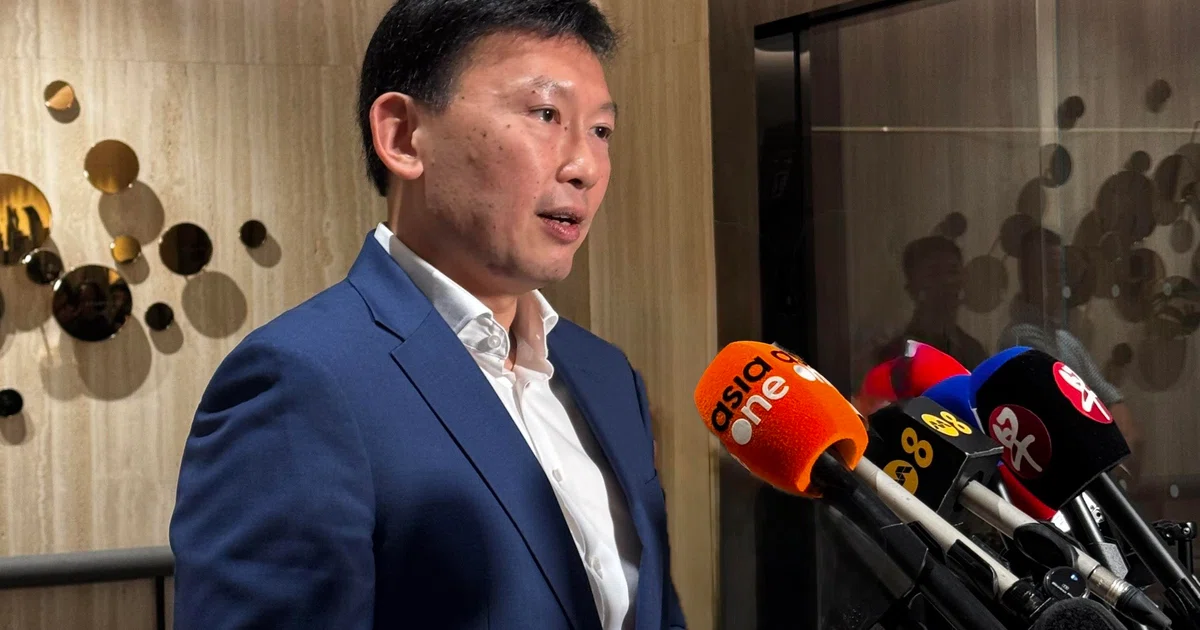
[SINGAPORE] The newly formed workgroup aimed at enhancing Singapore’s growth capital ecosystem will seek to bridge the gap between private funding and public listings, said Chee Hong Tat, deputy chairman of the Monetary of Singapore (MAS) and minister for national development. This will create a smoother pipeline from venture capital to initial public offerings (IPOs).
He noted that the initiative will provide a range of funding options for companies at various growth stages. While some may initially benefit from venture capital, as they scale, they will be able to access additional funding from private markets and, eventually, public markets.
This approach must be viewed as part of an ecosystem, he said at a doorstop interview with the media on Friday (Feb 13).
“If you do it well, different components of the ecosystem will reinforce one another, and that network effect would then enable us to be able to grow the range of services and options for companies and investors so that is what we hope to achieve,” he told The Business Times.
Announced by Prime Minister Lawrence Wong in the Budget 2026 speech, the workgroup will work closely with industry stakeholders to position Singapore as a leading centre for growth capital.
MAS revealed additional details on Friday, stating that the group will recommend measures to support the financing needs of companies across all growth stages.
Navigate Asia in
a new global order
Get the insights delivered to your inbox.
In a statement on Friday, MAS said that while bank loans have traditionally been the main mode of financing in Asian economies, more diverse sources of capital will better support companies and regional economies.
“As global investors diversify across markets to manage risks and capture new growth opportunities, there is potential for Singapore to position itself as a leading centre for growth capital in Asia,” said the central bank.
The workgroup will include private sector leaders with expertise in business, asset management and capital markets, as well as public sector representatives responsible for enterprise development and financial policy.
Key members include Bryan Yeo, group chief investment officer at GIC; Chia Der Jiun, managing director at MAS; Dilhan Pillay, executive director and chief executive officer at Temasek Holdings; Jermaine Loy, managing director at Economic Development Board; and Tan Su Shan, CEO and director at DBS Group.
Building on the positive momentum of the Equities Market Review Group, the Growth Capital Workgroup will focus on strengthening various segments of the growth capital markets, including venture capital, private equity, private credit and securitised assets.
It will study the full value-chain of financing from deal origination, capital raising and mobilisation, and capital recycling.
The goal is to explore emerging opportunities in the region, noted Chee.
On one hand, he sees companies in Asia expanding and requiring capital. On the other, investors are looking to diversify their portfolios and seek opportunities in the region.
“The supply of capital and the demand for capital presents an opportunity for us as a trusted financial hub to see how we can benefit from this group,” he said.
Chee noted that elements of the growth capital ecosystem already exist to support companies at various stages, from startups to more mature businesses preparing for public listings.
He emphasised that the work done through the Equities Market Review Group has energised public market interest, but there is now a need to extend support to earlier-stage companies before they are ready to list.
Chee sees private capital markets as valuable complements to traditional bank lending and public markets – offering companies a broader range of funding options.
However, based on discussions with industry players, Chee identified two possible areas for further exploration.
The first is fostering an ecosystem that supports entrepreneurs, both from Singapore and the wider region, to establish and raise capital for their businesses in the country. This would be a valuable addition to Singapore’s economic growth strategy, he said.
The second area involves infrastructure, with substantial infrastructure development expected in the region that will require long-term capital. Chee noted that this aligns with Singapore’s “strength as a trusted financial hub”.
While these areas are a priority, he noted that the workgroup remains open to exploring other opportunities, based on further consultations with industry stakeholders, to help these sectors thrive and grow.
Decoding Asia newsletter: your guide to navigating Asia in a new global order. Sign up here to get Decoding Asia newsletter. Delivered to your inbox. Free.
