Published Sat, Feb 14, 2026 · 10:34 AM
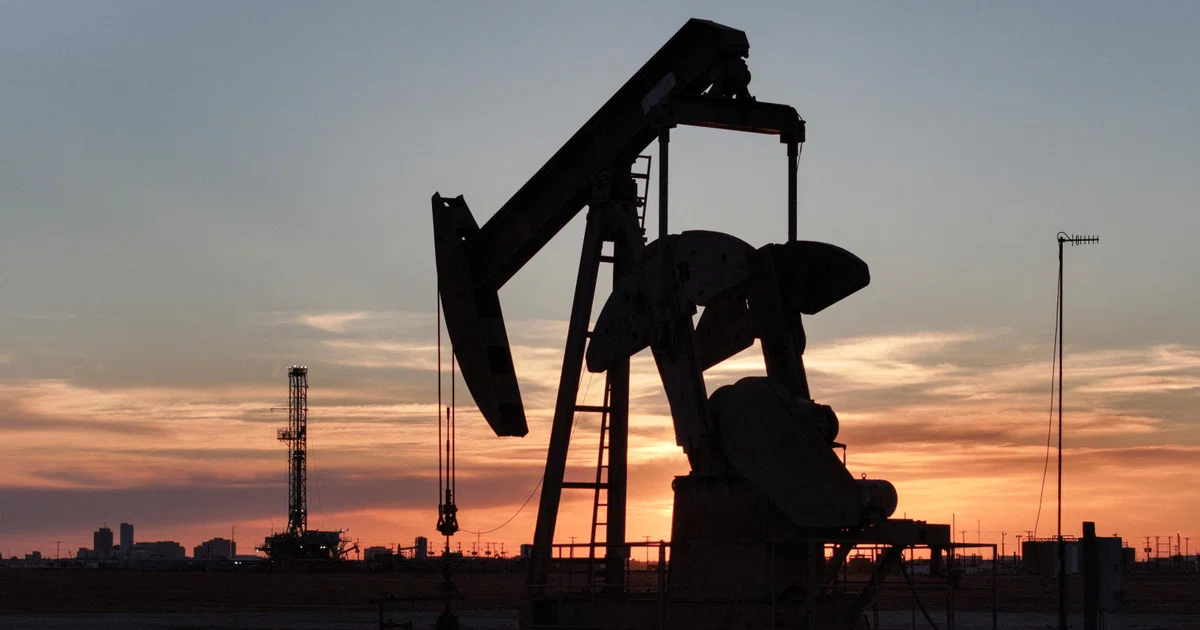
[HOUSTON] Oil prices settled marginally higher on Friday (Feb 13) after data showed an overall slowdown in US inflation, helping offset supply concern as Oprc+ is leaning towards a resumption in production increases.
Brent crude futures closed US$0.23, or 0.3 per cent, higher at US$67.75 a barrel, while US West Texas Intermediate (WTI) crude settled US$0.05, or 0.08 per cent higher at US$62.89.
Both benchmarks posted weekly declines after incurring near 3 per cent losses on Thursday. Brent settled down about 0.5 per cent, while WTI lost 1 per cent in the week. US consumer prices increased less than expected in January amid cheaper petrol prices and a moderation in rental inflation.
“Looks like inflation is stabilising. So, I think that’s going to be a boon for interest rates to probably continue to move a little bit lower. And I think as rates start to move lower… that’s a positive to the economy,” said Dennis Kissler, senior vice-president of trading at BOK Financial.
“The negative is going to be that Opec could possibly increase production a little further,” he added.
Prices fell earlier in the session as investors reacted to a Reuters report that Opec is leaning towards a resumption in oil output increases from April, ahead of upcoming peak summer fuel demand, and amid firmer crude prices owing to tensions over US-Iran relations.
Navigate Asia in
a new global order
Get the insights delivered to your inbox.
On the US supply side, Baker Hughes said oil rigs fell by three to 409 this week. Oil prices had strengthened earlier in the week on concerns that the US could attack Middle Eastern oil producer Iran over its nuclear programme.
But comments on Thursday from US President Donald Trump that Washington could make a deal with Iran over the next month drove down prices on Thursday.
The Pentagon, however, is sending an aircraft carrier from the Caribbean to the Middle East, US officials said on Friday, a move that would put two carriers in the region as tensions soar between the US and Iran.
Russia, meanwhile, said on Friday that the next round of peace talks on Ukraine will take place next week.
Negotiations with Iran and Russia will be the near-term market movers, Kissler said, adding that near-term global crude supplies remain ample and crude futures likely have a US$5 to US$7 per barrel geopolitical premium baked in.
The US also eased sanctions on Venezuela’s energy sector on Friday, issuing two general licences that allow global energy companies to operate oil and gas projects in the Opec member and for other companies to negotiate contracts to bring in fresh investments.
Oil sales from Venezuela controlled by the US have totalled over US$1 billion so far and in the next few months will bring in another US$5 billion, US Secretary of Energy Chris Wright told NBC News on Thursday. REUTERS
Decoding Asia newsletter: your guide to navigating Asia in a new global order. Sign up here to get Decoding Asia newsletter. Delivered to your inbox. Free.