


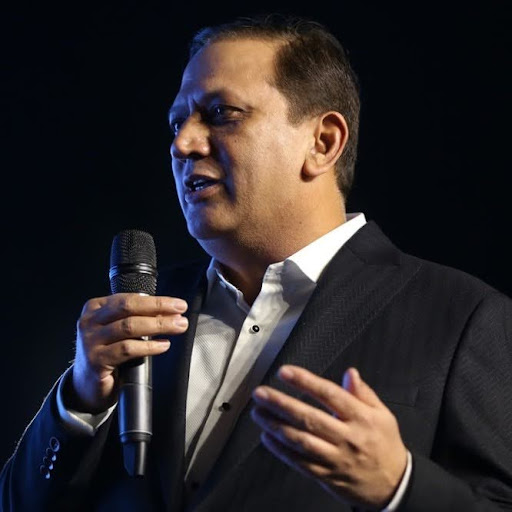
Some people grow into leadership; others simply live it from the start. Rajiv Sharma, founder of Knack Systems and Knack Global, belonged to the latter, guided by an instinctive sense of direction. From his earliest professional years, he felt a pull toward creating an impact that extended beyond defined roles. While he built a meaningful career as an executive, an internal restlessness remained. “Titles were never really what motivated me. I’ve always been more drawn to making progress and working through problems,” he says. “Entrepreneurship felt like a practical way to take on challenges and create something useful.”
Sharma’s journey began with a strong foundation in computer science, which he completed in India before moving to the United States. Those early years shaped his analytical thinking and his appreciation for systems that work seamlessly behind the scenes. His initial professional experience in the U.S. exposed him to global delivery models, including the opportunity to establish and manage offshore operations. That experience proved formative. It showed him that complex, distributed teams could operate with accountability and shared purpose.
With that conviction, Sharma founded Knack Systems, his first venture, with a focused approach toward enterprise technology services. “Starting the company came with some risk and required patience, but it fit the way I approached focused, long‑term work. As we grew internationally, it strengthened my view that offshore expertise and collaborative models can add real value,” he says. These experiences laid the foundation for a broader realization that certain industries faced inefficiencies that technology and thoughtful operations could meaningfully address.
Sharma later entered the healthcare space after careful observation. “I noticed how operational challenges could distract from care. The administrative load, rising costs, and fragmented processes I’ve seen made it clear some areas could be improved.” Additionally, he observed that many organizations relied heavily on in-house teams for non-core functions.
At the same time, Sharma recognized the untapped potential of global talent models, where deep expertise and process rigor could create meaningful operational value. “Healthcare professionals dedicate themselves to patient outcomes,” he shares. “Supporting that mission requires systems that respect their time and energy.”
This perspective led to the founding of Knack Global in 2007. The early years tested Sharma’s resolve. Progress arrived gradually, and momentum took time to build. Even so, his belief in the underlying model remained intact. He committed personal resources and embraced uncertainty, guided by a long-term view of transformation. Over time, the company grew from its earliest beginnings into a scalable enterprise, eventually reaching a market valuation that reflected its maturation until it was acquired by a global investment firm. This marked a significant chapter of Sharma’s entrepreneurial path.
Leadership decisions during this period reflected both foresight and adaptability. Sharma supported flexible work models well before they became widely adopted, recognizing the value of trust and autonomy within distributed teams. He anticipated the need for resilient systems that could operate without physical constraints, an insight that later proved essential. He also understood that many organizations carried high internal costs tied to legacy structures and limited technological integration. By prioritizing scalable processes and modern infrastructure, he positioned his ventures to address these realities thoughtfully. He notes, “A leader’s role is to prepare today for conditions that may arrive tomorrow.”
Culture played a significant role throughout his journey. Sharma emphasized internal growth, mentorship, and shared accountability. “Leadership credibility comes from standing with teams during challenging moments and sharing recognition during success,” he states. This philosophy, he believes, fostered loyalty and continuity, helping enable consistent delivery and deeper institutional knowledge. His approach reflected a belief that businesses can grow sustainably when people feel invested in the mission they serve.
Today, Sharma remains committed to making an impact. Drawing on decades of experience, he applies the same principles of focus, specialization, and long-term thinking. His curiosity around emerging technologies continues to inform his outlook, guided by the idea that innovation should expand opportunity and redefine how work evolves over time.
Rajiv Sharma’s story involves identifying gaps, accepting risk, and building patiently, transforming early ideas into enduring platforms. His move to the United States carried aspirations beyond personal advancement, rooted in a desire to contribute meaningfully across borders and communities. As his journey continues, it reflects a belief that progress comes from the willingness to commit fully to a vision that serves others.
