Self-injection has quietly become one of the most significant shifts in modern healthcare delivery. From chronic disease management to fertility treatments and hormone therapies, millions of patients are now expected to administer injections at home rather than in clinical settings. The global self-injection devices market is expected to reach over $19 billion by 2030.
According to Pourang Bral, general dentist and CEO of Painless World, the clinical rationale behind this shift is sound. “Home administration reduces costs, increases access, and alleviates pressure on healthcare facilities,” Bral says. “But operational success depends on what happens after the patient leaves the clinic.”
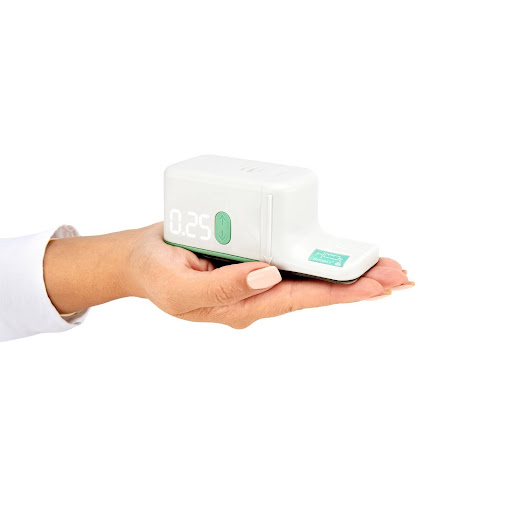
That reality is what led Painless World to develop Noodle, a device designed specifically to support patients during the transition from clinic training to at-home execution. Rather than focusing on instruction alone, the company set out to address a moment that is rarely measured but frequently experienced. The point at which a patient understands what to do but hesitates when it is time to do it alone.
“Patients are taught the steps,” Bral explains. “They often perform a supervised practice injection. They understand the process. Then they get home and pause.”
From Bral’s perspective, that pause is not a failure of education. It is a behavioral and emotional barrier that appears across healthcare systems. Patients may hesitate at the final step. Anxiety increases anticipation. Small changes in technique occur without feedback. Uncertainty builds around whether the injection was done correctly. “Real-life conditions such as poor lighting, fatigue, time pressure, or distractions amplify the challenge,” Bral notes. “The result is delayed doses, skipped treatments, or avoidable follow-up calls.”
From a business and systems perspective, this gap matters. In the United States alone, avoidable medical costs linked to non-adherence and incomplete treatment are estimated in the hundreds of billions of dollars annually. “Even marginal improvements in follow-through may produce meaningful financial impact,” Bral says. “As more therapies shift to home use, follow-through is no longer a patient-centric issue. It becomes an operational concern.”
According to Bral, the burden is often absorbed by clinicians and nurses. “When patients struggle at home, they call back,” he says. “They request reassurance. They need additional instruction. None of this reflects poor care. It reflects the reality that learning how to inject in a clinic is not the same as doing it alone at home.” Time spent responding to these challenges has the potential to accumulate quickly across patient populations and care teams.
Bral’s approach begins with acknowledging that emotional friction exists even when clinical instruction is sound. That perspective informed how Noodle was designed and positioned. Used as directed, the device is intended to make self-injection easier to carry out by reducing discomfort at the injection site prior to needle entry. It does not replace training, clinician oversight, or proper technique. Instead, it supports the moment when patients must act on what they were already taught.
Painless World
“Noodle applies gentle electrical pulses combined with physical stimulation, meant to numb the skin before injection,” Bral explains. “After a brief countdown, the device is removed, and the patient proceeds as normally instructed by the clinician.” The objective, Bral notes, is not distraction, but the numbing of nerve endings at the injection site. By minimizing discomfort and decision-making at the final step, some patients are better able to follow through with confidence.
“Tools that support adherence without adding complexity are increasingly attractive to healthcare systems, pharmacies, and partners,” Bral says. “Noodle acquires minimal training and no additional appointments or changes to clinical protocols. It fits into existing processes as an optional support for patients who express hesitation about injecting at home.”
Importantly, the approach is clinician-friendly. Bral emphasizes that this is not about shifting responsibility away from care teams. It is about recognizing a predictable point of failure and addressing it proactively. A simple acknowledgment that many patients struggle during their first at-home injections can normalize the experience and help prevent a silent drop off. Optional tools can then be introduced without pressure or added burden.
With nearly three decades in clinical practice, Bral’s philosophy is rooted in outcomes. Treatment efficacy depends on behavior. Behavior depends on confidence. Confidence often depends on how supported a patient feels once they are on their own. As healthcare continues to decentralize, success will be determined not only by innovation in therapies but by how effectively systems support patients beyond the clinic walls.
The shift to home-based care is accelerating. Solutions that account for both human behavior and operational realities are the ones most likely to scale. In that context, addressing the clinic-to-home gap is not simply a patient experience issue. It is a business imperative for modern healthcare.