


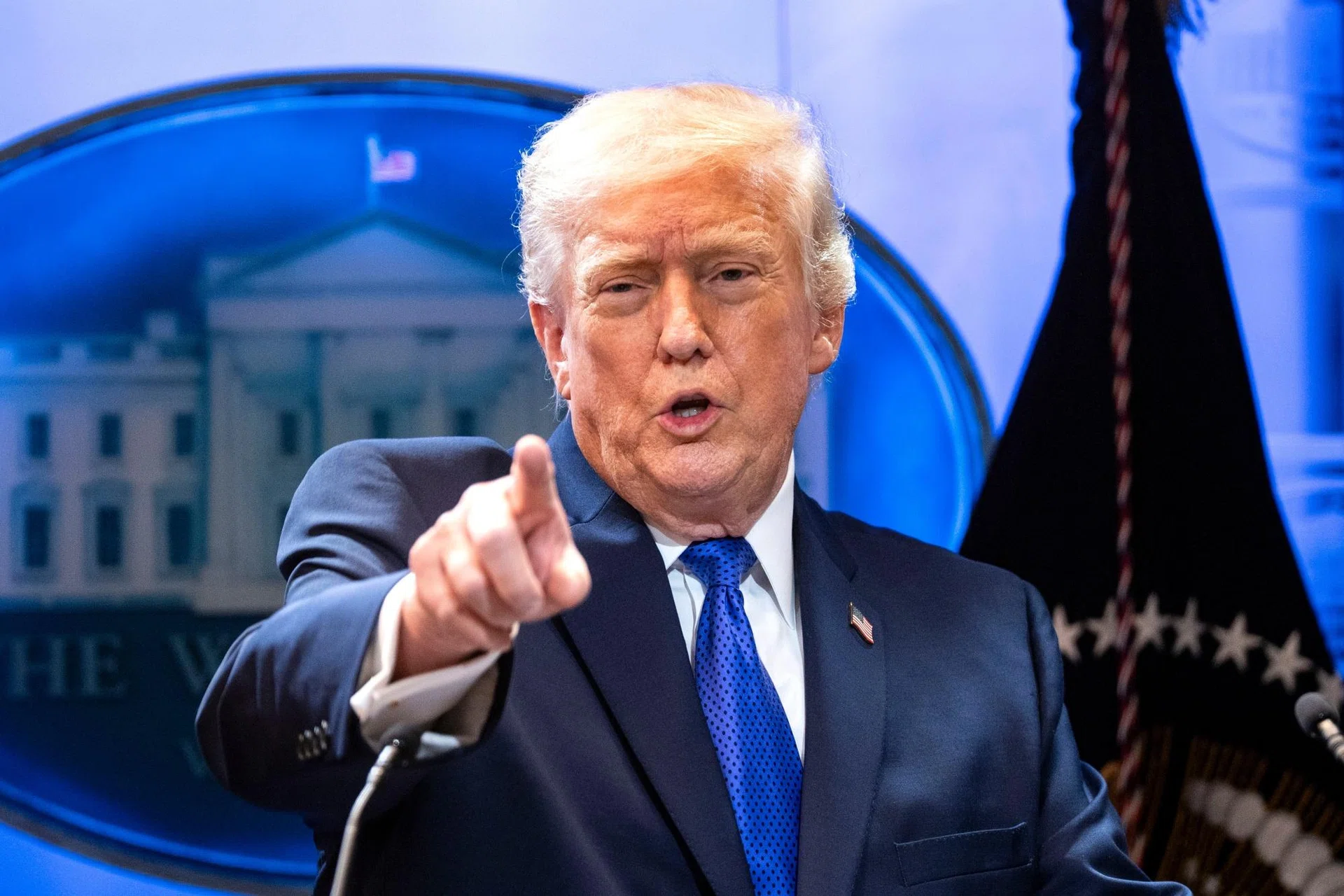
The new tariffs can be as high as 15 per cent and can last 150 days without congressional approval
[SINGAPORE] Markets in Asia struggled for a firm direction in the wake of US President Donald Trump’s increasing his latest global tariffs to 15 per cent from 10 per cent, after the US Supreme Court ruled that his previous tariff mechanism was illegal.
While Singapore’s Straits Times Index was up 0.2 per cent as at 9.05 am, South Korea’s Kospi was up 1.5 per cent at 10.04 am local time and Australia’s S&P/ASX 200 fell 0.7 per cent as at 12.03 pm in Sydney. The Japanese stock market was closed for the Emperor’s birthday.
The US Supreme Court on Friday (Feb 20) night in Asia struck down Trump’s original slate of tariffs — announced on the so-called Liberation Day in April last year. The court said that Trump exceeded his authority by invoking the International Emergency Economic Powers Act (IEEPA) without the approval on the US Congress.
Economists estimate more than US$175 billion worth of the original tariffs are to be refunded by the US government, according to Reuters.
Shortly after the ruling, Trump imposed a new 10 per cent global levy under another trade law provision before increasing that to 15 per cent on Saturday (Feb 21). The new provision, Section 122 of the Trade Act of 1974, allows tariffs of up to 15 per cent for 150 days without congressional approval.
Singapore has not revised its growth forecast, said Deputy Prime Minister Gan Kim Yong on Sunday (Feb 22), and noted that Singapore’s relative export competitiveness is unlikely to be affected even if tariffs were applied across the board. The country was set to face a 10 per cent levy under the original tariffs.
Navigate Asia in
a new global order
Get the insights delivered to your inbox.
DPM Gan also discouraged speculation that Singapore might be exempted from the new 15 per cent tariffs.
A spokesperson from the Ministry of Trade and Industry (MTI) said the Singapore government will seek clarity on the implementation of the new tariffs and the processes for the original tariff refunds.
MTI added that certain goods, including pharmaceuticals, pharmaceutical ingredients and some electronics, are exempt from the Section 122 tariffs but may be the subject of Section 232 tariffs that have not yet been imposed.
Decoding Asia newsletter: your guide to navigating Asia in a new global order. Sign up here to get Decoding Asia newsletter. Delivered to your inbox. Free.
