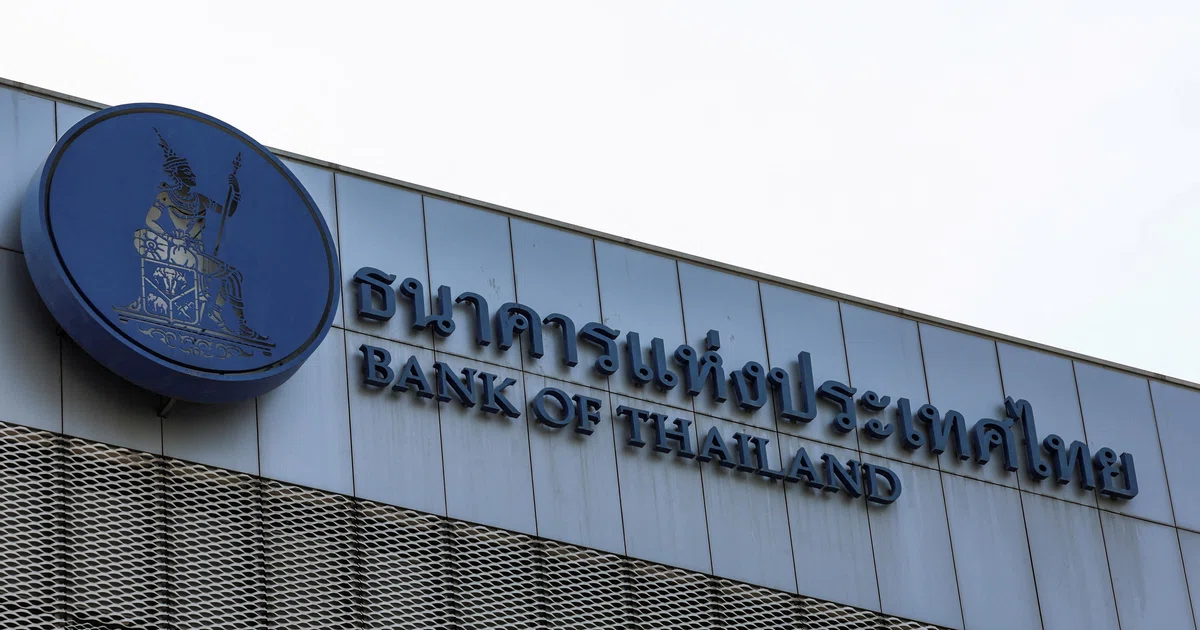
Thailand is poised to name veteran banker Vitai Ratanakorn as the next governor of the central bank, sources familiar said, selecting an advocate of aggressive interest rate cuts to help revive the nation’s faltering economy.
Finance Minister Pichai Chunhavajira picked Vitai, president of the Government Savings Bank (GSB), to run the Bank of Thailand (BOT), the sources said, confirming earlier reports in the Krungthep Turakij and Manager media outlets. Pichai declined to confirm if he is nominating Vitai as he headed into a Cabinet meeting on Tuesday (Jul 15) morning.
The 54-year-old Vitai is widely seen as a proxy candidate for the Ministry of Finance, and the appointment may renew concerns about the independence of the BOT, which under governor Sethaput Suthiwartnarueput has resisted pressure for rate cuts and a higher inflation target. Similar tensions have been seen elsewhere, with US President Donald Trump having publicly derided Federal Reserve chair Jerome Powell and called for deeper rate cuts from the Federal Reserve.
The baht declined 0.4 per cent against the US dollar on Tuesday morning, while the yield on benchmark 10-year sovereign bonds dropped two basis points.
While rates are decided by majority vote, as head of the policy panel Vitai is expected to have critical influence over their direction. The central bank last month left the benchmark interest rate unchanged at 1.75 per cent, citing the need to preserve limited policy space to respond to future shocks.
The policy rate should be significantly lowered for a sustained period to revive the stagnant economy, Vitai told local media after applying for the governor’s role. But more important than rate cuts is the need to ensure commercial banks pass on the reduction to customers.
A NEWSLETTER FOR YOU
Friday, 8.30 am
Asean Business
Business insights centering on South-east Asia’s fast-growing economies.
“This is a deep and prolonged downturn, and while interest rate cuts are necessary, they are not enough,” Vitai said, according to a Bangkok Post report on Jun 23. “Additional supportive measures are required.”
The next BOT governor faces a challenging economic landscape, including the region’s highest household debt, sluggish credit demand, negative inflation and weakening consumption. Despite a cumulative 75-basis point reduction in borrowing costs since October, growth remains subdued, further threatened by the prospect of a punitive US tariff on Thai exports and a slowdown in foreign tourist arrivals, both critical drivers of the economy.
That’s on top of domestic instability which earlier this month saw a court suspend Prime Minister Paetongtarn Shinawatra from office.
Under Vitai, the GSB spearheaded efforts to provide financial relief to small businesses and households burdened by heavy debt in the post-Covid-19 era. The other finalist in the selection process, Roong Mallikamas, is a deputy governor at the central bank who was widely seen as a continuity candidate.
The current governor, Sethaput, has repeatedly spoken of the importance of central bank independence, having repeatedly faced government calls to lower borrowing costs. A backlash from former BOT chiefs and economists last year also helped thwart a government bid to install its favoured nominee as BOT chairman, a separate role that’s influential in appointments and other matters.
Vitai has defended himself after being criticised by an ex-BOT governor who said the banker wouldn’t be able to make independent decisions because of his ties to the government.
“My experience and strong self-identity offer the confidence that I can make decisions independently, based on principles,” he said in a Facebook post on Jul 8. “Seeking the best interest of the country is important, without being influenced by any group.”
Vitai’s appointment needs to be officially confirmed, but is on the agenda for the Cabinet meeting scheduled for 10 am in Bangkok, Krungthep Turakij reported. BLOOMBERG