The Supreme Court on Friday allowed the Trump administration to temporarily block $4 billion in funding intended to support food assistance programs for 42 million low-income Americans, escalating the ongoing dispute over hunger relief amid the government shutdown.
Justice Ketanji Brown Jackson temporarily halted a lower court’s ruling that had ordered full November payments for the Supplemental Nutrition Assistance Program (SNAP). Her decision puts the order on hold until two days after the Boston-based 1st U.S. Circuit Court of Appeals decides on the administration’s request to limit the payment amounts. U.S. District Judge John McConnell of Rhode Island ordered the government on Thursday to use every available source of money.
Big Win for Trump
X
This includes a $23.35 billion child-nutrition fund backed by tariffs that is required to fully cover the $8.5 to $9 billion for November’s SNAP benefits. McConnell, who was appointed by former President Barack Obama, accused the administration of holding back food aid for “political reasons.”
In response, the Justice Department warned the Supreme Court that McConnell’s decision could create “more shutdown chaos,” warning it might trigger “a run on the bank through judicial action.”
X
Solicitor General D. John Sauer also argued that the ruling would compel the administration to spend money that Congress hadn’t approved, potentially draining funds meant for other nutrition programs.
“This unprecedented injunction makes a mockery of the separation of powers,” Sauer wrote in an emergency filing.
The administration said it had already used $4.65 billion in emergency funds to cover part of November’s SNAP costs, but that wasn’t enough to meet the full need. Although the 1st U.S. Circuit Court of Appeals initially refused to pause McConnell’s order, it has not yet ruled on the larger appeal.
The situation grew more confusing on Friday when the USDA informed states that money would be available to provide full SNAP payments — even as the administration was in court trying to block the very order that made those funds possible.
Crisis Situation
States like New York, New Jersey, and Massachusetts acted quickly to send out full payments, saying they didn’t want to risk further delays. By Friday evening, Wisconsin, Oregon, Hawaii, and Pennsylvania had also released the full benefits, while other states — including Colorado, North Carolina, and Illinois — announced they would follow suit over the weekend.
X
Delaware began using its own state funds to issue emergency SNAP payments.
Sauer told the Supreme Court that several states rushed to “grab what they could from the agency’s limited remaining funds” before the administration had a chance to appeal.
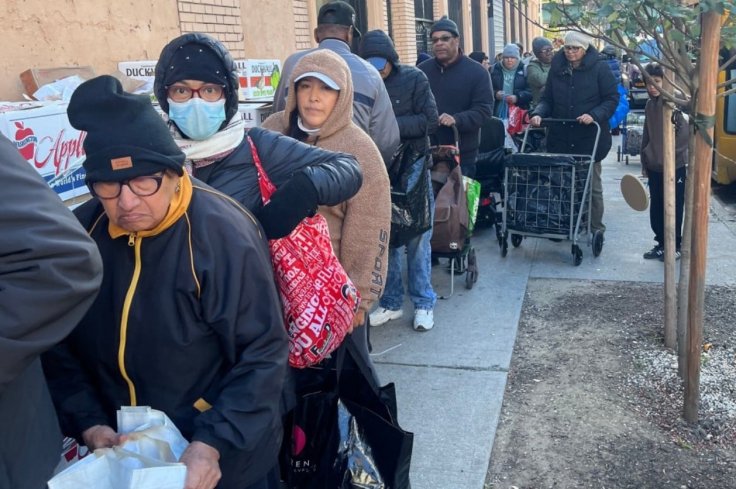
The rapid back-and-forth between courts and state agencies has left millions of SNAP recipients — about one in eight Americans — uncertain about when, or even if, their food assistance will arrive.
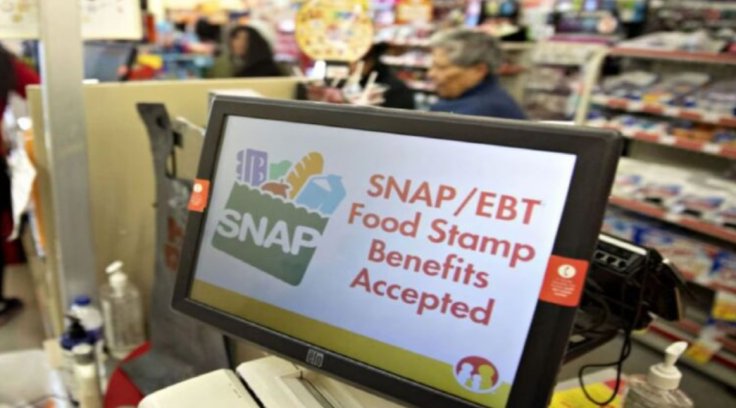
SNAP, which helps low-income families buy groceries, saw benefits lapse at the beginning of November for the first time in its 60-year history. The program typically provides up to $298 a month for single-person households and $546 for two-person households, depending on income.