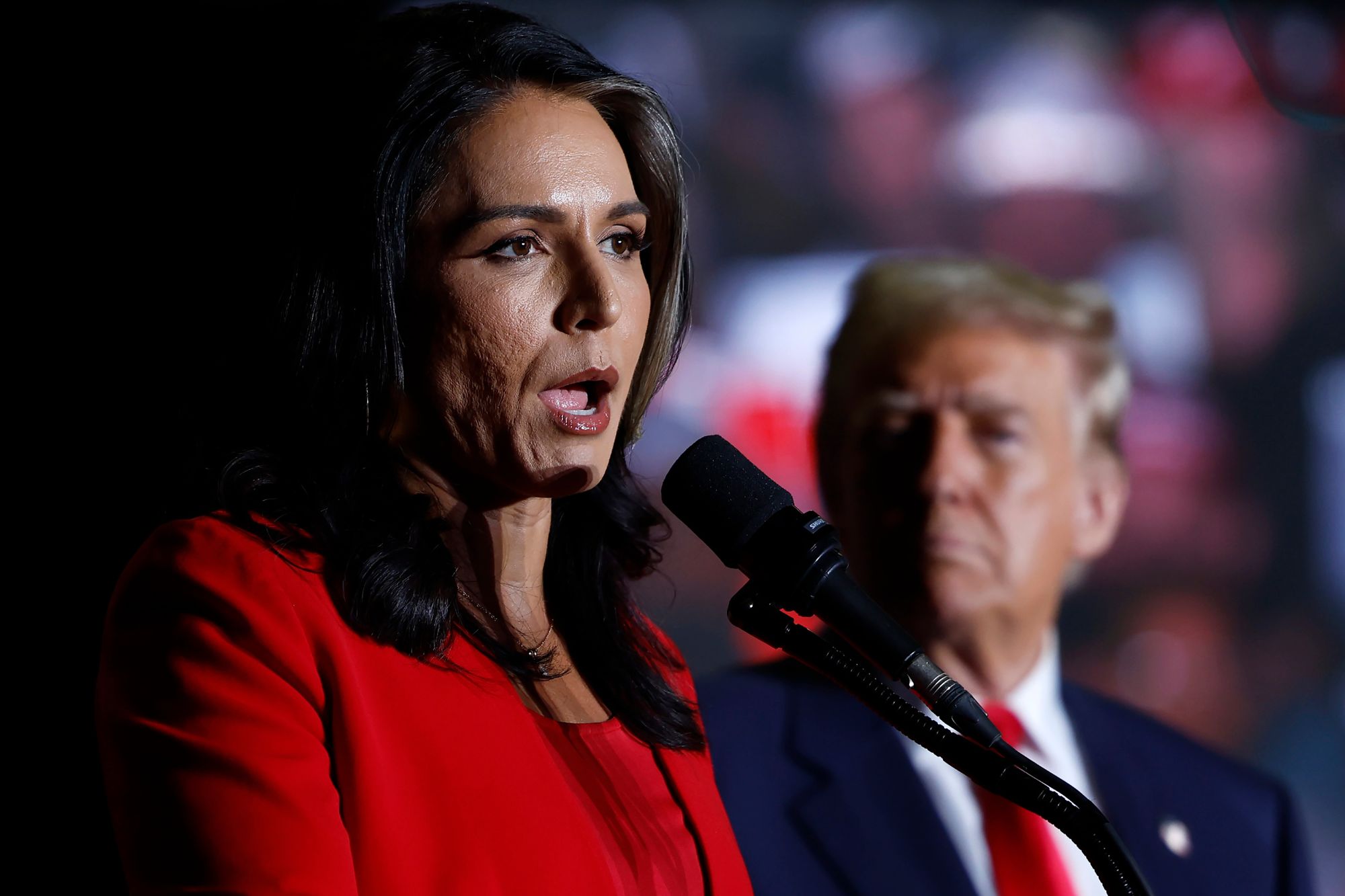
Director of National Intelligence Tulsi Gabbard was not included in key planning meetings for the U.S. military operation to remove Venezuelan President Nicolás Maduro in late 2025 and early 2026, according to reports released on Thursday.
The White House reportedly cut Gabbard out of months of strategic planning for what would become the Venezuelan raid because of her historic skepticism about U.S. military involvement in the South American nation, according to Bloomberg.
Officials anonymously told reporters that Gabbard’s past vocal anti-interventionist views cast doubt on her willingness to fully support the mission’s objectives. Some aides joked privately that the acronym of her title, DNI, stood for “Do Not Invite,” though a White House spokesman denied that characterization.
During her time as a U.S. representative and presidential candidate, Gabbard consistently warned against so-called “regime change wars,” arguing that the United States should avoid military entanglements abroad and allow nations to determine their own futures. She specifically urged in 2019 that the U.S. stay out of Venezuelan political affairs, a position that has resurfaced in public discourse following the Maduro operation.
The United States needs to stay out of Venezuela. Let the Venezuelan people determine their future. We don’t want other countries to choose our leaders–so we have to stop trying to choose theirs.
— Tulsi Gabbard 🌺 (@TulsiGabbard) January 24, 2019
Gabbard’s historical positions and her current role have drawn significant media attention after Operation Absolute Resolve, the name given to the U.S. strikes and special operations raid that ultimately led to Maduro’s capture and extradition to New York on federal drug trafficking charges. Despite her senior national security position, Gabbard was not featured in briefings or media appearances related to the mission.
Reports describe Gabbard as “not part of the inner circle” shaping the intervention, with other top officials such as Secretary of State Marco Rubio, Secretary of Defense Pete Hegseth, and CIA Director John Ratcliffe playing more visible roles in planning and public discussions about the campaign.
In her first year as DNI under President Donald Trump, Gabbard has been a polarizing figure, at times clashing with elements of the intelligence community and the White House over issues including nuclear intelligence assessments and internal agency priorities. Her non-interventionist foreign policy philosophy sometimes diverges sharply from the current administration’s strategy, especially in Latin America.
Her limited involvement stands in contrast to traditional expectations for the Director of National Intelligence, whose office typically contributes key assessments and intelligence support in major foreign operations.
Gabbard did eventually issue a brief statement acknowledging the operation’s success and congratulating U.S. forces and intelligence personnel involved, though it came after the most intense media coverage and was noticeably subdued compared with other administration officials’ commentary.
President Trump promised the American people he would secure our borders, confront narcoterrorism, dangerous drug cartels, and drug traffickers. Kudos to our servicemen and women and intelligence operators for their flawless execution of President Trump’s order to deliver on his…
— DNI Tulsi Gabbard (@DNIGabbard) January 6, 2026