Reuters
If the U.S. Supreme Court bans the consideration of race in college admissions, enrollment of minority groups at selective colleges will likely stall or decline – even if the schools give more weight to factors such as class, a new study found.
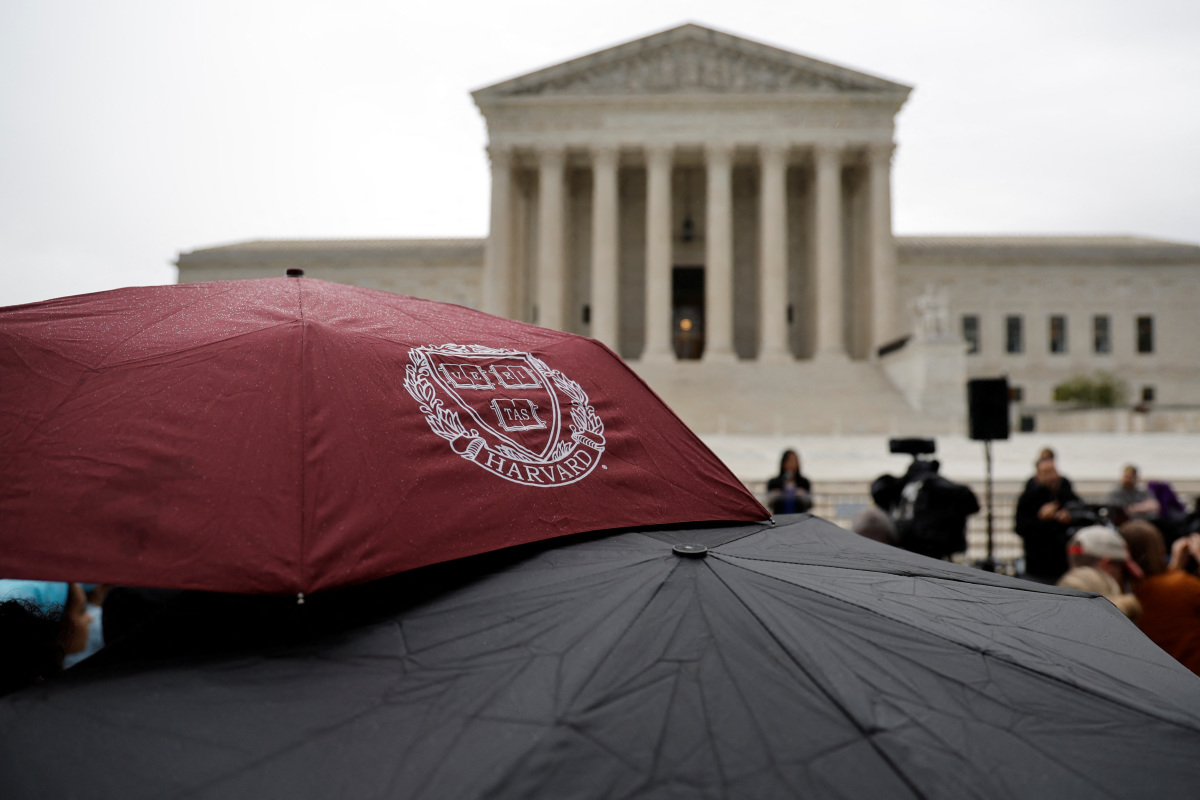
The conservative-leaning court will issue rulings this spring in cases questioning the legality of race-conscious admissions at Harvard and the University of North Carolina.
Students for Fair Admissions, the group suing Harvard and UNC, argues that class-conscious admissions would allow schools to create a diverse student body and boost disadvantaged students without focusing on race.
But a study released on Tuesday by Georgetown University’s Center on Education and the Workforce found that admissions practices that consider class – defined by family income and parental education and occupational prestige – but not race would still leave selective colleges without the representation of Black, Hispanic, Indigenous and Pacific Islander students seen in U.S. high schools.
To increase enrollment of all underrepresented groups on campus without race-conscious admissions, the study said, schools would need to overhaul the entire process.
That would involve eliminating the consideration of students’ athletic talent and their ties to school alumni or donors – factors that largely benefit white, affluent applicants, the study said.
About 60% of top U.S. colleges consider race as a factor in admissions, according to 2015 estimates.
The study’s authors said it was unlikely that schools would universally adopt class-conscious admissions.
Many colleges lacking large scholarship budgets would be limited in their ability to select applicants, which could further erode diversity, said Anthony Carnevale, head of the Georgetown center and lead author of the study.
An expert witness for Students for Fair Admissions in the Supreme Court cases, Rick Kahlenberg, said he believed many leading universities would be willing to overhaul their admissions processes, however, in order to maintain or increase their current racial and ethnic enrollment levels.
Kahlenberg, a scholar at the Georgetown University McCourt School of Public Policy who was not a part of the study, said that would likely include expanding high school recruitment, eliminating legacy admissions preferences and giving preference to socioeconomically disadvantaged students to achieve the desired enrollment.
“Universities are committed to racial diversity,” he said.
Carnevale said schools that do try class-conscious admissions might still face discrimination lawsuits if they start giving explicit preference to low-income students.
Schools would have to invest heavily in expanding their recruitment of high school students from disadvantaged backgrounds for a class-based alternative to produce anywhere near the level of racial diversity accomplished through race-conscious admissions, the study found.