Reuters
The U.S. Environmental Protection Agency on Friday said it would tighten national air quality standards for fine particle pollution for the first time since 2012, a move that could lead to tougher limits from tailpipes to smokestacks.
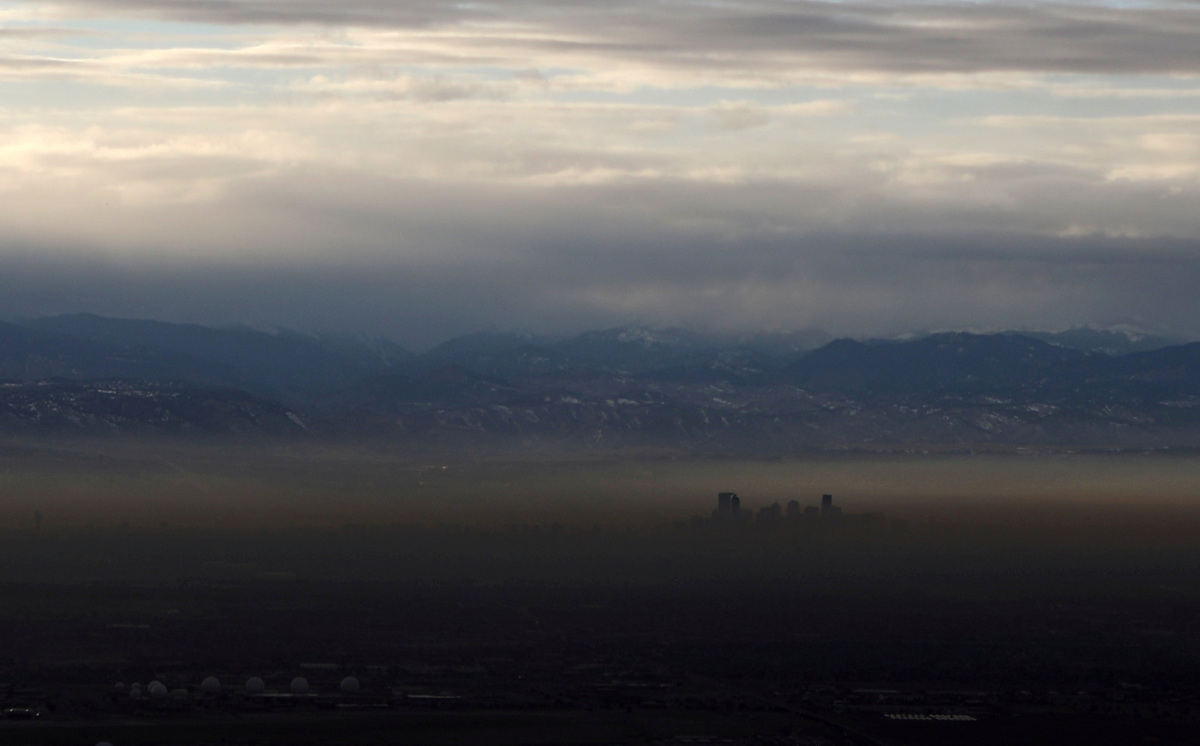
Fine particulate matter, or soot, comes from sources ranging from power plants to cars and trucks and refineries. It causes lung and heart damage and has been found to disproportionately affect low-income communities, according to EPA.
“Fine particulate matter is both deadly and extremely costly,” EPA Administrator Michael Regan told reporters, adding the decision was “based on sound science and a rigorous evaluation of the data that we have at hand.”
The proposal would lower the allowable concentration of particulate matter smaller than 2.5 microns, or PM 2.5, to a range of 9 to 10 micrograms per cubic meter (ug/m3)on average per year, from the current 12 ug/m3 in place since 2012. The EPA said it would also take public comment on revising the level to as low as 8 ug/m3, and as high as 11 ug/m3.
Public health and environmental groups on Friday welcomed the decision to strengthen the existing standard but criticized the agency for not going further.
Most members of the EPA’s Clean Air Scientific Advisory Committee (CASAC) had recommended that the annual average start in a range as low as 8-10 ug/m3 and the primary 24-hour PM 2.5 standard be lowered to 25 ug/m3. EPA left the 24-hour standard in tact at 35 ug/m3.
A study commissioned by the Environmental Defense Fund found that an annual standard of 8 ug/m3 prevents more than four times as many premature deaths as a standard of 10 ug/m3.
“The science is clear that we need standards at the most protective ends of the ranges that EPA’s own scientific advisors recommended,” said National Assistant Vice President at the American Lung Association Laura Kate Bender, who said dozens of groups will press EPA to adopt tighter standards during the 60-day public comment period.
EPA evaluates the PM2.5 standard every five years and has tended to tighten the level after review.
Former President Donald Trump’s administration had left the 2012 standard in place, despite mounting research that those levels pose a threat to public health.
The EPA estimates that an annual PM2.5 standard of 9 ug/m3 would prevent up to 4,200 premature deaths per year and yield $43 billion in net health benefits in 2032.
Earthjustice, which had sued the EPA to force it to update the PM2.5 standard that the Trump administration left unchanged, said Friday’s proposal was a “missed opportunity” to address daily spikes in soot pollution that affect some 63 million people in the United States.
“EPA is not living up to the ambitions of this administration to follow the science, protect public health, and advance environmental justice,” said Seth Johnson, Earthjustice attorney.
EPA will finalize the rule later this year after it reviews public comments.