How Case-by-Case Review Reopened AI Chip Exports From the US to China
The Commerce Department shifted semiconductor export licensing to case-by-case review in January 2026, permitting NVIDIA H200 and AMD MI325X sales to China under nine conditions.
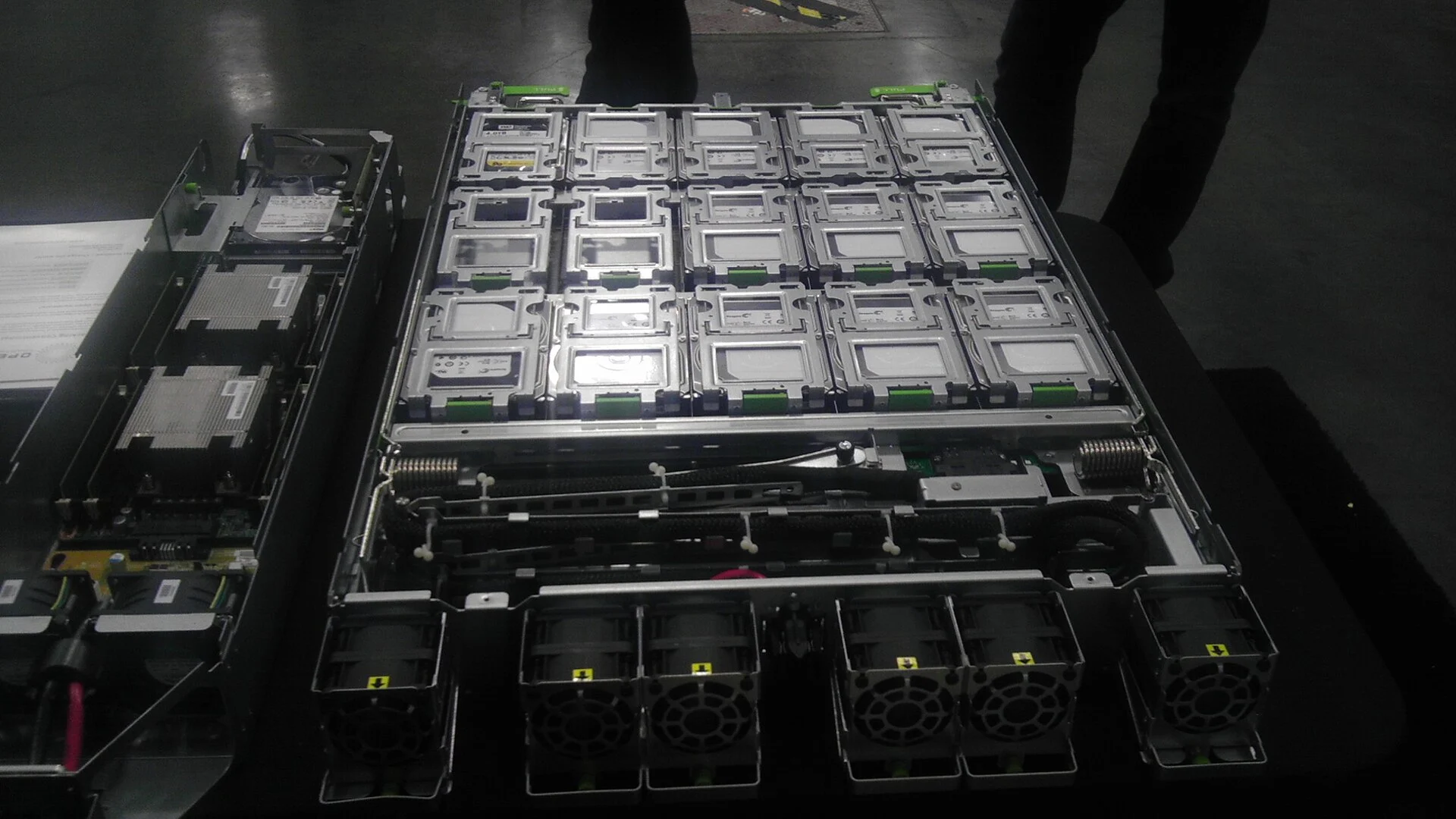
The US Department of Commerce’s Bureau of Industry and Security fundamentally altered how advanced semiconductor exports to China are regulated, shifting from near-total restrictions to case-by-case review. Announced on January 13, 2026, and effective two days later, the policy permits exports of chips like NVIDIA’s H200 and AMD’s MI325X to approved Chinese purchasers, provided applicants meet nine specific conditions ranging from third-party testing to capacity guarantees.
The move reflects a tactical recalibration as the U.S. balances commercial interests with national security concerns. The outcome reshapes incentives for semiconductor manufacturers, cloud providers, and data center operators worldwide, while exposing the practical fragility of export controls in an industry facing profound supply shortages.
Presumption of Denial Becomes Case-by-Case Review
Until January 15, 2026, exports of advanced computing chips destined for China faced a “presumption of denial”—the Commerce Department would block them unless an exporter met an extraordinarily high bar. That standard dissolved. The new rule applies to chips with total processing performance below 21,000 and total DRAM bandwidth below 6,500 gigabytes per second, essentially clearing NVIDIA’s H200 and AMD’s MI325X-equivalent processors for individual application review.
The reversal is significant because these chips rank among the most capable commercially available accelerators outside the military-grade tier. They power large language models, data center operations, and AI research in the U.S. and are among the most sought commodities in technology supply chains worldwide. Removing the categorical prohibition does not mean approval; applicants must satisfy each of nine requirements to move forward.
Policy Change Timeline
The Bureau of Industry and Security has enforced a separate license requirement for Chinese-headquartered companies operating outside China since May 2025. President Trump announced the licensing easing on December 8, 2025. The Bureau of Industry and Security issued the final rule on January 13, 2026, with an effective date of January 15, 2026.
Meeting Nine Conditions to Export
Exporters must demonstrate that chips are commercially available in the U.S., documented with shipment records to domestic customers. They must also certify that sufficient supplies exist to avoid delays serving American buyers. Aggregate exports cannot exceed 50 percent of the total processing power of identical chips shipped domestically since commercial launch.
Third-party testing in the U.S. must verify the technical specifications of a “representative subset” of exported units before they leave American soil. The policy also requires exporters to identify remote cloud-service end users located in a list of countries of concern, including China, Macau, Russia, Iran, North Korea, Cuba, Belarus, and Venezuela. Companies must certify that Chinese purchasers maintain robust export compliance procedures and cannot include sanctioned entities or firms on the Commerce Department’s Entity List.
For chips deployed in Infrastructure-as-a-Service operations, providers must disclose their customers in restricted jurisdictions and commit not to transfer model weights or algorithms to unauthorized parties. Physical security measures at the final destination must be detailed in writing.
A 25 Percent Tariff Replaces Revenue Sharing
President Trump paired the licensing change with a 25 percent import tariff on covered H200 and MI325X chips not destined for U.S. supply chain use. The tariff functions as an export fee. Chips bound for domestic data centers exceeding 100 megawatts of AI load, for research and development, startups, consumer applications, and public-sector uses remain exempt.
The tariff replaced an initially announced revenue-sharing arrangement permitting H200 sales to approved Chinese customers under agreements that would direct 25 percent of revenue to the U.S. government. The licensing rule and the tariff both took effect January 15, 2026.
Supply Chain Constraints Collide With New Demand
The policy opens a new demand channel precisely as the semiconductor industry faces acute shortages in critical inputs. Nearly 900,000 H200-equivalent chips can be exported under the 50 percent aggregate cap, equivalent to twice the processing capacity of the world’s largest data center. Meeting this demand tests global fabrication and memory capacity.
TSMC, the world’s dominant manufacturer of advanced semiconductors, has said its capacity for cutting-edge manufacturing nodes is about three times short of current demand globally, even before accounting for H200 exports to China. High-bandwidth memory, a critical component in every H200 and MI325X shipped, faces even tighter constraints. SK Hynix is sold out through 2026, and other producers are unable to augment output at the speeds the market demands.
Exporters must certify that sufficient supplies exist to avoid delays serving American buyers, a condition some analysts argue appears impossible to credibly meet when critical parts of the AI chip supply chain are already oversubscribed.
Enforcement Uncertainties and Loopholes
Since May 2025, the Commerce Department has also enforced a separate license requirement for advanced chips exported to Chinese-headquartered companies—or those with parent companies headquartered in China—even when they operate outside the country. That requirement reflects an enforcement concern: companies could otherwise legally export to approved customers in third countries, only to have chips redirected internally to Chinese entities. Under the January 2026 rule, such transactions remain eligible for case-by-case review if the nine conditions are met.
The “know your customer” and end-use restrictions depend on certifications from Chinese purchasers that chips will not reach military, nuclear, missile, or weapons programs. However, China’s stated “military civil fusion strategy” deliberately blurs distinctions between private companies and state military entities. Shell company tactics create additional loopholes. The third-party testing requirement applies to only a representative sample of exports, not every unit. Once chips enter China, preventing redirection to alternative customers or uses becomes virtually impossible without intrusive inspections.
The policy’s practical effectiveness depends partly on self-enforcement by Chinese customers and partly on Congressional commitment to funding monitoring. The Bureau of Industry and Security’s fiscal 2026 budget includes at least $10 million earmarked for enforcing these end-use and end-user restrictions. Whether that funding proves sufficient to detect diversion remains uncertain.
Market Hesitation and Strategic Ambiguity
The policy’s passage did not generate immediate market clearing. In the weeks after the rule took effect, China had reportedly paused the processing of H200 shipments and discouraged domestic purchases, using customs enforcement and informal guidance rather than a formal ban. This hesitation may serve multiple purposes for Beijing, including preserving diplomatic leverage and sustaining uncertainty that benefits domestic chipmakers such as Huawei.
For the semiconductor industry globally, the shift signals that future licensing policies could shift again with administrations or geopolitical circumstances. Executives at fabrication plants and chipmakers face strategic ambiguity about whether to prioritize American or Chinese customers and whether to locate capacity near U.S. or Chinese demand. The policy attempts to manage that tension through conditions, caps, and tariffs whose effectiveness will become clearer as shipments accumulate and enforcement patterns emerge.
Photo: Robert.Harker · CC BY-SA 3.0 · via Wikimedia Commons