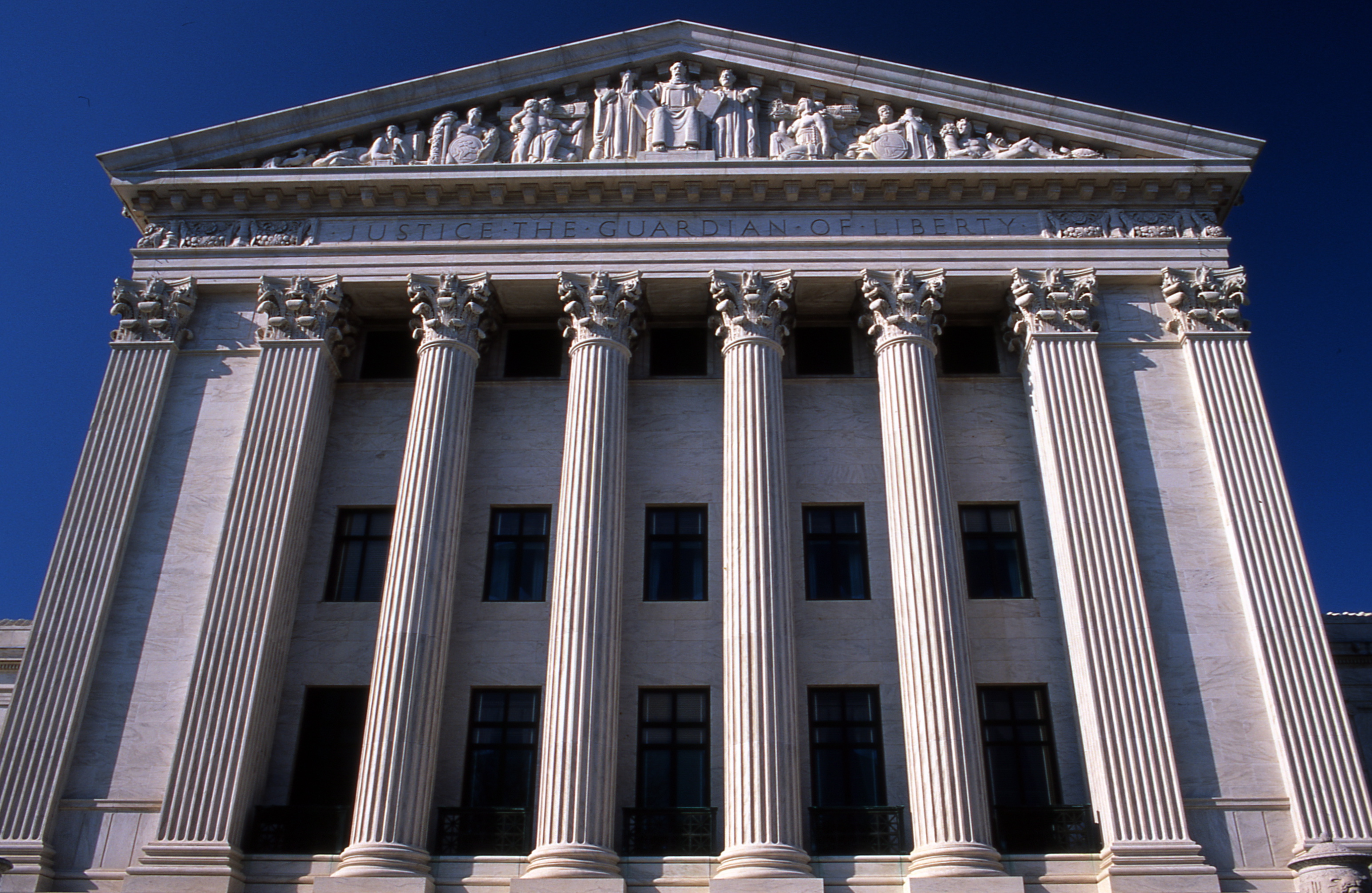
The US Supreme Court is set to decide a pivotal case that could reshape how race factors into American elections.
In Louisiana v. Callais, justices will determine whether Section 2 of the Voting Rights Act (VRA)—the law’s main safeguard against minority vote dilution—remains constitutional when used to mandate majority-minority districts.
The ruling, expected later this term, could significantly alter congressional map-drawing nationwide and mark the most consequential voting-rights decision in a decade.
What the Case Is About
Section 2 of the VRA forbids electoral maps that weaken the voting strength of racial minorities, even if no intent to discriminate is proven. The case arose after Louisiana adopted a new congressional map in 2024, adding a second Black-majority district—a remedy ordered by a lower court that found the earlier map diluted Black votes.
State officials later reversed their defence of the plan, arguing instead that the race-conscious remedy itself violated the Constitution’s equal-protection and voting-rights clauses. The justices heard arguments in March 2025 and requested reargument this autumn, signalling uncertainty over whether drawing a district primarily on racial grounds remains lawful.
Signals From the Bench
The Court’s conservative majority appeared divided but sceptical of race-based districting. Justice Brett Kavanaugh questioned whether the VRA’s race-conscious remedies should have a ‘time limit,’ suggesting that continuing them indefinitely might conflict with constitutional neutrality.
Justice Clarence Thomas and Justice Samuel Alito pressed advocates on whether courts have overextended Section 2 beyond its original intent.
By contrast, Justices Elena Kagan and Sonia Sotomayor warned that curtailing Section 2 could”hollow out” protections that have prevented decades of vote dilution. They argued that discrimination persists in more subtle forms and that weakening federal oversight risks reverting to pre-civil-rights-era inequities.
What Each Side Argues
States and conservative advocates supporting the Louisiana claim Section 2 now overreaches, compelling racial balancing rather than preventing discrimination. They argue that forcing legislatures to create majority-minority districts entrenches race as a dominant political criterion, contrary to the Fourteenth Amendment’s demand for equal treatment.
Civil-rights groups, including the ACLU, counter that Section 2 remains vital to ensuring fair representation. They contend that without it, minority voters would face systematic dilution of electoral power in states with racially polarised voting patterns. The group said in a statement that Section 2 has been “a critical tool for protecting the promise of equal participation in democracy.”
Stakes and Potential Impact
A ruling that narrows or invalidates Section 2 could reshape dozens of congressional and legislative maps nationwide. Political analysts estimate that up to 19 districts currently drawn to empower minority voters may be reconfigured to favour white majorities.
Such a decision would embolden GOP-controlled legislatures, particularly in the South, to redraw boundaries with fewer federal constraints—potentially reducing Black, Latino, and Native American representation. Conversely, if the Court upholds Section 2, it would reaffirm judicial precedent from cases like Allen v. Milligan (2023), which maintained race-based remedies as a necessary, albeit limited, tool for combating discrimination.
The final opinion—expected before the Court recesses in June 2026—will determine whether the Voting Rights Act retains its last remaining teeth or becomes a relic of the civil-rights era.
Originally published on IBTimes UK