


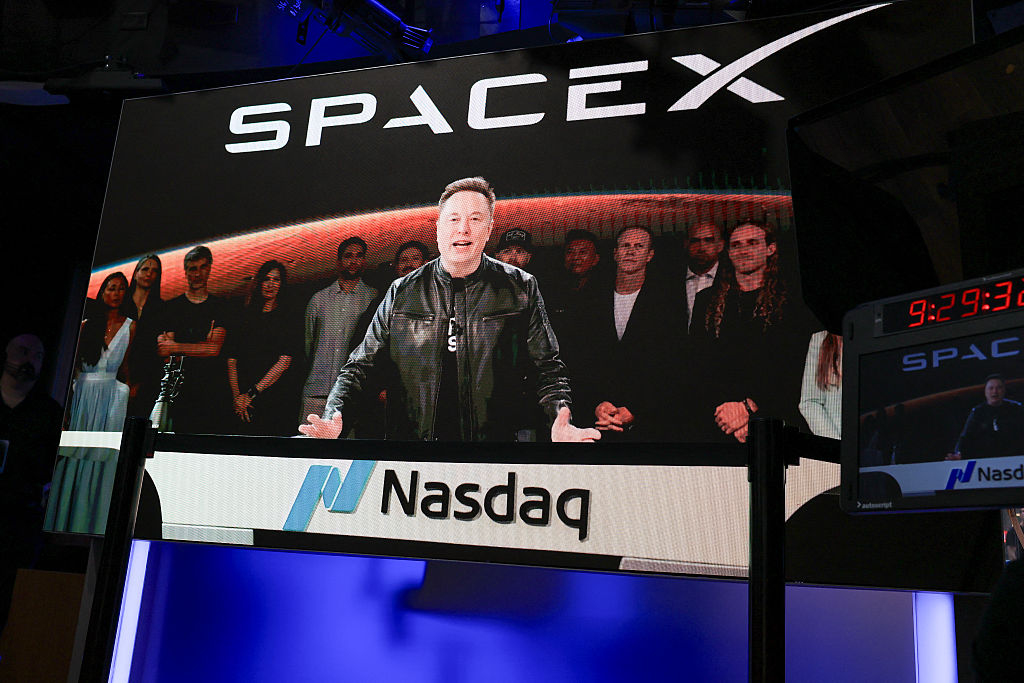
Wall Street is preparing for one of the busiest trading sessions of the year as FTSE Russell completes its annual reconstitution of the Russell U.S. indexes, a closely watched event expected to trigger massive buying and selling.
This year’s rebalance is drawing even greater attention because newly public aerospace giant SpaceX is set to be fast-tracked into the Russell 1000 Index following its blockbuster initial public offering earlier this month.
Analysts expect the reshuffling, combined with broad changes affecting hundreds of companies, to generate roughly $150 billion in trading volume during Friday’s market close. Reuters reported that the session is likely to become one of the year’s most important liquidity events for U.S. equities.
The Russell indexes serve as benchmarks for approximately $12.2 trillion in assets, making membership highly valuable for publicly traded companies. Passive investment funds that track the indexes must buy and sell shares to mirror the new composition, often creating unusually large trading volumes and sharp price swings during the final minutes of trading.
According to FTSE Russell, last year’s June reconstitution generated more than $217 billion in trading at the closing bell, and this year’s event could rival that activity. SpaceX is expected to be among the biggest beneficiaries of the rebalance. Following one of the largest IPOs in Wall Street history, the company will enter the Russell 1000 under FTSE Russell’s revised fast entry rules for newly listed companies.
The stock will be classified as approximately 90.4% growth and 9.6% value, making it a significant holding for growth-focused index funds. Analysts estimate that passive funds will be forced to purchase billions of dollars’ worth of SpaceX shares as the new weighting takes effect.
Beyond SpaceX, the reconstitution reflects a broader shift in market leadership. Roughly 62 companies are expected to join the Russell 1000, with many graduating from the Russell 2000 as their market capitalizations expanded over the past year. Technology and industrial companies account for a large share of the promotions.
Several major technology companies will also see changes to their style classifications. Microsoft and Apple are expected to shift further toward value indexes, while Alphabet and Advanced Micro Devices will be classified entirely as growth stocks.
Amazon is also moving toward the value side of the Russell style indexes, changes that will require additional portfolio adjustments by fund managers tracking both growth and value benchmarks.
Meanwhile, smaller companies continue to attract renewed investor interest. The Russell 2000 has outperformed many large-cap benchmarks in recent weeks, fueled by optimism surrounding artificial intelligence spending, improving earnings expectations, and a broadening market rally beyond the mega-cap technology names.
Several fast-growing companies, including Bloom Energy, are also changing index classifications following significant gains in their market values. This year’s rebalance is also historically significant because FTSE Russell has returned to a semiannual reconstitution schedule for the first time in more than three decades.
The index provider said the move is designed to ensure benchmarks more accurately reflect rapidly changing market conditions while maintaining transparency for investors. Preliminary data also show the total market capitalization represented by the Russell 3000 has climbed to $75.6 trillion.
