


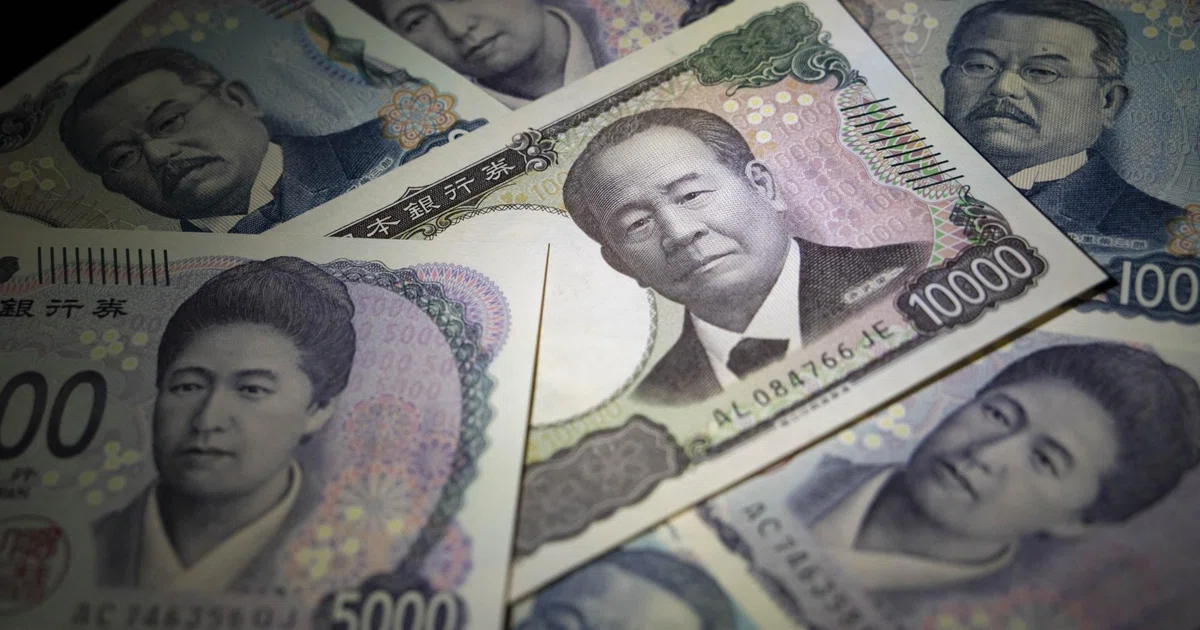
[TOKYO] Bank of Japan (BOJ) officials are paying increasing attention to the yen’s potential impact on inflation, with possible implications for future rate hikes after a likely hold decision next week, according to sources familiar with the matter.
The officials see the weak yen as a factor with growing influence, particularly as businesses become more inclined to pass on higher input costs to their customers, according to the sources.
While the officials do not have a preset course for borrowing costs, having just raised the benchmark rate last month, the yen could prompt them to bring forward subsequent rate hikes, the sources said.
The broad expectation among private economists is that the BOJ will raise rates every six months or so, a pace that currently positions the next likely move in the summer.
The yen briefly strengthened to 158.33 against the US dollar from around 158.68 before the news.
The bank delivers its next policy decision on Jan 23, and the officials are of the view that it will be appropriate to keep the rate on hold at 0.75 per cent, the highest in three decades. The board will make a final policy decision after monitoring economic data and financial markets up to the last minute, the sources said.
Navigate Asia in
a new global order
Get the insights delivered to your inbox.
The officials will be watching how the yen affects underlying inflation, including the price expectations of households and businesses, given that the inflation trend has already come close to their 2 per cent target, the sources said.
The officials see the BOJ as having room to continue hiking rates, with an emphasis on executing any policy changes in a timely manner rather than staying too cautious, the sources said. Some officials noted that the negative repercussions of a weak yen may be increasing for the economy as the trend persists, according to the sources.
The yen has remained weak against the US dollar even after the BOJ hiked the benchmark rate on Dec 19, sliding further to a fresh 18-month low this week on news that Prime Minister Sanae Takaichi will hold a snap election next month.
The yen has gained a little after touching an 18-month low earlier this week following a series of ramped up warnings by currency authorities. The yen’s 10-year average versus the US dollar is 123.20, according to data compiled by Bloomberg, and it’s been trading roughly between 140 and 161.95 for more than two years.
A fall in the yen increases inflationary pressures via the higher cost of imports, while it boosts exporters’ profits.
Japanese businesses are turning increasingly vocal about foreign exchange rates. In unusual remarks for the head of Japan’s biggest business lobby Keidanren, Yoshinobu Tsutsui said this week that the government should conduct currency intervention to halt the excessive depreciation of the yen, describing recent weakness as “a little too much”. BLOOMBERG
Decoding Asia newsletter: your guide to navigating Asia in a new global order. Sign up here to get Decoding Asia newsletter. Delivered to your inbox. Free.
