EU-Mercosur Interim Trade Deal to Apply From 1 May 2026, Ahead of Parliament’s Consent
The EU's interim trade deal with Brazil, Argentina, Uruguay and Paraguay is set to apply provisionally from 1 May 2026, while Parliament's consent waits on an EU court opinion.
The European Commission says the interim trade agreement between the EU and Mercosur will be applicable from 1 May 2026. The deal covers four South American countries: Brazil, Argentina, Uruguay and Paraguay. It is the trade half of a wider package that the two sides signed in January 2026.
Full entry into force still depends on the European Parliament’s consent, and that consent is on hold while the EU’s top court considers the legal basis of the agreements. Tariff changes can begin before the parliamentary step is complete. Some members of the Parliament have objected to that sequence.
Two Agreements, but Only One Applies Early
The EU and Mercosur signed two texts in January 2026. The EU-Mercosur Partnership Agreement covers political dialogue and cooperation. The Interim Trade Agreement covers only trade and investment liberalisation, according to the Commission, and it is the text that carries the tariff schedules. The Diplomat’s report calls the broader text the EU-Mercosur Association Agreement and refers to the two texts as APEM and ATI.
Only the interim agreement is applied provisionally. The Commission advises EU importers and exporters to prepare for the provisional tariffs starting 1 May by reviewing the tariff reduction staging for their product lines.
The Diplomat reports that the EU officially signed the agreement on 17 January. The Commission says the interim text was signed in January 2026 and will be applicable from 1 May 2026.
Tariff Scope in the Commission Notice
The European Commission says duties will be removed on more than 91% of EU goods exported to Mercosur, mostly over up to 10 years, with certain sensitive products phased in over up to 15 years.
What Tariffs Change From 1 May
The Commission says duties will be removed on more than 91% of EU goods exported to Mercosur, mostly over periods of up to 10 years. Certain sensitive products are phased in over up to 15 years. In the other direction, the EU will progressively remove duties on 92% of Mercosur imports, and give preferential access to a further 7.5% through tariff-rate quotas and other mechanisms, over up to 10 years. For key farm exports, the Commission says, liberalisation is partial and runs through quotas rather than full tariff elimination.
Some rates apply on day one. Within the quotas, poultry, pork, sugar, honey and industrial ethanol enter at 0% duty, while beef enters at 7.5%. The Commission says the dismantling schedule starts on the day the agreement enters into force and runs for 15 years. The percentages above are phased in over up to 10 years. The sources used here do not give a date for entry into force, and none confirms that application began on 1 May.
The agreement also includes a bilateral safeguard clause. It makes it possible to reverse tariff concessions in the event of a threat of serious injury to EU production. The Commission’s list of products under the safeguard clause includes vehicles and automotive parts, footwear, clothing and textiles, oil seeds and protein crops, hake, prawns and squid, and coffee, tea and cacao.
Proof of Origin Decides Who Qualifies
Preferential rates depend on a statement on origin. Under Annex 3-C, the exporter declares that the goods are originating and includes an operator reference number. On the EU side that is the REX number. On the Mercosur side it is the CUIT in Argentina, the CNPJ in Brazil or the RUT in Uruguay. Importers claim the preference using that statement.
For up to five years from entry into force, the EU will also accept a certificate of origin under Annex 3-D, as published by Notice 2026/875. The Commission lists this certificate as an accepted statement on origin during that period. From entry into force, Paraguay will issue only Annex 3-D certificates. The same preference can therefore be claimed with different documents, depending on the exporting country and the period in question.
Tariff changes can begin before the parliamentary step is complete.
Parliament Asks the Court First
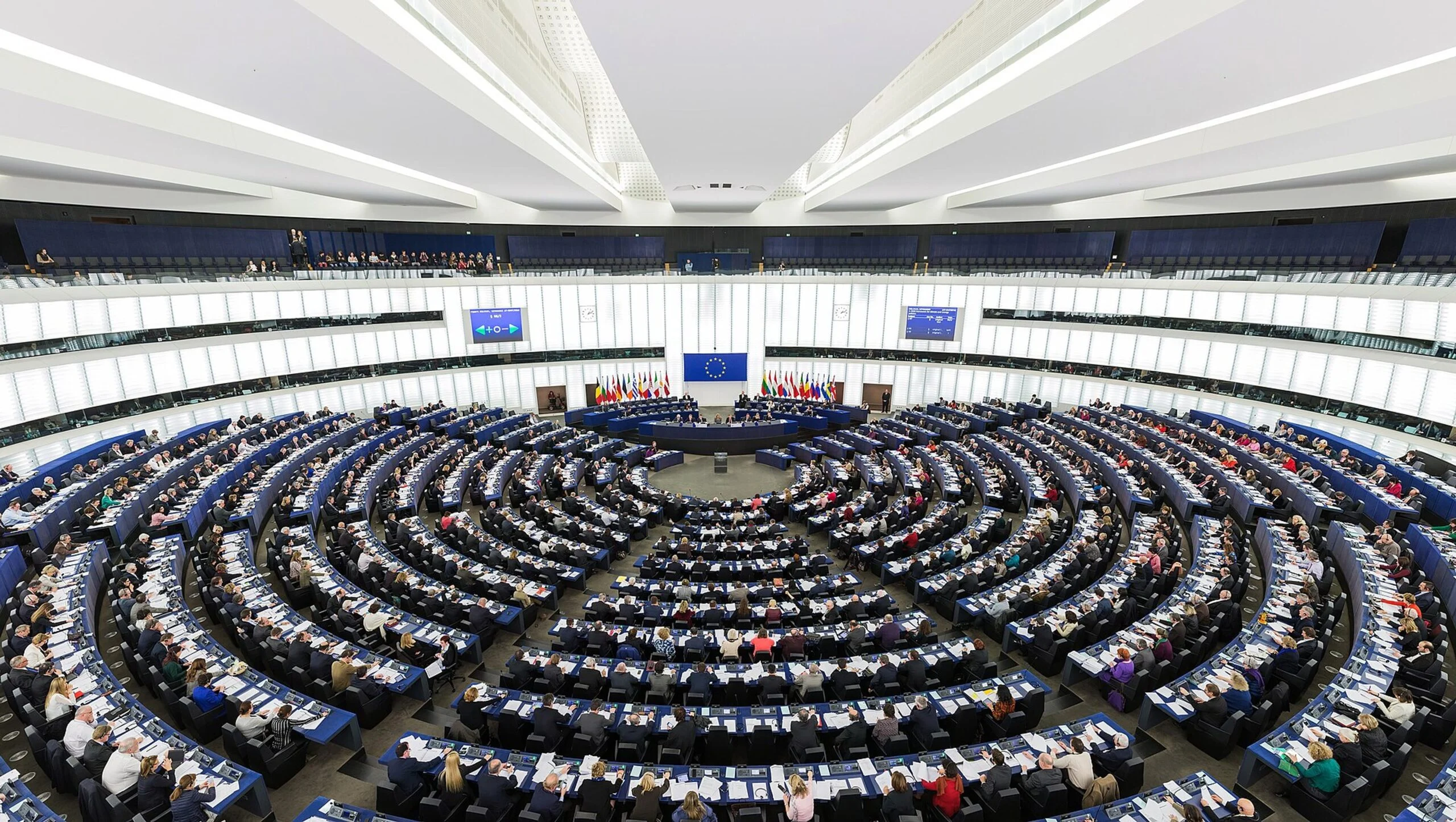
In January 2026, the European Parliament approved a resolution asking the Court of Justice of the European Union for a legal opinion. The vote was 334 in favour, 324 against and 11 abstentions, according to The Diplomat. The Diplomat says the court will review the legal basis of the EU-Mercosur Association Agreement (APEM) and the Interim Trade Agreement (ATI). The exact date of the vote is not confirmed in the sources used here.
Parliament cannot vote on consent until the court issues its opinion, and reporting at the time said that opinion could take more than a year. The European People’s Party backed provisional application, arguing that it could offer greater predictability and business opportunities in South America. It also warned that the referral could cause unnecessary delays. The Socialists and Democrats said they regret that the vote prevents Parliament from starting democratic scrutiny.
The leader of Patriots for Europe, Jordan Bardella, urged Ursula von der Leyen to end provisional application immediately. The Left called the vote a victory and argued that the treaty is detrimental to agriculture, climate and health.
The Commission’s page says full ratification is still subject to ongoing debate in the EU Parliament and potential CJEU rulings. The interim text is set to apply while its legal basis is under review.
Ratification Dates Differ, and Full Entry Into Force Stays Open
The Commission’s page names Brazil, Argentina, Uruguay and Paraguay as the countries covered. Scottish Legal News, writing on 25 March, tied the 1 May start to Mercosur countries that complete their ratification procedures and notify the EU before the end of March. It said Argentina, Brazil and Uruguay had completed the required steps, and that Paraguay had recently ratified and was expected to notify soon. The article gives no specific dates for any of these steps. It also said the Commission sent its note verbale to Paraguay, which it described as the legal guardian of the Mercosur treaties, as the final procedural step.
Scottish Legal News also reported that the Court had not yet ruled at that date. It said the deal will create the world’s biggest free trade zone, with a combined population of more than 700 million people. It quoted trade commissioner Maroš Šefčovič on the need to complete all democratic procedures while provisional application proceeds.
As of 25 March, no Court opinion or Parliament consent vote had been reported. The timetable for the partnership agreement was therefore open at that date, and the interim trade text was the part set to apply provisionally.