How the EU’s PPWR Forces Packaging Redesign Starting August 12
New rules on recyclability, empty space, and materials took effect August 12. Businesses must register, report data, and overhaul packaging design—or face shipment holds and fines.
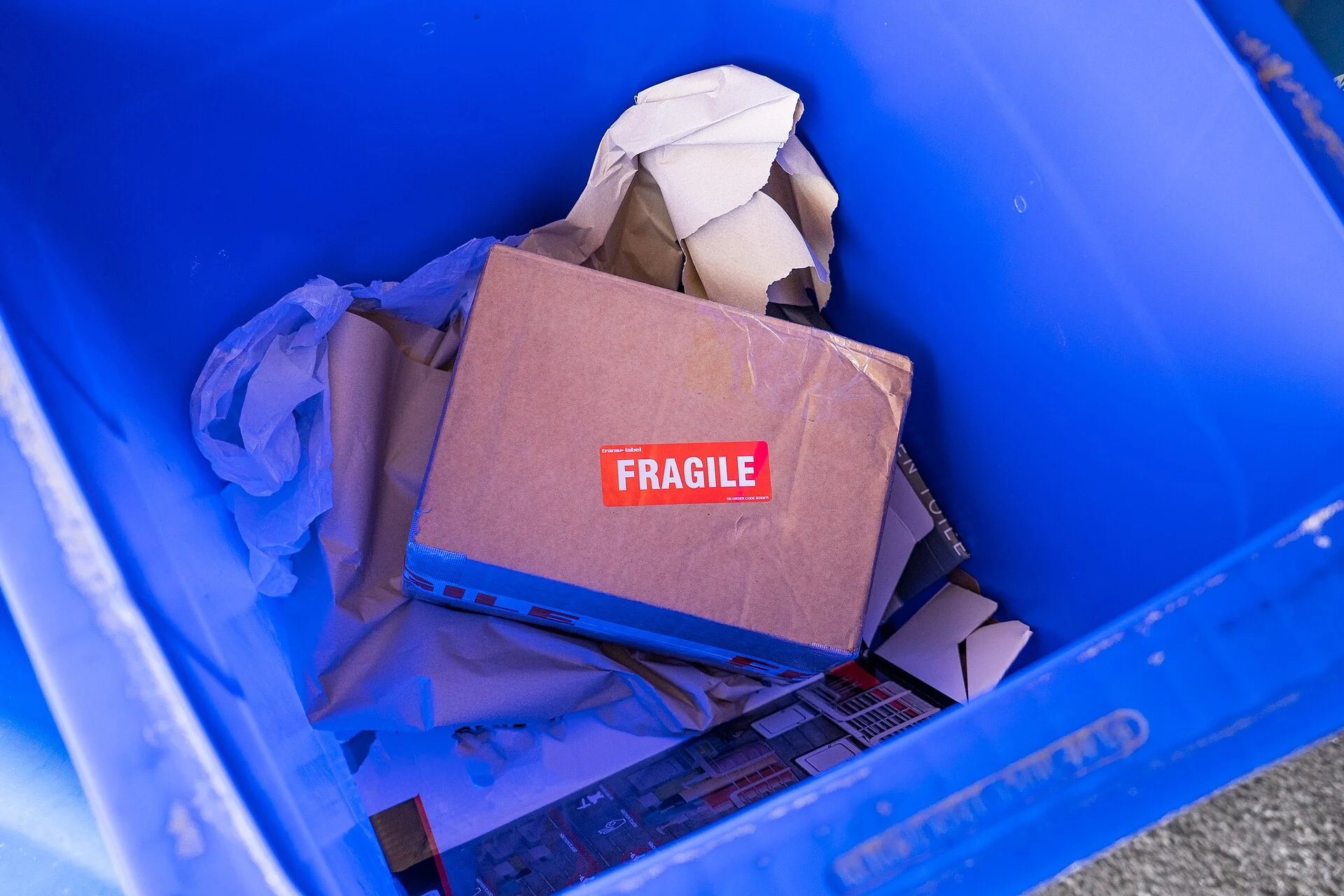
Rising packaging waste across the EU prompted a regulatory overhaul that took effect on August 12, 2026. The Packaging and Packaging Waste Regulation (PPWR) replaced three decades of fragmented national rules with a single, directly applicable framework affecting any business placing packaged goods on the EU market. Unlike its predecessor—a 1994 Directive that allowed each of the 27 member states to implement requirements differently—the PPWR is a Regulation that applies uniformly across all markets with no room for national variation.
The shift introduces immediate restrictions on chemicals, registration mandates, and efficiency standards, with more stringent requirements phasing in through 2040. The regulation supports the EU’s broader push toward climate neutrality by 2050 and requires all packaging to be recyclable by 2030. For international suppliers, the change creates both a hard compliance deadline and a sharp dividing line: companies shipping to the EU now face a single set of design and registration rules across the bloc, while enforcement and costs continue to vary by country. Failure to register, declare required data, or meet design standards results in shipment holds, administrative penalties that vary by member state, and delisting from major online platforms.
From fragmented rules to unified standards
The European Commission proposed the PPWR in 2022 to replace the patchwork system created by the 1994 Packaging and Packaging Waste Directive. Under the old Directive, each member state maintained separate packaging regulations, meaning a company could meet different requirements in different countries. This fragmentation created barriers to cross-border trade and allowed inconsistent enforcement. The European Parliament approved the PPWR on April 24, 2024, and the Council followed on December 16, 2024.
The shift from Directive to Regulation is legally significant. A Directive requires each member state to implement the rules into national law, often leading to variations in interpretation and enforcement timelines. A Regulation is directly applicable in all member states and requires no national transposition. This removes the possibility for local adjustments and creates stronger harmonization. Beginning August 12, 2026, all 27 EU member states apply the same rules simultaneously, eliminating the transition periods and local flexibility that characterized the old system.
The PPWR consolidates compliance costs into a single framework. While adjustment expenses arise in the near term, the Commission argues that unified rules reduce long-term costs by eliminating the need to maintain parallel compliance systems for each member state.
Key dates and requirements through 2040
PPWR took effect August 12, 2026. From 2027, digital identifiers (QR codes) begin phasing in, with harmonized labeling required from 2028 and QR codes for reusable packaging mandatory from February 2029. By 2030: a 50% empty-space cap for grouped, transport, and e-commerce packaging (a 40% e-commerce cap already applies from August 2026), Grade C minimum recyclability, recycled-content minimums (10–35% for plastic; 25–70% for other materials), and 40% reusable transport packaging. By 2038, only Grade A or B packaging permitted. By 2040, 70% of transport packaging must be reusable and recycled-content targets rise to 65% for plastic.
What changed on August 12: immediate requirements
The regulation’s first enforcement target is per- and polyfluoroalkyl substances (PFAS), known as “forever chemicals” because they persist indefinitely in the environment. Food-contact packaging such as takeaway containers, pizza boxes, and microwave popcorn bags can no longer contain PFAS above strict thresholds: 25 parts per billion as a target, 250 ppb as a sum, and 50 parts per million total fluorine. The Commission published implementation guidance in March 2026, but enforcement began immediately with no grace period.
Every company placing packaged goods on the EU market must register with national authorities in each country where it sells. Companies based outside the EU that ship directly to EU consumers must appoint an authorized representative within a member state. Most member states impose no minimum sales threshold—even a single unit triggers the requirement to register. Registrations feed into a unified EU producer registry expected by 2029, consolidating data currently held separately by each member state.
After registration, businesses must report annually on the weight of packaging they use, broken down by material type, and declare whether packaging is designed for single-use or reuse. Companies must also pay fees to producer responsibility organizations (PROs) in each member state—costs that vary by jurisdiction and by the type of packaging. The reporting structure consolidates into a unified registry by 2029, but until then companies file separately in each country. This creates administrative overhead for international suppliers managing multiple registrations and fee structures simultaneously.
The recyclability grading system and 2030 redesign requirements
The PPWR uses a five-tier system measuring what percentage of packaging, by weight, can be effectively recycled. Grade A represents 95% or more recyclable material; Grade B, 80% or more; Grade C, 70% or more. Grades D and E fall below 70% and are effectively non-compliant under the new rules. From January 1, 2030, only Grade C and above are permitted on the EU market. By January 1, 2038, Grade C packaging is phased out entirely, leaving only Grades A and B compliant.
Recyclability grades are not assigned by declaration or self-assessment but reflect measurable material properties and infrastructure compatibility. Sorting compatibility is a key factor—materials must be identifiable by near-infrared (NIR) scanners in sorting facilities. Multi-material laminates produce mixed signals that cause misidentification, lowering the grade. A glass jar with an easily removable metal lid might achieve Grade A, but adding a non-recyclable plastic sleeve lowers the rating significantly. Companies must rethink packaging strategy, update systems, and establish long-term processes for collecting, maintaining, and verifying packaging data. This is not a one-time compliance project but a continuous challenge with requirements rolling out between 2026 and 2040.
To meet the 2030 deadline, companies must conduct material audits, obtain Declarations of Conformity from suppliers for each packaging type, and plan reformulation for packaging that will not meet the minimum Grade C standard. EU importers share full legal accountability for packaging compliance and, when selling under their own brand, must issue their own Declarations of Conformity. The regulation requires documentation to be retained for five years for single-use packaging and ten years for reusable packaging, available within ten days of a regulatory request.
The regulation itself sets no EU-wide fine — penalties for non-compliance vary widely from one member state to another.
Recycled content mandates and material-specific targets
Beginning January 1, 2030, plastic packaging must incorporate minimum percentages of post-consumer recycled content. The targets vary by packaging type and material sensitivity. Single-use beverage bottles must contain 30% recycled content starting in 2030, rising to 65% by 2040. Contact-sensitive PET packaging (such as food trays) requires 30% recycled content by 2030 and 65% by 2040. Other contact-sensitive plastics must meet 10% in 2030 and 35% in 2040. All other plastic packaging faces 35% in 2030 and 65% in 2040.
Non-plastic materials face their own recycled content minimums. Paper and cardboard must contain 70% recycled content. Glass requires 50% recycled content. Metal packaging must incorporate 25% recycled content. These targets are calculated as an average across all packaging produced at each manufacturing site in a given calendar year, not per-unit minimums. Limited exemptions from reuse and recyclability requirements apply to medical and hazardous product packaging where safety or sector-specific legislation requires it. Companies must gather documented evidence of recycled content at every supply chain tier and plan supplier contracts accordingly, as recycled material costs and availability vary across regions.
The regulation also imposes efficiency standards that take effect in phases. From August 12, 2026, e-commerce packaging must not exceed 40% empty space unless technically unavoidable. A broader cap follows from 2030, when grouped, transport, and e-commerce packaging must not exceed 50% empty space overall. These constraints force companies to redesign box sizes or change fill materials. Starting 2030, 40% of transport packaging must be reusable; by 2040, that figure rises to 70%. The regulation bans certain single-use plastic formats starting in 2030, including shrink wrap on multipacks and hotel miniature bottles.
Enforcement mechanisms and business consequences
Member States retain enforcement authority and must implement “effective, proportionate, and dissuasive” penalties. The regulation itself does not set a uniform EU-wide fine amount — penalties vary by country, with some member states imposing administrative fines and others, such as Germany, able to impose immediate sales bans. Some member states may prioritize large fines; others may prioritize market access restrictions. Missing or incorrect declarations can result in shipment delays and other customs issues.
Online marketplaces including Amazon and Zalando require proof of registration before allowing product listings in EU markets. Repeated violations can escalate to product seizures and recalls. Administrative penalties vary significantly by member state and by the severity of non-compliance.
The regulation creates a continuous compliance obligation rather than a fixed deadline. Phased requirements through 2040 mean companies must plan long-term supply chain investments, reformulate packaging at multiple transition points, and maintain documentation systems that survive staffing changes and organizational restructuring. The shift represents “a continuous compliance challenge rather than a one-time project,” as compliance specialists describe it, characterizing the regulatory landscape through the end of the decade. Early action positioning is essential for businesses to meet deadlines and establish themselves as industry leaders in sustainable packaging before competitors face forced compliance under time pressure.
Photo: Meanwell Packaging · CC BY 2.0