CBAM Certificates Priced From EU ETS Auctions Come Due for Surrender in 2027
Importers of listed EU-bound goods will buy CBAM certificates priced from EU ETS auctions, with the first surrender due in 2027.
The EU Carbon Border Adjustment Mechanism, known as CBAM, entered its definitive regime on 1 January 2026, after a transitional phase from 2023 to 2025. Importers of covered goods must account for the carbon emissions embedded in those goods and settle that cost by buying and surrendering CBAM certificates. The European Commission and Ireland’s Environmental Protection Agency (EPA) set out the mechanics.
According to the EPA, CBAM aims to address the risk of carbon leakage by ensuring that imported goods face a carbon price equivalent to that of EU-produced goods, and it complements the EU Emissions Trading System (EU ETS). The rules are set out in the regulation, a set of implementing and delegated acts, and a series of guidance documents published on 14 August 2026.
Which Goods Fall Under the Charge
The Commission lists six covered areas: cement, iron and steel, aluminium, fertilisers, electricity and hydrogen. The EPA says CBAM goods are those listed in Annex 1 to Regulation (EU) 2023/956, identified by CN code. Traders can check whether a specific product is in scope by entering its CN code and country of origin, as shown on the customs declaration, in the TARIC database.
On 14 August 2026 the Commission published ten guidance documents for the definitive period, aimed particularly at non-EU installation operators, as well as authorised declarants and verifiers. Four are general. Guidance No. 1 introduces CBAM concepts, including roles, milestones, deadlines and exemptions for non-EU installation operators. Guidance No. 2 is a quick guide for those operators, Guidance No. 3 covers the calculation of embedded emissions, and Guidance No. 4 covers the free allocation adjustment.
The other six are sector documents, numbered 5a to 5f, covering cement, hydrogen, fertilisers, iron and steel, aluminium and electricity. Each gives an overview of production processes, value chains, and monitoring and reporting considerations, with worked examples. The Commission says the material helps businesses prepare for verification.
Q3 2026 Certificate Price
The Commission published the Q3 2026 CBAM certificate price of €82.32 on 5 October 2026. It is a weighted average of EU ETS auction clearing prices for the quarter.
The 50-Tonne Threshold and Authorised Declarant Status
The EPA describes a single mass-based threshold. Obligations apply to importers whose cumulative imports of CBAM goods in a calendar year reach the 50-tonne threshold. Hydrogen and electricity sit outside that threshold, and the EPA says they apply in any quantity, under separate provisions.
Importers that reach the threshold must obtain authorised CBAM declarant status from 2026, before importing goods for release for free circulation. The application must be submitted before the cumulative threshold is exceeded, and an applicant can withdraw before the assessment is complete.
The EPA acts as the national competent authority for granting and revoking authorisation, selling certificates and enforcement. Revenue’s Customs Division is the customs authority.
How Embedded Emissions and Certificate Counts Are Set
Embedded emissions can be determined in two ways: by default values, or by actual values verified by an accredited verifier, according to the EPA. The Commission lists the calculation methods in Implementing Regulation (EU) 2025/2547 and the default values in Implementing Regulation (EU) 2025/2621, which its legal page shows as corrected by Implementing Regulation (EU) 2026/1740. Verification principles sit in Implementing Regulation (EU) 2025/2546, and accreditation and verification rules in Delegated Regulation (EU) 2025/2551.
Verifiers review operators’ emissions data and supporting documentation, then issue verification reports. Declarants can use those reports for actual verified emissions figures.
The number of certificates an importer must surrender depends on the quantity imported and the actual specific embedded emissions, the EPA says. That figure is reduced by emissions already covered by EU ETS free allocation and by any carbon price effectively paid in the country of origin, where relevant. The free allocation adjustment is calculated under Implementing Regulation (EU) 2025/2620, which also sets out the benchmarks.
What CBAM Certificates Cost and When They Are Bought
The Commission calculates each 2026 quarterly certificate price as a weighted average of the auction clearing prices of EU ETS allowances, so that the carbon cost for EU producers stays consistent with the cost for CBAM imports. Each quarterly price is calculated in the first calendar week after the quarter it covers ends, using publicly available auction data. Each 2026 price applies to certificates for goods imported in that quarter. Implementing Regulation (EU) 2025/2548 covers the calculation and publication of the prices.
The Commission’s price page lists €75.36 for Q1 2026, published on 7 April, and €75.28 for Q2, published on 6 July. The Q3 price of €82.32 was published on 5 October 2026. The Q4 price is scheduled for publication on 4 January 2027, and no figure is yet listed.
From 2027, the Commission will calculate and publish prices weekly. Under Article 20 of Regulation (EU) 2023/956, all CBAM certificates must be bought on the common central platform from February 2027.
Each quarterly price is calculated in the first calendar week after the quarter it covers ends.
How Non-EU Producers Share Emissions Data
Non-EU installation operators register through the Commission’s O3CI portal in three steps. First, they create an EU Login account with two-factor authentication. Second, they submit an onboarding access request covering company details and a user role, with a single PDF containing the company registration certificate, proof of representation and the authorised representative’s ID. English documents with a courtesy translation are preferred. Third, they complete the access request in the portal, following the technical user manual.
Once emissions data is uploaded for an installation, operators can share it with declarants instead of sending it to each one separately. The Commission says this allows operators to ensure confidential treatment of business-sensitive data, and declarants can use the data to populate their CBAM reports. Declarants search the Third Country Installations registry under the Emissions tab. They must also share their EORI number with the supplier outside the registry, because it is needed to retrieve the supplier’s installation and emissions data.
Verifiers use the same portal and EU Login process, and each user registers individually. A verifier’s access request includes accreditation country and number, and the verifier then applies to the national competent authority in the country where it is accredited.
Key Dates for Importers in 2026 and 2027
The definitive regime began on 1 January 2026. The Commission published the Q1 and Q2 2026 prices on 7 April and 6 July, followed by the Q3 price on 5 October. The guidance series arrived on 14 August.
The Q4 2026 price is scheduled for publication on 4 January 2027. From 2027, prices are published weekly, and certificates are bought on the common central platform from February 2027.
The EPA says authorised declarants should submit their annual declarations and surrender certificates by 30 September of the year after importation. Applied to 2026 imports, that gives 30 September 2027. The EPA also states that certificates relating to 2026 imports must be purchased and surrendered in 2027.
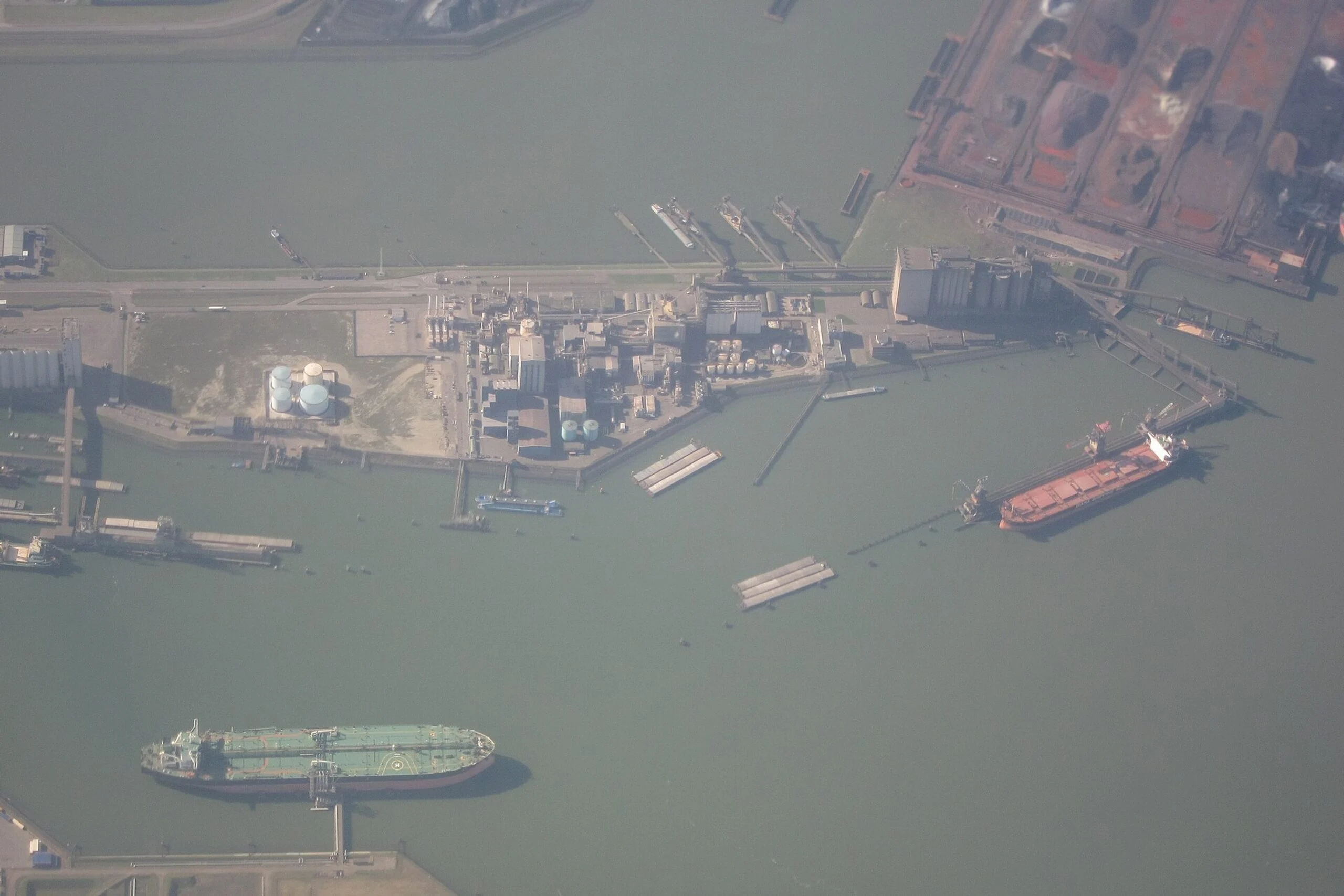
Photo: Olivier Cleynen · CC BY 4.0 · via Wikimedia Commons