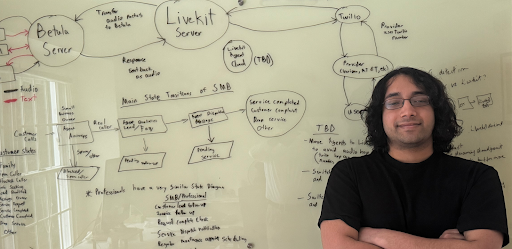
For small businesses and independent professionals, the phone remains one of the most important and most disruptive tools in daily operations. Every call could be a new customer or a wasted interruption. According to Rahul Ajit, founder of Betula AI, as spam calls increase and customer expectations for responsiveness rise, managing inbound communication has become a growing challenge.
Betula AI was created to address that challenge by rethinking how calls are handled in small business environments. Rather than functioning as a simple answering service or voicemail replacement, the platform operates as a full customer lifecycle assistant designed to manage conversations from first contact through follow-up.
“Small businesses lose time and revenue every day to missed calls, spam, and interruptions,” said Ajit. “We built Betula AI to take that burden off owners by handling calls intelligently and only escalating what truly matters.”
Betula AI combines large language model technology with voice-based interaction to create a virtual assistant that can answer calls at any time. When a call comes in, the system engages the caller in natural dialogue, identifies why they are calling, filters out spam, and determines the appropriate next step.
“This is not just about answering the phone,” Ajit said. “Betula AI manages the entire customer journey. It remembers previous conversations, handles follow-ups, helps businesses to grow their reputation, and makes sure each interaction builds on the last instead of starting from zero every time.”
According to Ajit, for many business owners, the pain points Betula AI addresses are familiar. Spam calls consume attention. Legitimate inquiries are missed during busy periods or outside business hours. Voicemail systems frustrate callers and create delays. Betula AI aims to replace these friction points by responding in real time and maintaining continuity across interactions.
“If a call represents a genuine service request, the assistant can qualify the lead and schedule an appointment or pass the call through to the business owner,” he explains. “If the call is irrelevant or spam, it is filtered out without disrupting daily operations.” Known callers can be recognized and routed appropriately, allowing repeat customers or personal contacts to bypass unnecessary screening.
“Large enterprises have teams and infrastructure to manage customer communication,” Ajit said. “Our goal is to give solopreneurs and small teams access to that same level of professionalism without needing additional staff.”
Betula AI’s technology is powered by advanced language models that allow the assistant to speak naturally and adapt responses based on context. This conversational flexibility helps interactions feel less scripted and more human, which is especially important for service-based businesses built on trust and responsiveness.
Beyond commercial use cases, Betula AI has also explored nonprofit applications. One prototype focuses on mental health providers, where the assistant automates intake calls that typically require dedicated clinician time. The system guides patients through structured questions over the phone, reducing administrative workload while maintaining consistency and care.
The company’s business model targets small businesses and professionals who cannot staff phones twenty-four hours a day. This includes service trades, independent practitioners, and small teams that need reliable coverage without hiring additional personnel. Betula AI positions itself as a way to bring enterprise-level customer engagement capabilities to organizations that historically could not access them.
Looking ahead, the company plans to expand its voice technology further. Future development includes deeper voice recognition that allows the system to identify callers by voice rather than only by phone number, creating more personalized interactions over time. Betula AI is also continuing to refine its conversational intelligence based on real-world usage and customer feedback.
“As customer expectations continue to rise, small businesses face increasing pressure to respond quickly and professionally,” says Ajit. “Betula AI reflects a broader shift toward automation that supports human decision making rather than replacing it. By handling repetitive tasks and screening calls, the platform allows business owners to focus on the work that matters most.”
With its emphasis on accessibility, continuity, and human-like interaction, Betula AI is positioning itself as a practical solution to one of the most persistent operational challenges facing small businesses today.