How Digitally Delivered Services Are Reshaping Global Trade Growth
UNCTAD data show services now outgrowing goods trade, with digital exports at 56% of the total, while the poorest countries fall further behind.

Global trade is tilting toward services, and a growing share of that trade never touches a port or a border checkpoint. UN Trade and Development’s Global Trade Update, published in September 2026, found that services rose from 23% of world exports in 2015 to 27% in 2025, with digitally deliverable services now accounting for 56% of that total.
The World Trade Organization’s own tracking points the same direction. Its March 2026 outlook projected merchandise trade would grow just 1.9% in 2026, versus a 4.8% baseline forecast for services trade, after goods and services grew 4.6% and 5.3% respectively in 2025. But UNCTAD’s report points to a second, related trend: the least developed countries are being left further behind in the part of trade growing fastest.
Services Pull Ahead of Goods
According to UNCTAD, global services exports grew at an average annual rate of 6.7% over the past decade, then accelerated to 8.3% growth in 2025. The WTO’s Global Trade Outlook, published in March 2026, projected combined goods-and-services trade growth would slow to 2.7% in 2026 from 4.7% in 2025, with merchandise trade the weaker of the two components.
The WTO’s own estimates shifted as new data arrived. Its October 2025 outlook had put merchandise trade growth at 2.4% for 2025 and just 0.5% for 2026, while forecasting digitally delivered services would grow 6.1% in 2025 and 5.6% in 2026, faster than overall services trade at 4.6% and 4.4%. By comparison, that same forecast put transport services growth at only 1.8% for 2026 and travel services at 4.4%, showing that even within services trade, growth is concentrated in categories that move over networks rather than through the physical movement of goods or people.
WTO Director-General Ngozi Okonjo-Iweala said the March 2026 outlook “reflects the resilience of global trade, buoyed by trade in high technology products and digitally delivered services.” The WTO also found that products tied to artificial intelligence, including chips, servers and related equipment, grew 21.9% year-on-year in 2025 to $4.18 trillion in trade value, up from $3.43 trillion in 2024, and accounted for 42% of total global trade growth despite representing only about one-sixth of trade. Its earlier October 2025 forecast had already flagged AI-related goods as driving nearly half of overall trade expansion in the first half of that year.
AI Products’ Outsized Role in 2025 Trade Growth
Trade in AI-enabling products such as chips and servers rose 21.9% year-on-year in 2025 to $4.18 trillion, and accounted for 42% of all global trade growth despite making up only about one-sixth of total trade, according to the WTO’s March 2026 Global Trade Outlook.
What Counts as Digitally Deliverable
UNCTAD’s category of digitally deliverable services covers exports that can move over communications networks rather than requiring physical movement or in-person delivery. These grew at 7.1% a year on average over the past decade, outpacing services trade overall, and now make up 56% of all services exports worldwide.
The WTO’s own Work Programme on Electronic Commerce, adopted at the Second Ministerial Conference in May 1998 and formally established by the General Council that September, defines e-commerce for its purposes as “the production, distribution, marketing, sale or delivery of goods and services by electronic means.” Four WTO bodies covering trade in services, trade in goods, intellectual property and development have spent more than two decades examining how existing trade rules apply to that activity.
The digitally deliverable share varies sharply by income level. In developed economies, 61% of services exports are digitally deliverable. In least developed countries, the figure is 16%. UNCTAD attributes the gap to limited and expensive internet connectivity, insufficient digital infrastructure, fragmented cross-border payment systems, weak regulatory frameworks and a shortage of specialized digital skills.
Services Embedded in Everything Else Countries Sell
The report also found that services are no longer a separate category from goods trade but an input to it. In 2022, services represented 71% of global intermediate inputs, the components and support functions that go into producing and moving other exports.
That share also differed by income group. Developed economies drew 78% of their intermediate inputs from services, compared with 61% in developing economies and 58% in least developed countries, UNCTAD found. A narrower measure focused specifically on industrial exports showed an even wider gap: services made up 33% of intermediate inputs in developed economies’ industrial exports in 2022, compared with 13% in the least developed countries.
The Poorest Countries Fall Further Behind
Despite the overall boom, least developed countries generated just 0.6% of global services exports in 2025, according to UNCTAD’s September update.
The gap extends to digital readiness more broadly. UNCTAD’s AI Preparedness Index for 2023 put developed economies at an average score of 0.65, small island developing states at 0.43, developing economies generally at 0.41, and least developed countries at 0.31.
Coverage of the update varied in how it labeled that 0.6% figure. A Caribbean Broadcasting Corporation report on the release attributed the number to “developing countries” broadly, citing the update’s framing that Barbados and other economies “are not seeing the benefits” of the wider services boom, while other accounts of the same UNCTAD release attributed the figure specifically to least developed countries. The underlying number is the same; the terminology differs by outlet.
Despite the overall boom, least developed countries generated just 0.6% of global services exports in 2025.
Why the WTO’s Digital Trade Rules Collapsed
Multilateral rules for digital trade have struggled to keep pace with the shift UNCTAD describes. The WTO’s moratorium on customs duties on electronic transmissions was first adopted at the Second Ministerial Conference in May 1998 and repeatedly extended since, most recently at the 13th Ministerial Conference in 2024, which set its expiry at the 14th Ministerial Conference or 31 March 2026, whichever came first. At MC14, held in Yaoundé, Cameroon, and concluding on 30 March 2026, members failed to reach consensus, and both the moratorium and its associated Work Programme lapsed on March 30.
The failure reflected a longstanding split among members. India and South Africa have argued the moratorium restricts tariff revenue that developing economies need and limits their ability to regulate digital sectors, with India reportedly exploring domestic taxes on mobile data to offset the lost revenue. Indonesia had previously opposed the moratorium but reversed its position after signing a recent trade agreement with the United States that required it to support a permanent moratorium. Brazil and the African, Caribbean and Pacific Group of states took a middle position, calling for deeper empirical analysis rather than outright termination.
Trade agreements outside the WTO have moved further and faster on their own. Of 487 preferential trade agreements signed between 2000 and 2025, 55% included e-commerce or digital trade provisions, 39% included digital trade exceptions, and 38% included data protection provisions, according to UNCTAD’s analysis.
What Comes Next for Digital Trade Rules
MC14 did produce agreements in other areas, including on integrating small economies into the multilateral trading system and on special and differential treatment under existing agreements, and ministers agreed to continue fisheries subsidies talks toward the next ministerial conference. But the draft Ministerial Decision on Electronic Commerce, including a proposal to extend the moratorium to December 31, 2030, was left unresolved and referred back to Geneva for further negotiation.
Director-General Okonjo-Iweala said of the unfinished Yaoundé package, which includes the e-commerce decision, “we shouldn’t leave it on the table.” In the meantime, a separate plurilateral E-Commerce Agreement among 67 WTO members covering roughly 70% of global trade includes its own commitment to a permanent moratorium, though it does not bind the full WTO membership. Post-conference analysis of the outcome noted the lapse does not trigger automatic customs duties, but it leaves questions of classification, valuation and enforcement for digitally delivered products unresolved while talks continue.
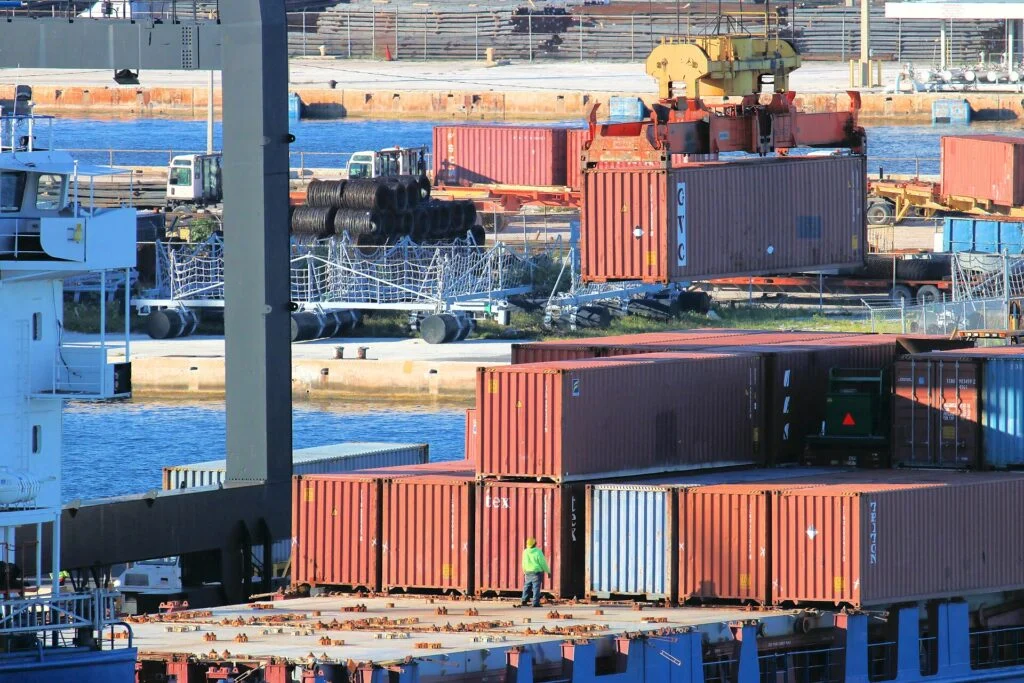
Photo: 颐园居 · CC BY-SA 4.0 · via Wikimedia Commons