How New York and London Are Trying to Save Pandemic-Era Streateries
Both cities let restaurants spill onto streets during COVID lockdowns. Now they are writing permanent rules, at very different costs.
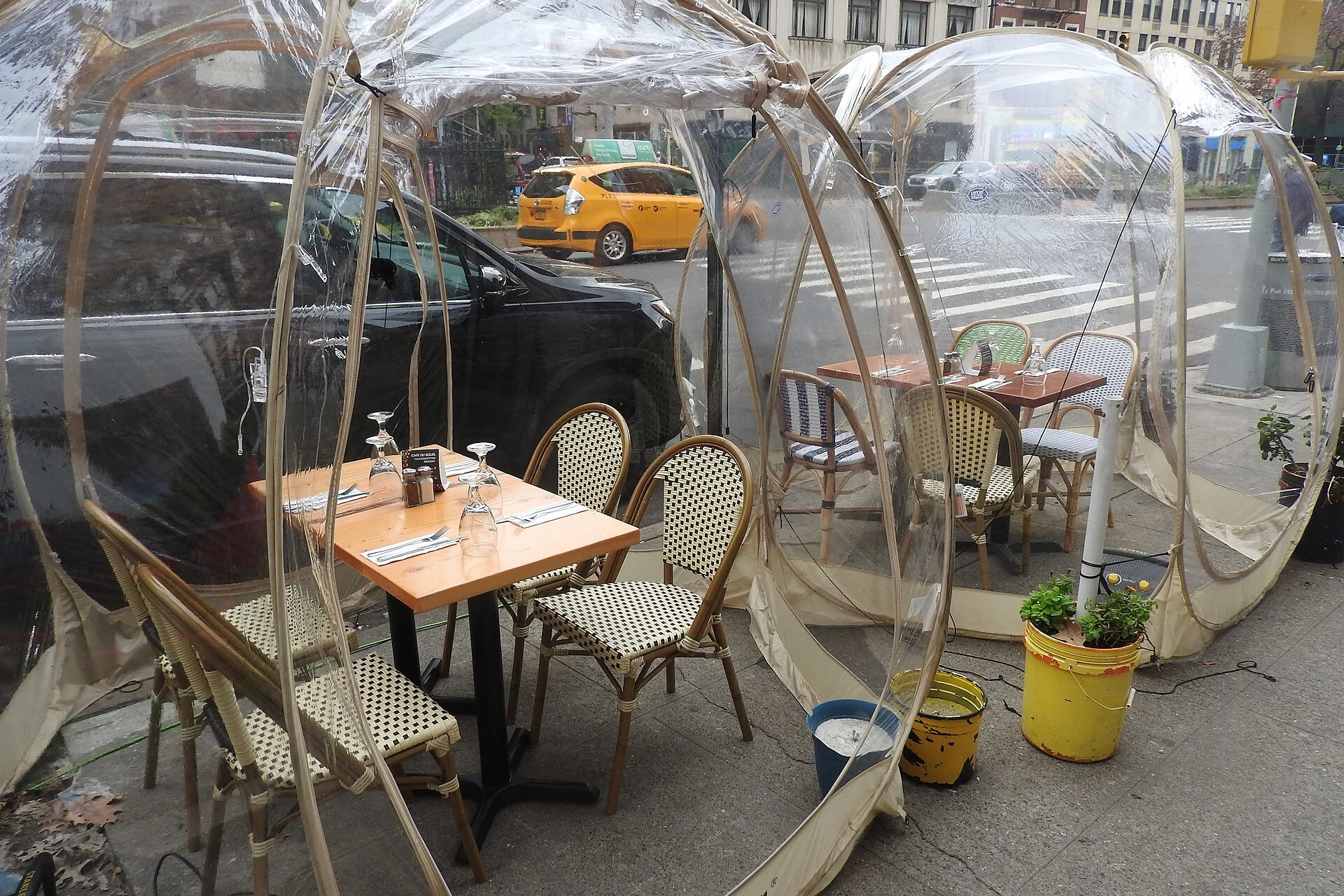
New York City and London both built emergency systems for outdoor dining during the 2020 lockdowns, letting restaurants spill onto sidewalks and parking spaces when indoor seating was banned or limited. Six years later, both cities are working to keep those tables and chairs in place permanently, but neither has made it cheap or simple to stay.
New York has just extended its outdoor dining calendar even as enrollment in its permit program has fallen sharply under new fees and paperwork. London’s pavement licensing system was made permanent by national law in 2024, with a fee cap that keeps costs well below New York’s, though individual boroughs still layer their own rules on top.
From Emergency Order to Permanent Law in New York
New York’s outdoor dining program began as an emergency measure during the COVID-19 pandemic, when the city created the Temporary Open Restaurants Program to let restaurants serve food and drink on sidewalks and in curbside parking spaces. At its peak, according to a February 2025 press release from the city comptroller’s office, about 12,500 restaurants took part, supporting an estimated 11,720 jobs and $373 million in annual wages.
The temporary program ended in 2024, when the city replaced it with a permanent licensing system called Dining Out NYC. The Department of Transportation’s rule for the new program took effect March 3, 2024. It required roadway cafés — seating set up in the street — to operate only from April through November, while sidewalk cafés could run year-round.
On August 31, 2026, Mayor Zohran Mamdani signed a bill, Int. 0655, removing that seasonal shutdown for roadway dining, allowing restaurants to keep roadway dining setups in place all year; DOT plans to issue rules on winterizing those setups in the coming months. “Outdoor dining transformed our city once before, and now we are making sure it has a permanent place in New York City,” Mamdani said. Council Member Restler, a sponsor of the bill, said “too many restaurants and cafes have been locked out of our roadway dining program by unnecessary red tape and seasonal restrictions.”
The Backlog, By the Numbers
The New York City comptroller’s office reported that only 40 of about 3,500 restaurants that had applied for outdoor dining permits had received them as of February 2025, ahead of that year’s April 1 start of the roadway dining season.
A Steep Drop in Participation
Even as calendar rules ease, the number of restaurants enrolled in the program has fallen. One report found that six weeks into the 2026 season, only 2,100 restaurants held permits — down from roughly 2,500 the year before and from about 13,000 during the pandemic; that pandemic-era peak estimate sits above the comptroller’s 12,500 figure, suggesting different counts have been used to describe the program’s high point.
The comptroller’s office reported that only 40 of the roughly 3,500 restaurants that had applied for outdoor dining permits had received them as of February 2025, ahead of that year’s April 1 start date for the season. Comptroller Brad Lander said at the time that restaurant owners were “running out of time to design new outdoor seating and obtain liquor licenses.”
Applying to the current program costs $2,100, on top of a security deposit of $1,500 to $2,500, according to reporting on the permit process; total costs with legal fees and public-space payments can run into the tens of thousands of dollars. Andrew Rigie, executive director of the NYC Hospitality Alliance, said permits have become “too expensive and bureaucratic.” A city Department of Transportation spokesperson acknowledged that the review process can stretch to six or nine months or longer. Some restaurant owners have reported waiting more than a year for approval.
London’s Pavement Licence Becomes Permanent
London’s outdoor dining rules trace back to the Business and Planning Act 2020, passed by Parliament on July 22, 2020. It created a fast-track “pavement licence” allowing pubs, cafes and restaurants to place furniture on the pavement outside their premises — including, in the law’s terms, tables, counters or shelves for food and drink, and chairs, benches, umbrellas and heaters. The fee was originally capped at £100, with a streamlined public consultation replacing the standard Highways Act process.
That temporary regime was made permanent by the Levelling-up and Regeneration Act 2023. According to GOV.UK guidance, the new permanent system took effect March 31, 2024. It raised the fee cap to £500 for first-time applications and £350 for renewals, with each local authority free to set its own fee up to that ceiling. Licences can run for up to two years, and the law sets a 14-day public consultation followed by a further 14 days for a council to decide — a roughly 28-day process from application to determination.
Businesses must also carry public liability insurance and post a notice at their premises for the duration of the consultation period, under the current legislation.
In New York, an application costs $2,100 plus a deposit; in the City of London, the licence was offered free of charge.
Local Variation Within London
Individual London authorities have layered their own policies onto the national framework. The City of London Corporation offered its al fresco dining licences free of charge starting in 2022, as part of its wider hospitality recovery effort. It extended the scheme, first introduced in July 2020, through an announcement on September 15, 2023, keeping the fast-track process running through September 2024; 176 licences were in operation in the Square Mile at the time. James Tumbridge, chairman of the Corporation’s licensing committee, said the aim was to “maintain this liveliness” in the district’s streets.
The Royal Borough of Kensington and Chelsea went further, becoming the first London borough to commit to a permanent, borough-wide al fresco dining policy, in effect from March 2023 and running each year from March to October. As of a March 2022 announcement, the borough had already licensed 114 outdoor dining terraces on footway extensions and issued more than 450 pavement licences overall. A council consultation found about 70% of 138 respondents supported continuing the scheme, and a separate survey by the Cadogan estate found 93% of 884 respondents in favor.
Two Different Routes to the Same Problem
Reporting from both cities describes the same underlying pressure: restaurants that came to rely on extra outdoor seats and revenue during the pandemic are now being asked to pay for that space and go through official channels to keep it.
The two systems differ in how they set costs and timelines. In England, fees and processing periods are fixed by national legislation — a maximum of £500 and a roughly 28-day decision window — with authorities such as the City of London and Kensington and Chelsea then running their own consultations, extensions and expiry dates on top of that baseline. In New York, fees, deposits and design requirements are set at the city level, and the comptroller’s office and industry groups have both documented review times running to six months or longer, with thousands of applications unresolved as of early 2025.
New York’s newest legislative change addresses the operating calendar — how much of the year restaurants can use roadway seating — rather than the fees or processing times that the comptroller’s office and hospitality groups have identified as sources of the delay.
Photo: Jim.henderson · CC BY-SA 4.0