The stock is up 31% to start 2026, the third-best performance in the S&P 500 Index
[NEW YORK] Intel’s dramatic rally to start the year shows investors are increasingly optimistic about the chipmaker gaining new foundry customers, putting it back into the artificial intelligence trade it appeared to abandon in 2024.
The stock is up 31 per cent to start 2026, the third-best performance in the S&P 500 Index. After an 84 per cent rally in 2025, the shares are near their highest level in two years, recovering from a 60 per cent drop in 2024 when Intel appeared to be falling behind its rivals who were capitalising on the AI boom.
“It’s back from the dead,” said Kim Forrest, chief investment officer at Bokeh Capital Partners and a long-time Intel shareholder. “It was painful to own and it’s wonderful now.”
A range of catalysts are driving the optimism: an improving financial outlook, new confidence from Wall Street as seen in recent analyst upgrades, speculation about new foundry customers, and even enthusiasm around the company’s potential to be a winner in President Trump’s “America First” campaign.
Intel reports its fourth-quarter earnings after the bell on Jan 22 and investors will be looking for signs of progress. Analysts at firms like Citi and KeyBanc have recently raised their ratings on the stock, which now has the most buy-equivalents in more than a year.
Earlier this week, John Vinh at KeyBanc upgraded Intel shares to overweight, citing solid demand, progress in its foundry business, and a potential agreement with Apple for the company’s chips to be used in computers and iPhones.
Navigate Asia in
a new global order
Get the insights delivered to your inbox.
Manufacturing chips for AI and other uses is a huge business, and progress in Intel’s 18A technology is “enough to convince us it could credibly be the #2 foundry supplier in the industry ahead of Samsung,” Vinh wrote. He also set a Street-high price target of US$60, implying 24 per cent upside from its Thursday (Jan 15) closing price of US$48.32.
That said, the average analyst target of US$40.66 implies a 16 per cent decline over the next 12 months. But it may be that Wall Street is still catching up. For example, Citi raised its rating to neutral from sell in a research note on Thursday, and boosted its price target to US$50 from US$29.
“We believe Intel should benefit from the advanced packaging supply tightness at TSMC and has a unique window of opportunity to attract foundry wafer customers with the support of the US government,” Citi analyst Atif Malik wrote.
Intel is also benefiting from demand for its central processing unit, CPU, chips for PCs and data centres, which need CPUs in addition to the graphics processing unit, or GPU, chips that Nvidia and other semiconductor makers provide.
The most unpredictable factor driving Intel’s rally is its ties to Trump, who last year brokered an investment by the US government after criticising chief executive officer Tan Lip-Bu. Nvidia and SoftBank Group have also invested in Intel, helping to shore up its balance sheet.
“You have a company that is perceived to be on the good side of the angels with particularly the power brokers in Washington, DC, but also with some marquee tech companies,” said Paul Meeks, head of tech research at Freedom Capital Markets.
Intel’s status as a rare maker of chips on US soil could also be giving the stock a boost, as speculation rises that China may act on Taiwan, which would likely disrupt the most important foundry operator, Taiwan Semiconductor Manufacturing Co.
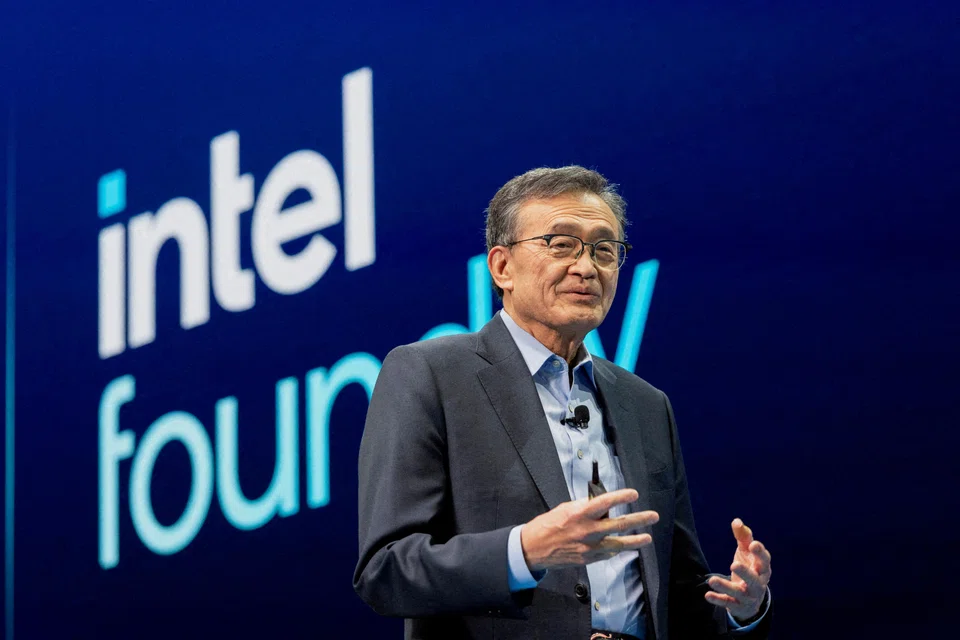
Optimism about the foundry and fabrication business has risen since Tan Lip-Bu took over leadership last year but Intel still has not landed any high profile customers. His arrival with an engineering background has been an important part of Intel’s pivot, according to Bokeh Capital’s Forrest.
“Intel had decades of mismanagement at the very top, positioning the company incorrectly and kind of hanging onto glory,” she said. “But here’s what they had: They had good engineers and good fabs that could make products.”
The stock’s run has some investors wary of a pullback. Intel is priced at more than four times estimated sales, the highest in more than two decades. That’s overvalued, according to Meeks.
The next catalyst for Intel investors could be in next week’s results. Intel’s revenue is projected to rise 3 per cent in 2026 following an expected 1 per cent decline in 2025, according the average of analyst estimates compiled by Bloomberg. So the key will likely be in the comments from Tan and other Intel executives about what they see on the horizon.
“Nobody’s expecting them to crush it,” Freedom Capital’s Meeks said. “Confirming some partners for their latest manufacturing technology, that would be a potential surprise.” BLOOMBERG
Decoding Asia newsletter: your guide to navigating Asia in a new global order. Sign up here to get Decoding Asia newsletter. Delivered to your inbox. Free.